Quick answer
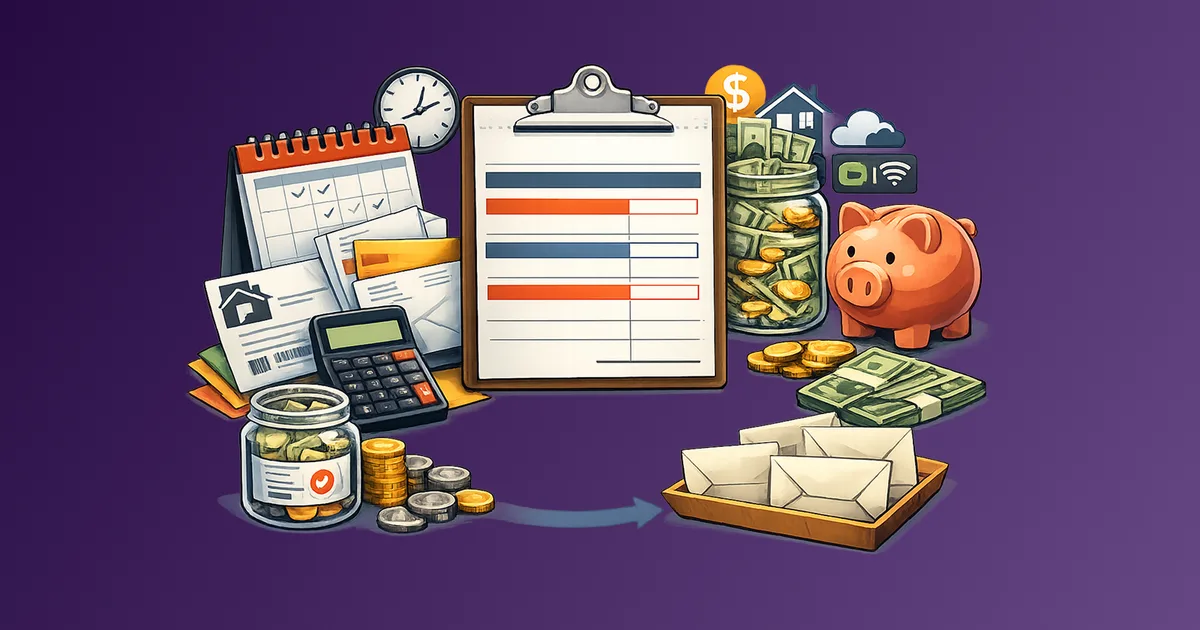
Build a practical zero-based budget by anchoring on recurring expenses first, then sinking funds, then discretionary categories so every dollar is assigned before the month begins.
Zero-based budgeting has a reputation for being thorough and a reputation for being exhausting. Both are partly true, depending on how you implement it. The version that collapses is the one that starts by accounting for every daily transaction before the month begins. The version that works is the one that starts with recurring expenses as fixed anchors, then allocates what remains.
Stay Updated with Subtrakr
Sign up to our newsletter to get updates about Subtrakr and valuable insights about subscriptions and recurring expense management.
Most people's budgets fail not because of impulse purchases, but because recurring costs are incomplete, inaccurate, or not treated as committed before discretionary spending begins. Zero-based budgeting, applied through the lens of recurring expenses, fixes exactly that problem.
Zero-based budgeting assigns every dollar of after-tax income a specific purpose so that income minus all allocations equals zero. For busy people, the practical starting point is not daily transactions but recurring expenses: the fixed and semi-fixed costs that commit a portion of income before the month begins. List these first, assign them to budget categories, build sinking funds for irregular annual costs, then allocate what remains to discretionary categories. The result is a budget where committed spending is visible and intentional, not estimated and passive.
Zero-based budgeting assumes you already see the full recurring picture—not only subscriptions, but rent, insurance, utilities, payroll, and debt service. If that inventory is not built yet, start with How to Track Non-Subscription Recurring Expenses: Rent, Insurance, Utilities, and Payroll, then return here to assign every dollar.
What Is Zero-Based Budgeting and How Does It Differ from Other Methods?
Zero-based budgeting means every dollar of income is assigned to a category before the month begins. The goal is not to reach zero in your bank account. It is to reach zero unassigned dollars: all income is either spent, saved, or invested with intention.
The contrast with the 50/30/20 rule is instructive. The 50/30/20 framework gives you proportional targets and checks your spending against them. Zero-based budgeting goes further: it requires you to decide in advance where every dollar goes, not just whether the ratios look healthy after the fact. Envelope budgeting is the lighter-weight alternative if you only need category-level constraints.
The contrast with casual budgeting (tracking spending without pre-allocation) is more significant. Tracking tells you what happened. Zero-based budgeting determines what will happen. The difference matters most for recurring expenses, because they commit income automatically whether you have allocated for them or not.
The method works well for busy people precisely because most of the allocation happens once per month, not daily. Once recurring expenses are assigned and sinking funds are established, the ongoing maintenance is light.
Why Start with Recurring Expenses Instead of Daily Transactions?
The instinct when building a zero-based budget is to start from income and work toward daily spending categories: groceries, dining, entertainment, and so on. This is how most budgeting templates are structured.
The problem is that recurring expenses are not discretionary. They have already committed a portion of income before you begin allocating. If you build the discretionary categories first, you are allocating money that is not actually available for discretionary use.
Starting with recurring expenses reverses this. You establish the committed baseline first. What remains after recurring costs and savings contributions is your actual discretionary pool. This prevents the common situation where a budget looks balanced until the phone bill, the cloud storage charge, and three subscription renewals process in the same week.
The pay essentials first approach operates on the same logic: recurring structural costs are assigned before anything else, and discretionary spending is allocated from what remains. Zero-based budgeting is a more granular implementation of the same principle.
Step-by-Step Setup: Recurring Expenses, Sinking Funds, Then Discretionary
Step 1: Establish Your Monthly After-Tax Income (5 minutes)
Use your actual take-home figure. If income varies, use the lowest reliable month from the past three to four months as your baseline. This is your total to allocate to zero.
For freelancers and those with variable income, choose a floor figure you are confident you will meet in most months. Any income above that floor becomes additional allocation to savings or a buffer category, not an expansion of the discretionary budget.
Monthly after-tax income: ___
Step 2: List All Recurring Expenses (15 minutes)
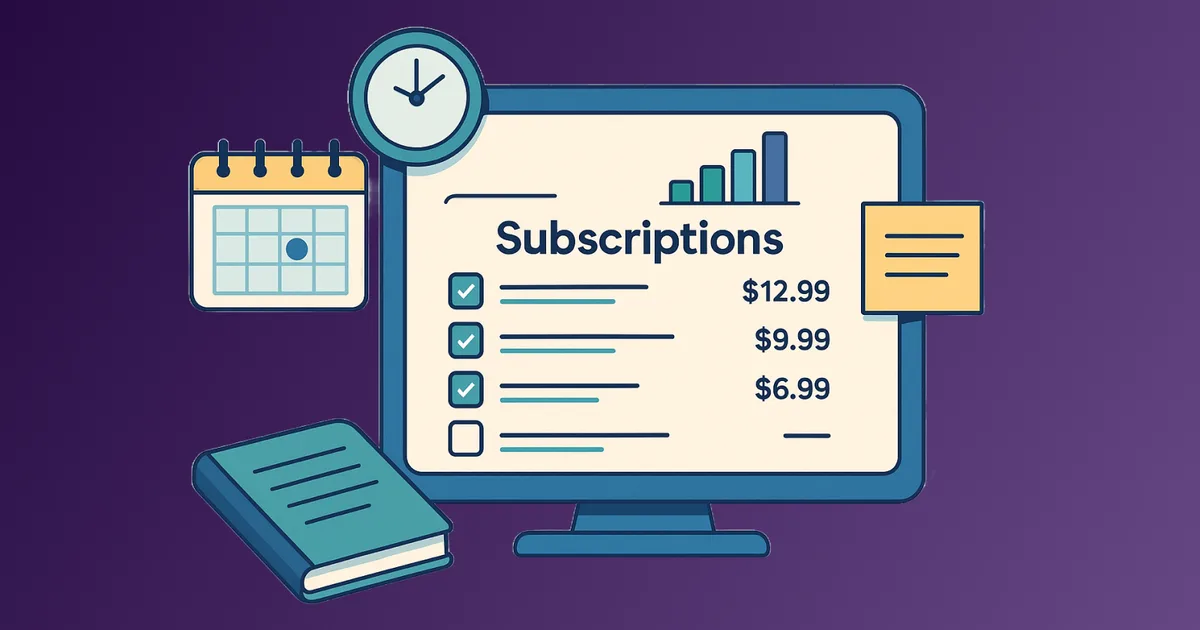
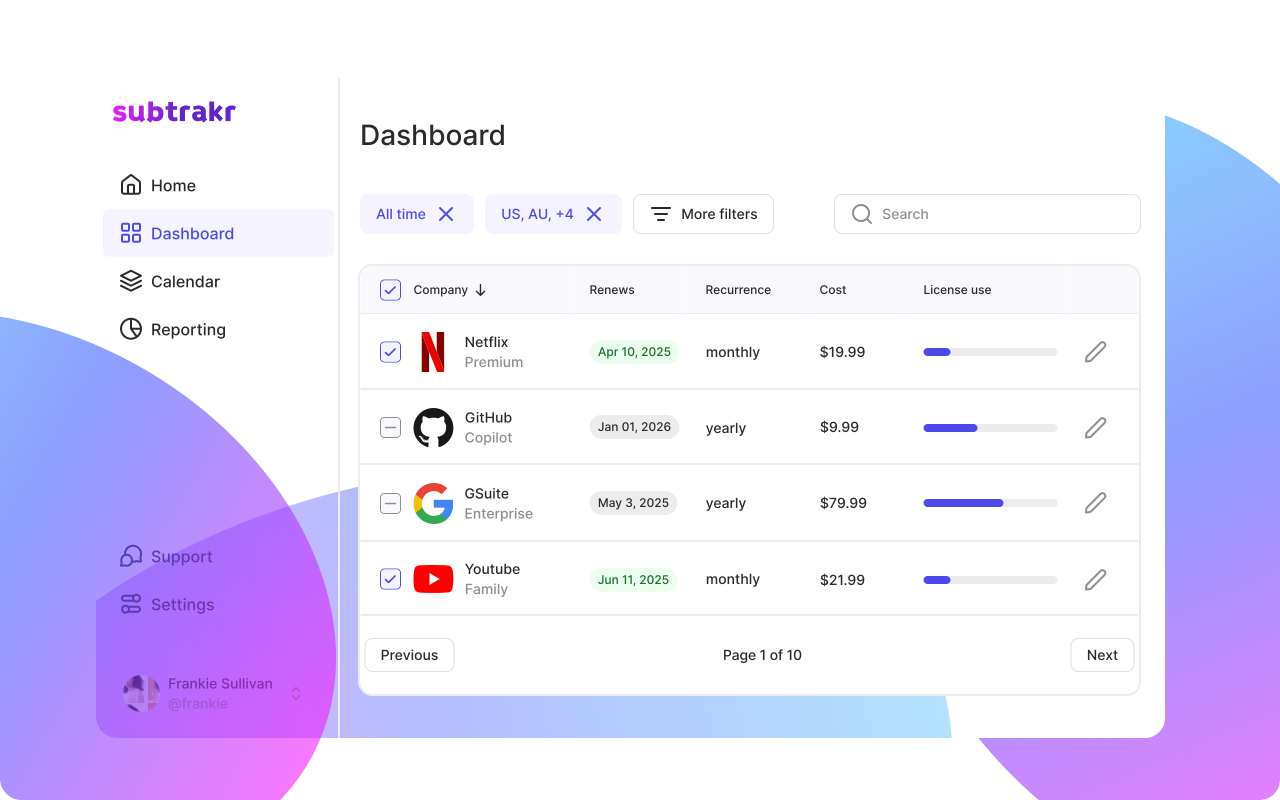
Pull every recurring charge from your bank statements, credit card history, PayPal, Apple subscriptions, and Google Play billing. Include annual subscriptions. Do not estimate from memory. The subscription discovery guide covers every source systematically if you have not done a full sweep recently.
For annual subscriptions, note both the annual total and the monthly equivalent (annual cost divided by 12). You will use the monthly equivalent in the budget, and the full annual figure when building your sinking fund.
For each recurring expense, record:
| Item | Billing cycle | Monthly equivalent | Category |
|---|---|---|---|
| Rent / mortgage | Monthly | Full amount | Housing |
| Internet | Monthly | Full amount | Utilities |
| Phone plan | Monthly | Full amount | Utilities |
| Streaming (per service) | Monthly | Full amount | Entertainment |
| Cloud storage | Annual | Annual / 12 | Tools |
| Software subscription | Annual | Annual / 12 | Tools / Work |
| Insurance (home, health, car) | Monthly or Annual | Monthly equivalent | Insurance |
If your list is not complete yet, run a full discovery sweep before continuing.
Step 3: Categorize and Total Recurring Expenses (10 minutes)
Group your recurring expenses into budget categories. The categories should reflect your actual spending structure, not a generic template. Common categories for recurring expenses:
- Housing (rent, mortgage, property tax if paid monthly)
- Utilities (electricity, gas, water, internet, phone)
- Insurance (health, home, car, life)
- Transportation (car payment, fuel direct debits, transit passes)
- Subscriptions: Essential (cloud storage, password manager, work tools)
- Subscriptions: Entertainment (streaming, music, gaming, news)
- Subscriptions: Fitness and wellness
- Debt repayment (minimums plus any extra)
- Savings and investments (treat as a non-negotiable allocation)
Total each category. This is your committed baseline.
Total recurring monthly expenses: ___
Remaining after recurring: Income ___ minus recurring ___ = ___
Step 4: Build Sinking Funds for Annual and Irregular Costs (10 minutes)
A sinking fund is a monthly allocation set aside for a known future expense. Instead of absorbing a $240 annual subscription as a one-time hit in March, you allocate $20 per month throughout the year. When the charge arrives, the money is already there.
Identify every annual or irregular subscription and bill in your list. For each one, divide the annual cost by 12. That monthly figure becomes a sinking fund allocation in your budget.
SINKING FUND SETUP
Annual subscription 1: ___ annual / 12 = ___ per month
Annual subscription 2: ___ annual / 12 = ___ per month
Car registration / annual insurance: ___ / 12 = ___ per month
Any other annual bills: ___ / 12 = ___ per month

Total monthly sinking fund allocation: ___
This total comes out of your remaining pool before discretionary allocation begins. Sinking funds are not optional savings - they are pre-committed allocations for expenses you know are coming.
Step 5: Allocate Discretionary Categories (10 minutes)
What remains after recurring expenses and sinking funds is your actual discretionary pool. Now build your variable spending categories.
Discretionary pool: Income ___ minus recurring ___ minus sinking funds ___ = ___
Allocate this pool across your variable categories. Common ones:
- Groceries
- Dining and takeaway
- Clothing and personal care
- Household supplies
- Entertainment (variable: cinema, events, books)
- Transport (variable: fuel top-ups, taxis, parking)
- Gifts and occasions
- Buffer / miscellaneous
Assign specific amounts to each. The total must equal your discretionary pool. If the categories exceed the pool, reduce an allocation. Do not borrow from the recurring or sinking fund totals.
Step 6: Verify the Zero (5 minutes)
ZERO CHECK
Monthly income:                    ___
Total recurring expenses:          ___
Total sinking fund allocations:    ___
Total discretionary allocations:   ___
Total savings / investments:       ___

Sum of all allocations:            ___
Income minus allocations:          ___ (should equal 0)
If the result is positive, allocate the remainder. Common destinations: emergency fund top-up, additional debt repayment, savings acceleration, or a buffer category.
If the result is negative, your allocations exceed income. Identify the category with the most flexibility and reduce it until you reach zero. Start with discretionary categories before touching recurring ones.
How Do You Handle Annual Subscriptions and Irregular Renewals?
Annual subscriptions are the most common source of budget disruption for people who otherwise have their recurring costs under control. The charge arrives once a year, rarely at a time that feels convenient, and is large enough relative to a monthly subscription to feel like a surprise even when it is not.
Three tools work together to eliminate this problem:
- The monthly equivalent in the budget. Every annual subscription should appear in your budget at its monthly equivalent, not as a lump sum in the renewal month. This keeps the budget accurate throughout the year, not just in eleven of twelve months.
- The sinking fund allocation. The monthly equivalent is not just for tracking - it should be set aside each month in a separate account or earmarked sub-account. When the annual charge arrives, you withdraw from the sinking fund rather than absorbing the cost from that month's discretionary budget.
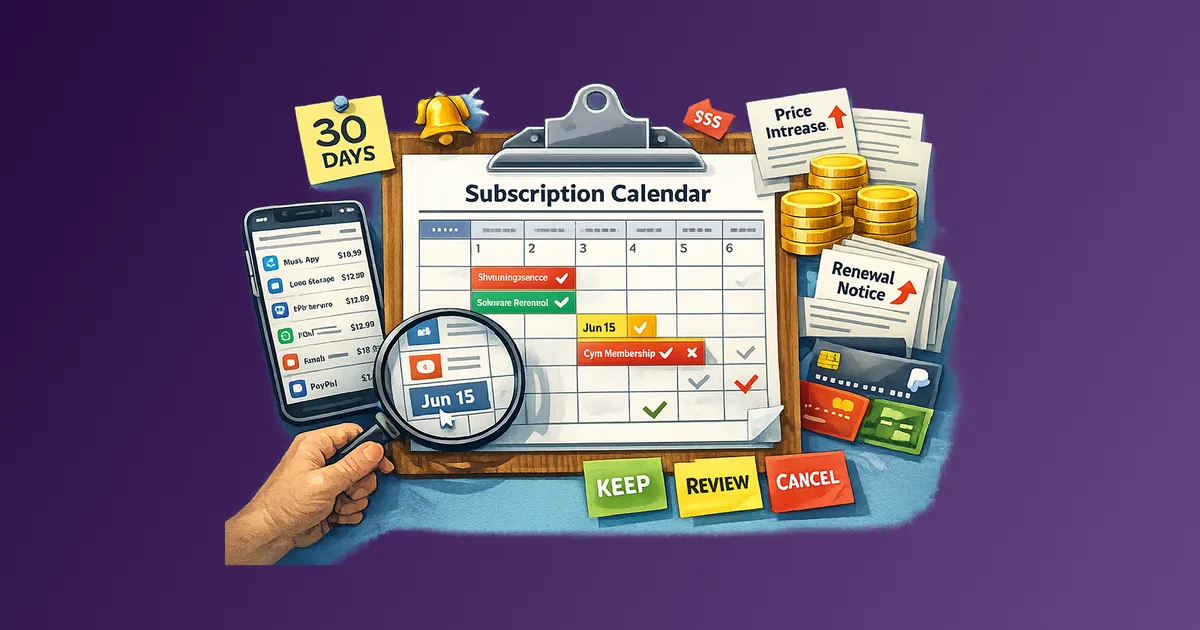
- A subscription renewal calendar. Set a reminder seven to ten days before each annual subscription renews. This gives you time to decide whether to renew, cancel, or negotiate before the charge processes. The subscription calendar guide covers the reminder structure in detail, including how to handle price changes at renewal.
For subscriptions you are not certain you will renew, include the sinking fund allocation anyway. If you cancel before renewal, the accumulated amount transfers to your buffer or savings. You lose nothing by preparing for a charge you ultimately decide not to incur.
Review Cadence and Adjustment Rules
A zero-based budget is set at the start of each month. It requires a review structure to stay accurate: a brief monthly reset and a lighter mid-month check.
Monthly Reset (15 to 20 minutes, before the month begins)
The monthly reset is when you rebuild the zero allocation from scratch for the upcoming month. For most months, this means adjusting for any changes rather than starting from zero - but the discipline of reviewing every category prevents the budget from drifting.
Monthly reset checklist:
[ ] Income confirmed for the upcoming month
[ ] Any new recurring expenses to add?
[ ] Any cancelled subscriptions to remove?
[ ] Any price changes to update?
[ ] Annual subscriptions renewing this month - sinking fund ready?
[ ] Sinking fund allocations reviewed and still accurate?
[ ] Discretionary categories adjusted for any expected changes (travel, occasions, etc.)?
[ ] Zero check completed - all allocations sum to income?
Mid-Month Check (5 to 10 minutes, around the 15th)
A lighter pass to confirm that recurring charges have processed as expected and that discretionary spending is tracking against allocations.
[ ] All expected recurring charges processed correctly?
[ ] Any unexpected charges appeared? If yes: identify, classify, adjust
[ ] Discretionary categories on track?
[ ] Any subscription renewal reminders triggered? Decision made?
Adjustment Rules
When a recurring expense changes: Update the budget immediately. Do not wait for the monthly reset. A price increase that processes this month at the old rate and next month at the new rate needs to be reflected in next month's reset.
When a subscription is cancelled: Remove it from the budget and reallocate the freed amount. The default reallocation is savings or debt repayment, not automatic expansion of a discretionary category.
When income changes: Rebuild the discretionary pool from the new income figure. Recurring allocations stay fixed unless a conscious decision changes them. This prevents lifestyle inflation from adding recurring costs automatically when income increases.
When sinking funds run short: If an annual subscription renews before the sinking fund is fully built (because you started the budget partway through the year), cover the shortfall from the buffer category or discretionary savings. Then increase the monthly sinking fund allocation slightly to rebuild the gap before next year's renewal.
Common Mistakes When Zero-Based Budgeting with Recurring Expenses
Not including all recurring expenses in the initial setup. A zero-based budget with an incomplete recurring expense list will appear to balance but will not. Every missing recurring charge is an unallocated commitment that will disrupt the budget when it processes. Run the full discovery pass before building the budget.
Treating savings as leftover rather than allocated. In a zero-based budget, savings is a category like any other. It is assigned at the start of the month, not funded with whatever remains after spending. If savings is treated as a residual, it will be zero or near-zero in months where discretionary spending runs high.
Building sinking funds in the same account as spending money. If the sinking fund balance sits in your main current account, it will get spent. Use a separate savings account or a clearly labelled sub-account. The mental separation is less reliable than the structural one.
Reallocating freed subscription money to more subscriptions. When a cancellation frees up $15 per month, the budget now has $15 of unallocated recurring capacity. The zero-based discipline requires you to assign it somewhere intentionally. Savings or debt repayment is usually the better default than filling the slot with a new subscription.
Over-engineering the discretionary categories. A zero-based budget with twenty-five discretionary line items takes longer to build and is harder to follow than one with eight. Merge similar categories. The goal is clarity and accountability, not precision for its own sake.
FAQ
Is zero-based budgeting too time-consuming for people with busy schedules?
The initial setup takes about an hour. Monthly resets take fifteen to twenty minutes once the template is built. The mid-month check is five to ten minutes. The front-loaded time investment pays back in fewer budget surprises and less reactive financial decision-making throughout the month.
How do I handle recurring expenses that vary slightly each month, like a phone bill with add-ons?
Budget the stable base amount as a fixed recurring allocation. Add a small variable buffer to the same category to absorb fluctuations. Review the actual charge each month and adjust if the base rate has changed permanently.
Can zero-based budgeting work with variable income?
Yes, with a baseline income figure rather than a variable one. Budget to the floor. When income comes in above the baseline, allocate the surplus before spending it - add it to savings, accelerate a debt payment, or top up a sinking fund. Do not let it absorb passively into discretionary spending.
What happens if an unplanned recurring charge appears mid-month?
Add it to the budget immediately. Identify its category and reduce another allocation to compensate, or absorb it from the buffer category. Then determine whether it is a legitimate recurring expense to include in future months or something to cancel.
Should I budget monthly equivalents for annual subscriptions even if I might cancel them?
Yes. The sinking fund approach is low-risk: if you cancel before renewal, the accumulated amount moves to savings. The cost of building a sinking fund you do not use is zero. The cost of not building one for a renewal you do not cancel is a one-month budget disruption.
How is this different from just tracking subscriptions in a spreadsheet?
A spreadsheet tracks what you spend. A zero-based budget pre-assigns where every dollar goes. Tracking is diagnostic. Zero-based budgeting is prescriptive. Both are useful, but they answer different questions. Tracking tells you what happened; zero-based budgeting determines what will happen.
Next Step
The highest-value first action is the recurring expense list. Before building a zero-based budget, you need a complete and current inventory of every recurring charge, with annual subscriptions converted to monthly equivalents.
If that list does not exist yet, start there. For a year-ahead version of the same inventory, collect the 2027 recurring expense inputs now so next year's allocations are not reconstructed in December. Once the list exists, the zero-based setup takes about an hour and produces a budget where every dollar is assigned before the month begins rather than explained after it ends.