Quick answer
List recurring expenses first, classify needs vs wants with a strict consequence test, then map totals to 50/30/20 targets—plus a copy-paste worksheet and a sub-10-minute monthly review.
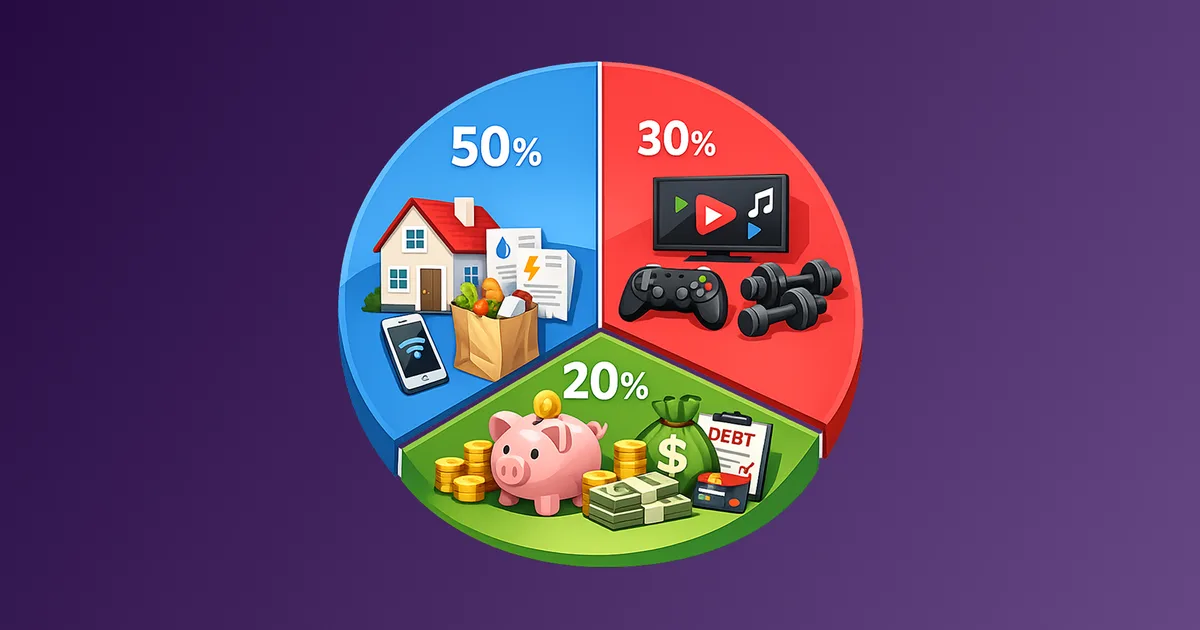
The 50/30/20 rule is one of the most cited frameworks in personal finance. Fifty percent of after-tax income goes to needs, thirty percent to wants, twenty percent to savings and debt repayment. It is easy to memorize and genuinely useful as a starting orientation. The problem is that most people try to apply it by working backward from spending they have already committed to, rather than forward from a clear picture of what those commitments actually cost. If you want a more granular approach that pre-allocates every dollar, use Zero-Based Budgeting for Recurring Bills: A Practical Guide for Busy People.
Stay Updated with Subtrakr
Sign up to our newsletter to get updates about Subtrakr and valuable insights about subscriptions and recurring expense management.
Recurring expenses are what make the backward approach unreliable. They are not purchased in the moment. They accumulate quietly, get undercounted in mental estimates, and spread across the needs and wants buckets in ways that are easy to misjudge without a list in front of you.
This version of the rule starts with recurring expenses first, then allocates.
The 50/30/20 rule divides after-tax income into needs (50%), wants (30%), and savings or debt repayment (20%). To apply it accurately with a modern subscription stack, you need to list all recurring expenses before assigning them to a bucket. Most people underestimate how much of their needs budget is already committed to fixed recurring costs, and how many subscriptions they classify as needs are actually wants. The setup takes about 30 minutes. The monthly review takes less than 10.
What Is the 50/30/20 Rule and Where Does It Break Down in Real Life?
The rule is a proportional budget guide: half of what you take home funds the costs you cannot reasonably avoid, a third funds the life you choose to lead, and the remainder builds financial resilience through savings or eliminates debt.
At a high level, this framing is useful. It gives people a way to sense-check whether their spending structure is roughly healthy without requiring detailed tracking of every transaction.
The breakdown comes from three real-world problems.
The needs bucket is harder to measure than it looks. Housing, utilities, insurance, and groceries are straightforward. But a significant portion of modern needs spending is fragmented across recurring digital bills: internet access, cloud storage, a phone plan, software required for work. These are genuine needs for most people today, but they are scattered across payment methods and billing cycles in ways that make them easy to undercount. The analysis in How Much of Income Do People Spend on Recurring Expenses? shows how recurring costs as a share of household income have grown substantially as digital services have moved from optional to structural.
The needs and wants boundary is genuinely ambiguous for subscriptions. Is a streaming service a need or a want? For most people, it is a want. But for a household that cancelled cable and relies on streaming for all television, one streaming service may function as a need while three others are clearly wants. The boundary is real but personal, and the 50/30/20 rule does not help you draw it.
Subscription costs grow without active decisions. Variable spending categories like dining out or clothing require a conscious purchase each time. Subscriptions do not. They accumulate through one-time sign-up decisions and then continue billing indefinitely. By the time someone applies the 50/30/20 rule, their wants bucket may already be partially committed to services they signed up for months or years ago and barely use.
How Do You Translate Subscriptions into Needs vs Wants in Practice?
The classification does not have to be complicated, but it does require a definition you actually apply consistently.
For this framework, use a simple test: would the absence of this service cause a concrete, immediate problem in your daily life or work?
If yes, it belongs in needs. If no, it belongs in wants. The test is deliberately strict. It excludes services that are valuable, enjoyable, or frequently used unless their absence causes an actual problem.
Recurring expenses that typically belong in needs (50%):
- Housing payments (rent, mortgage)
- Utilities: electricity, gas, water, heating
- Internet access and mobile plan
- Groceries and essential household supplies
- Health insurance and essential medical costs
- Transportation costs required for work
- Minimum debt repayments
- Cloud storage if used for work-critical documents
- Security or backup software required for professional use
Recurring expenses that typically belong in wants (30%):
- Streaming and entertainment subscriptions
- Music platforms
- News and media subscriptions
- Fitness and wellness apps
- Gaming subscriptions
- Premium tiers of tools you could use for free
- Subscription boxes and product services
- Software upgrades used for personal rather than professional purposes
The gray area worth naming explicitly:
Some subscriptions sit at the boundary and require a personal judgment call. A password manager is a want for a casual user and a near-need for someone managing dozens of professional accounts. A fitness app is a want for someone who also has a gym membership and a more defensible cost for someone who has replaced all other fitness spending with it. A professional software subscription is a need if it generates direct income and a want if it is aspirational.
The classification system does not need to be perfectly consistent across all households. It needs to be consistent within yours, applied to your actual usage, not to what the service theoretically provides.
Setup Workflow: List Recurring Expenses First, Then Allocate
The standard mistake when applying the 50/30/20 rule is starting with the percentages and trying to fit existing spending into them. The subscription-friendly approach reverses this: build a complete list of recurring expenses first, classify each one, then calculate whether your allocation is within range.
Step-by-Step Setup (Time required: 25 to 35 minutes)
Step 1: Find all your recurring expenses (10 minutes)
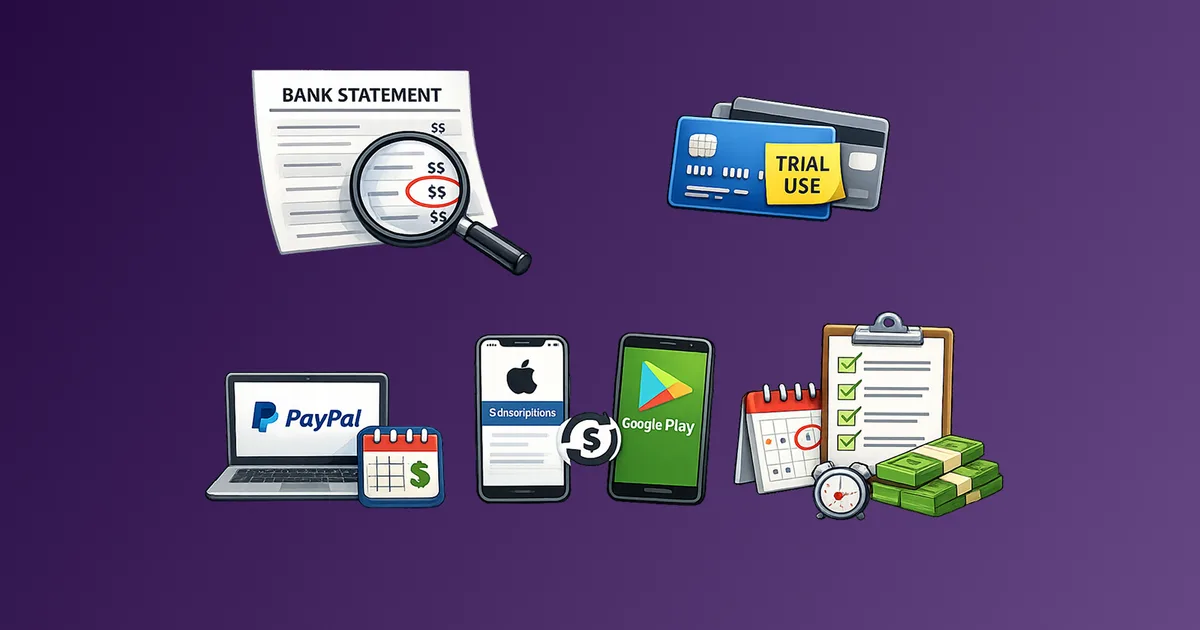
Pull your last two bank statements and check your credit card, PayPal, Apple subscriptions, and Google Play billing history. List every recurring charge you find. Include annual subscriptions converted to a monthly equivalent (divide the annual cost by 12). If you have not done this recently, the complete subscription discovery guide covers every source systematically.
Step 2: Calculate your after-tax monthly income (2 minutes)
Use your take-home pay, not gross income. If your income varies month to month (freelancers, variable hours), use a conservative average from the past three months.
Step 3: Calculate your 50/30/20 targets (2 minutes)
After-tax monthly income: ___

Needs budget (50%):   ___ x 0.50 = ___
Wants budget (30%):   ___ x 0.30 = ___
Savings target (20%): ___ x 0.20 = ___
Step 4: Classify each recurring expense as need, want, or savings (10 minutes)
Go through your list from Step 1. Apply the consequence test to each item. Assign it to needs, wants, or savings (for recurring investment or debt contributions). Do not classify by instinct or habit. Apply the test.
Step 5: Total each bucket and compare to targets (5 minutes)
Total recurring needs:   ___   vs target: ___   difference: ___
Total recurring wants:   ___   vs target: ___   difference: ___
Total recurring savings: ___   vs target: ___   difference: ___
Add non-recurring spending estimates to each bucket (variable groceries, dining, clothing, etc.) to see your complete picture.
Step 6: Identify the adjustment
If your needs bucket exceeds 50% of income, the options are: reduce a cost classified as need (renegotiate, downgrade, or switch a utility or insurance), reclassify items that are genuinely wants but were listed as needs, or accept a temporarily higher needs ratio and adjust the wants and savings split accordingly.
If your wants bucket exceeds 30%, you have the most direct lever: identify which recurring wants are lowest in value relative to their cost and reduce or rotate them. The subscription audit checklist provides the decision framework for this step.
Copy-Paste: 50/30/20 Recurring Expense Worksheet
MONTHLY INCOME
After-tax monthly income: ___

50/30/20 TARGETS
Needs (50%):   ___
Wants (30%):   ___
Savings (20%): ___

RECURRING NEEDS (target: ___)
Housing:              ___
Utilities:            ___
Internet / phone:     ___
Insurance:            ___
Essential transport:  ___
Work-required tools:  ___
Debt minimums:        ___
Other needs:          ___
TOTAL RECURRING NEEDS: ___

RECURRING WANTS (target: ___)
Streaming (list):     ___
Music:                ___
News / media:         ___
Fitness / wellness:   ___
Gaming:               ___
Other entertainment:  ___
Non-essential tools:  ___
Other wants:          ___
TOTAL RECURRING WANTS: ___

RECURRING SAVINGS / DEBT (target: ___)
Investment accounts:  ___
Pension / retirement: ___
Extra debt payments:  ___
TOTAL RECURRING SAVINGS: ___

BUDGET CHECK
Needs:   ___ / ___ target   [ ] within range  [ ] over
Wants:   ___ / ___ target   [ ] within range  [ ] over
Savings: ___ / ___ target   [ ] within range  [ ] under
Monthly Review Checklist to Prevent Drift
The 50/30/20 allocation is not a one-time setup. Recurring expenses change: prices increase, new subscriptions get added, old ones get forgotten. A brief monthly check keeps the framework accurate without requiring a full reset each time.
The review takes under ten minutes if you run it consistently. If you skip it for two or three months, the catch-up takes longer because more has drifted.
MONTHLY 50/30/20 REVIEW CHECKLIST

[ ] Any new recurring expenses added this month?
    If yes: classify and add to the correct bucket

[ ] Any price increases received or applied?
    If yes: update the amount and recheck bucket total

[ ] Any subscriptions cancelled or paused this month?
    If yes: remove from bucket and note the saving

[ ] Needs bucket still within 50%?
    If over: identify highest-cost item with flexibility

[ ] Wants bucket still within 30%?
    If over: identify lowest-value recurring want for review

[ ] Savings target being met?
    If under: check whether a want can be reduced or rotated

[ ] Any annual subscriptions renewing next month?
    If yes: review value before the charge processes
The review becomes a natural anchor point for any subscription decisions: price increases, cancellations, new sign-ups. Every change to your recurring expense stack is a reason to recheck the bucket totals, not just note the change.
What Are the Most Common Mistakes When Applying 50/30/20 to Recurring Expenses?
Classifying subscriptions as needs by habit rather than by the consequence test. A streaming service you have had for three years does not become a need because it is familiar. Apply the test each time: what concrete problem does cancellation cause tomorrow?
Using gross income instead of after-tax income. The 50/30/20 targets should be calculated on what you actually receive, not what you earn before deductions. Using gross income makes the buckets larger than your real budget allows.
Ignoring annual subscriptions in the monthly calculation. A $120 annual subscription is $10 per month. If it is not converted and included, your recurring costs are understated and your wants budget appears healthier than it is.
Treating the 50% needs target as a floor rather than a ceiling. The goal is to keep needs at or below 50%, not to fill the bucket. If your genuine needs cost 38% of income, the remaining 12% should flow to savings or discretionary spending, not find new recurring costs to absorb it.
Adding new subscriptions to the wants bucket without checking whether it still has room. The 30% wants allocation is finite. Each new subscription reduces the headroom for variable wants spending: dining, clothing, entertainment purchases. A wants budget at 30% with $120 in recurring subscriptions has less room for variable spending than one with $40. Track the committed portion of each bucket separately from the variable portion.
FAQ
Does the 50/30/20 rule still work if my income varies month to month?
Yes, with one adjustment. Use a conservative income baseline rather than your best recent month. Freelancers and those with variable income are better served by budgeting to a floor figure and treating any income above that as supplemental. The freelancer recurring expense guide covers budgeting structure for variable income in more detail.
What if my needs genuinely exceed 50% of my income?
This is common in high cost-of-living areas and lower income brackets. In that case, use the framework as a diagnostic rather than a hard rule. The ratio still tells you which bucket is under pressure and where the adjustment needs to come from, even if hitting 50% is not immediately achievable.
How should I classify a subscription that I use for both work and personal purposes?
Allocate it based on primary use. If more than half of your usage is work-related, classify it as a need. If personal use dominates, classify it as a want. For subscriptions where the split is genuinely equal, classify as a want unless cancellation would directly affect income.
Should debt repayment go in needs or savings?
Minimum required payments belong in needs, since missing them has concrete consequences. Any additional debt repayment above the minimum belongs in the savings bucket, since it is a discretionary allocation toward financial improvement.
Is 20% savings realistic for most people?
It is an aspirational target, not a universal baseline. If you are currently saving less, use the gap as a diagnostic: which bucket is overcrowded, and which recurring items within it have the most room to move? Progress toward 20% is more useful than paralysis at not reaching it immediately.
How often should I redo the full setup, not just the monthly review?
A full setup recalculation once per year is sufficient for most people, or whenever income changes significantly. Major life events (new job, moving, adding a household member) also warrant a full reset rather than a monthly patch.
Next Step
Run the setup workflow once this week. The full list of recurring expenses is the part most people skip, and it is also the part that makes the framework actually work. Without it, the 50/30/20 percentages are estimates applied to estimates.
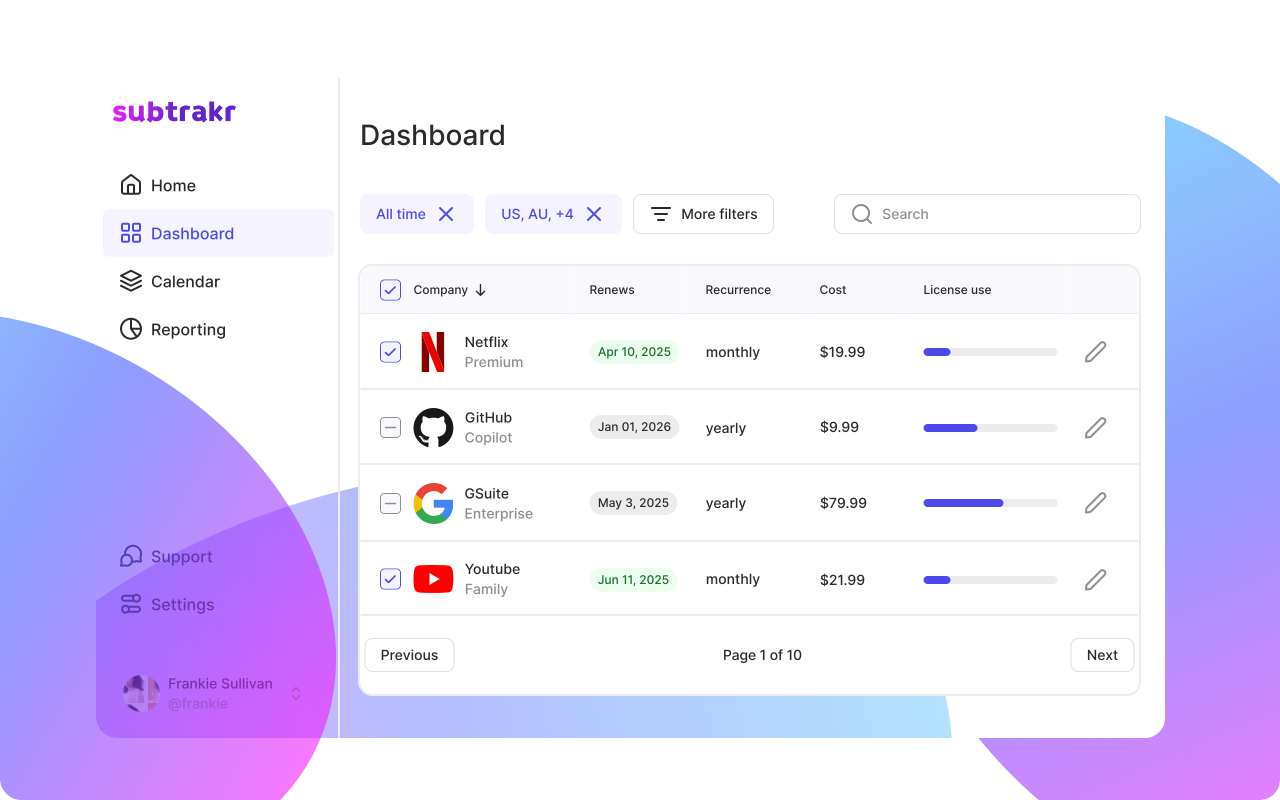
If you use Subtrakr, your recurring expense list is already the starting point. Add the monthly equivalent for any annual subscriptions, classify each item as need or want, and check the totals against your after-tax income. The picture that comes back is usually more informative than people expect.