Quick answer
Envelope budgeting for subscriptions sets hard category caps so every new signup requires a conscious trade-off instead of passive monthly drift.
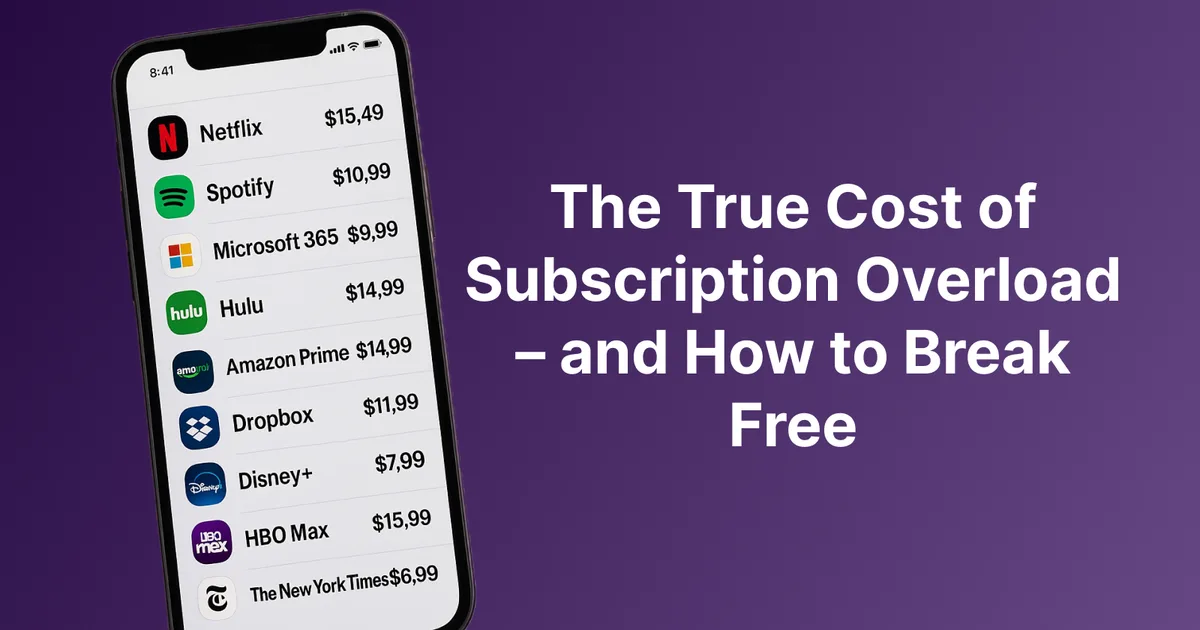
Subscription creep does not happen through one bad decision. It happens through many small, reasonable ones. Each new service is affordable on its own. None of them individually justifies a review. But the stack grows by two or three services a year, each addition slightly below the threshold of concern, until the monthly total is significantly higher than anyone consciously chose.
Stay Updated with Subtrakr
Sign up to our newsletter to get updates about Subtrakr and valuable insights about subscriptions and recurring expense management.
The envelope method addresses this at the structural level, not the transaction level. Instead of tracking every charge, you set a fixed spending limit per subscription category and treat that limit as a hard boundary. When the envelope is full, something has to come out before something new goes in.
The envelope method for subscriptions works by assigning a fixed monthly spending limit to each subscription category - streaming, SaaS tools, fitness, news, and so on. When a category reaches its limit, adding a new subscription requires removing an existing one. The system does not require detailed transaction tracking. It requires one decision at the category level each month: is this envelope still within its limit? That single constraint prevents the incremental accumulation that most people never consciously notice until the total is already substantial.
What Does "Envelope" Mean in a Subscription Context?
The traditional envelope method divides cash into physical envelopes labelled by spending category. When an envelope is empty, spending in that category stops until the next budget period. The discipline comes from the physical constraint: the money is either there or it is not.
Subscriptions do not work with cash, but the logic transfers cleanly to digital categories. A subscription envelope is a named category with a fixed monthly spending cap. Every subscription assigned to that category counts against the cap. When the total reaches the limit, the envelope is full.
Unlike variable spending categories like groceries or dining, subscription envelopes have an additional property: the spending is committed in advance rather than purchased in the moment. Once you subscribe to something, it bills automatically every cycle unless you actively cancel it. This makes the envelope constraint especially useful, because the risk is not an impulse purchase in a weak moment. It is gradual accumulation of recurring commitments that each felt like a reasonable decision at the time.
The subscription overload article describes this accumulation pattern in detail: individual charges that feel manageable combine into a total that most people would not have consciously approved if asked about it as a single number.
How Do You Set Envelope Sizes?
The most practical starting point is your current spending, adjusted for intent rather than built from an abstract ideal.
Step 1: List Your Current Subscriptions by Category
Group every active subscription into logical categories. Common ones:
- Streaming and video (Netflix, Disney+, YouTube Premium, etc.)
- Music and audio (Spotify, Apple Music, Audible, podcasts)
- News and reading (newspaper subscriptions, newsletters, magazine apps)
- Fitness and wellness (fitness apps, meditation, nutrition tools)
- SaaS and productivity tools (cloud storage, password manager, task management, note-taking)
- Gaming (game subscriptions, in-game passes)
- Lifestyle and boxes (subscription boxes, food delivery passes, etc.)
- Business and professional tools (job boards, professional software, learning platforms)
You do not need to match this list exactly. Use the categories that reflect your actual subscription structure.
Step 2: Total Each Category
For each category, add up the current monthly spend. Include monthly equivalents for annual subscriptions (annual cost divided by 12).
CURRENT CATEGORY TOTALS

Streaming / video:         ___
Music / audio:             ___
News / reading:            ___
Fitness / wellness:        ___
SaaS / productivity:       ___
Gaming:                    ___
Lifestyle / boxes:         ___
Business / professional:   ___

Total across all envelopes: ___
Step 3: Set the Envelope Limit for Each Category
You have two options here.
Option A: Set limits at current spend. Use the current total for each category as the starting envelope limit. This does not reduce spending immediately, but it prevents further growth. Any new subscription requires removing an existing one to stay within the cap.
Option B: Set limits below current spend. If a category total is higher than you would choose knowing the full number, set the limit at what you consider reasonable. The gap between current spend and the new limit represents subscriptions to remove before the end of the current month.
For most people, Option A is the right starting point. It requires no immediate cancellations and creates the structural constraint that prevents future growth. Option B is the better choice when the current spend is clearly above what you want to be paying.
The limit should be a round number that is easy to remember. A streaming envelope of $22 is less useful than one of $20 or $25. The precision matters less than the habit of checking against it.
What Are the Rules for Adding a New Subscription?
The envelope method only prevents subscription creep if the cap is treated as a hard constraint rather than a guideline. The single most important rule is:
A new subscription can only enter a category if the resulting total stays within the envelope limit.
This means one of three things must happen before you add a new subscription:
- Cancel or pause an existing subscription in the same category to create room within the limit.
- The category has unused capacity because an existing subscription was already cancelled or priced down.
- You explicitly decide to raise the envelope limit - a deliberate, conscious choice rather than a passive drift.
Option 3 is not forbidden. Life changes, income changes, and occasionally a category genuinely warrants a higher cap. The critical difference between raising an envelope limit and subscription creep is intentionality. Creep happens without a decision. Raising a limit requires one.
A useful friction point before any new subscription: check the category envelope first, not after. The question is not "should I subscribe to this?" but "does this category have room?" If it does not, the decision becomes "which existing subscription is worth less than this new one?" That reframe changes the mental calculus significantly. You are no longer evaluating the new service in isolation. You are comparing it directly against what you already pay for.
Platforms are specifically designed to make each isolated subscription decision feel small. The envelope method counters this by making every addition a comparative trade-off rather than a standalone choice.
How Do You Set Up Digital Envelopes for Subscriptions?
Physical cash envelopes are not an option for digital recurring charges, but several approaches replicate the constraint structurally.
A simple spreadsheet or note. The most accessible approach. One row per category, with the envelope limit, current subscriptions, individual costs, and total. The check is manual but takes about two minutes per category per month. A template is included below.
A dedicated bank sub-account per category. Some banks and neobanks allow you to create named savings pots or sub-accounts. Depositing the envelope amount each month and paying subscriptions from the relevant pot creates a real financial constraint: when the pot reaches zero, the envelope is empty. This approach is more friction-heavy to set up but creates a harder boundary than a spreadsheet.
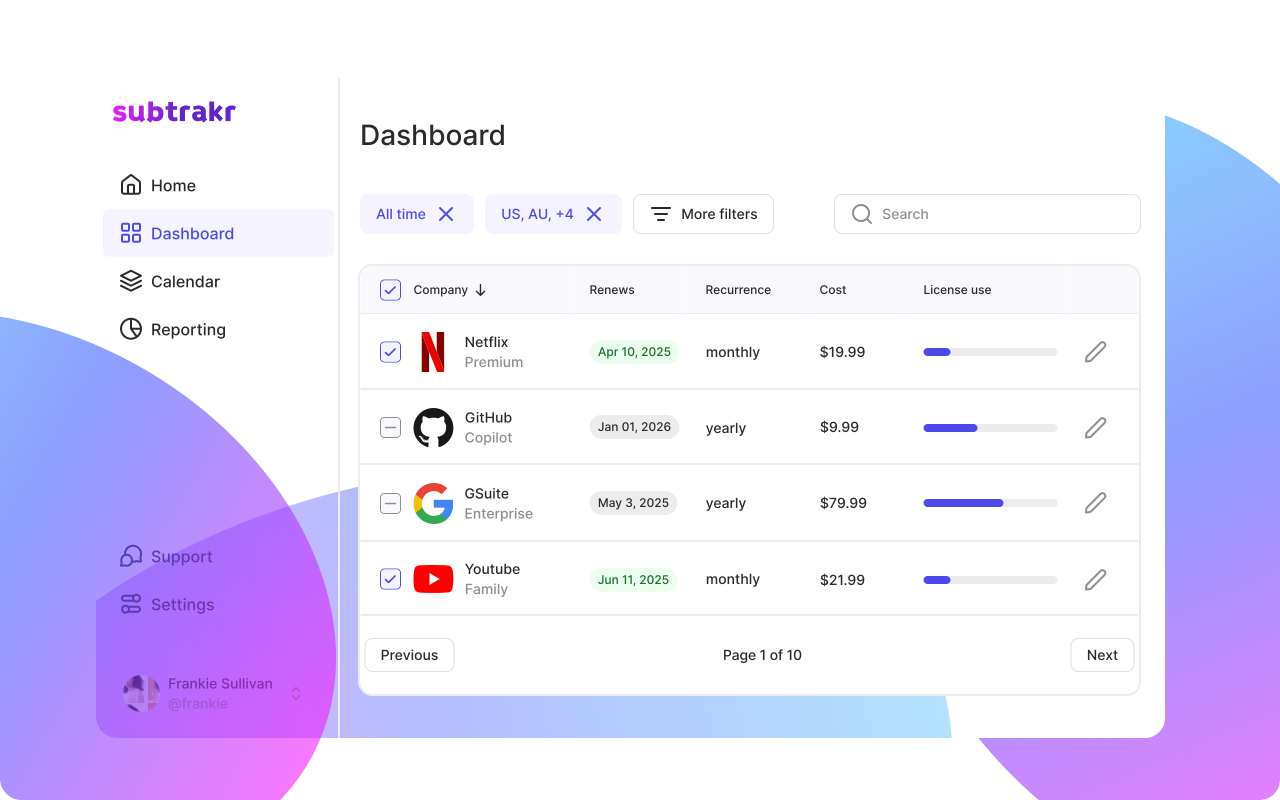
A subscription tracker. If you already track subscriptions in a tool like Subtrakr, adding category limits alongside your subscription list converts the tracker into an envelope system. The category total is already calculated; you just compare it against the limit you have set.
The method matters less than the consistency. The envelope only works if you check it. Weekly or monthly is sufficient. Daily is unnecessary.
Copy-Paste: Subscription Envelope Template
SUBSCRIPTION ENVELOPE TRACKER

Category: Streaming / Video
Envelope limit: ___
Subscriptions:
  1. _______________ : ___/mo
  2. _______________ : ___/mo
  3. _______________ : ___/mo
Category total: ___   Remaining: ___   [ ] Within limit

---

Category: Music / Audio
Envelope limit: ___
Subscriptions:
  1. _______________ : ___/mo
  2. _______________ : ___/mo
Category total: ___   Remaining: ___   [ ] Within limit

---

Category: SaaS / Productivity
Envelope limit: ___
Subscriptions:
  1. _______________ : ___/mo
  2. _______________ : ___/mo
  3. _______________ : ___/mo
Category total: ___   Remaining: ___   [ ] Within limit

---

Category: Fitness / Wellness
Envelope limit: ___
Subscriptions:
  1. _______________ : ___/mo
  2. _______________ : ___/mo
Category total: ___   Remaining: ___   [ ] Within limit

---

Category: News / Reading
Envelope limit: ___
Subscriptions:
  1. _______________ : ___/mo
  2. _______________ : ___/mo
Category total: ___   Remaining: ___   [ ] Within limit

---

TOTAL ACROSS ALL ENVELOPES: ___
OVERALL SUBSCRIPTION CAP:   ___
Status: [ ] Within cap   [ ] Over cap - action required
Monthly Envelope Review and Reset
The review is the maintenance step that keeps the system honest. Without it, price increases quietly push categories over their limits, forgotten subscriptions stay active, and the cap becomes nominal rather than real.
Monthly review takes five to ten minutes. The questions are simple.
MONTHLY ENVELOPE REVIEW

For each category:
[ ] Any new subscriptions added this month?
    If yes: category total updated?   Still within limit?
[ ] Any subscriptions cancelled or paused?
    If yes: category total updated?   Capacity noted for next addition?
[ ] Any price increases processed this month?
    If yes: new total calculated?   Still within limit?
[ ] Any annual subscriptions renewing next month?
    If yes: monthly equivalent still accurate?   Renewal confirmed or being reviewed?

For the overall cap:
[ ] Total across all envelopes within overall subscription cap?
[ ] Any category limits that feel misaligned with current usage?
[ ] Any categories where all subscriptions have low usage?
    If yes: candidate for limit reduction at next reset?
The reset moment is also the right time to apply any limit changes deliberately. If you want to raise a category limit, do it at the monthly reset with a clear reason, not mid-month in response to a new sign-up you have already committed to.
One additional check worth running quarterly rather than monthly: a usage pass. For each subscription in each envelope, confirm that you used it at least once in the past 30 days. A subscription sitting in a category that has room is still waste if it is providing no value. The envelope method caps total spending per category; it does not automatically surface low-usage subscriptions within a category that is technically under its limit. The recurring expense audit checklist provides the structure for this usage review pass.
What Are the Most Common Envelope Budgeting Mistakes for Subscriptions?
Setting limits too high to create any real constraint. An envelope limit at twice your current spend in a category provides no friction. The limit should feel slightly tight, not comfortable. If adding a new subscription never requires a trade-off, the system is not doing its job.
Treating the limit as a target rather than a ceiling. An envelope limit of $25 for streaming is not a spending goal. If your current streaming total is $14, the remaining $11 is not available capacity to fill. It is buffer against price increases and a reserve for occasional additions.
Using too many categories. Ten or twelve narrow categories creates a tracking overhead that most people will not sustain. Five to seven broader categories are easier to maintain and sufficient to prevent creep across the main subscription types.
Forgetting to update envelopes after price increases. A streaming service that raised its price by $2 this month has pushed its category total up by $2 without any new subscription being added. If the envelope check only happens at sign-up and not monthly, the drift goes unnoticed. Price increases are the most common reason an envelope slips above its limit without any active decision.
Not applying the trade-off rule consistently. The system only prevents creep if every addition triggers a comparison against the envelope limit. One exception creates a precedent. The habit of checking the envelope first needs to be applied every time, not just when it is convenient.
FAQ
How is the envelope method different from just having a subscription budget?
A subscription budget sets a total spending target and checks against it periodically. The envelope method goes further by creating category-level constraints with an explicit trade-off rule: new additions require removals. It is more granular and creates more friction at the point of sign-up, which is where the creep starts.
What if a subscription sits across two categories, like a bundle covering streaming and music?
Assign it to the primary category - whichever service you value more. Note the secondary benefit in that category's list. Avoid splitting the cost across two envelopes, as it makes both totals harder to interpret accurately.
Should I include annual subscriptions in the monthly envelope total?
Yes, at their monthly equivalent. A $96 annual subscription belongs in the envelope at $8 per month. This keeps the envelope total accurate across all twelve months, not just the one where the charge processes.
How do I handle a price increase that pushes a category over its limit?
You have three options: cancel or downgrade the service that increased, remove a different subscription in the category to create room, or deliberately raise the envelope limit. The third option is valid but should be a conscious choice, not a passive adjustment.
Can this method work alongside zero-based budgeting or the 50/30/20 rule?
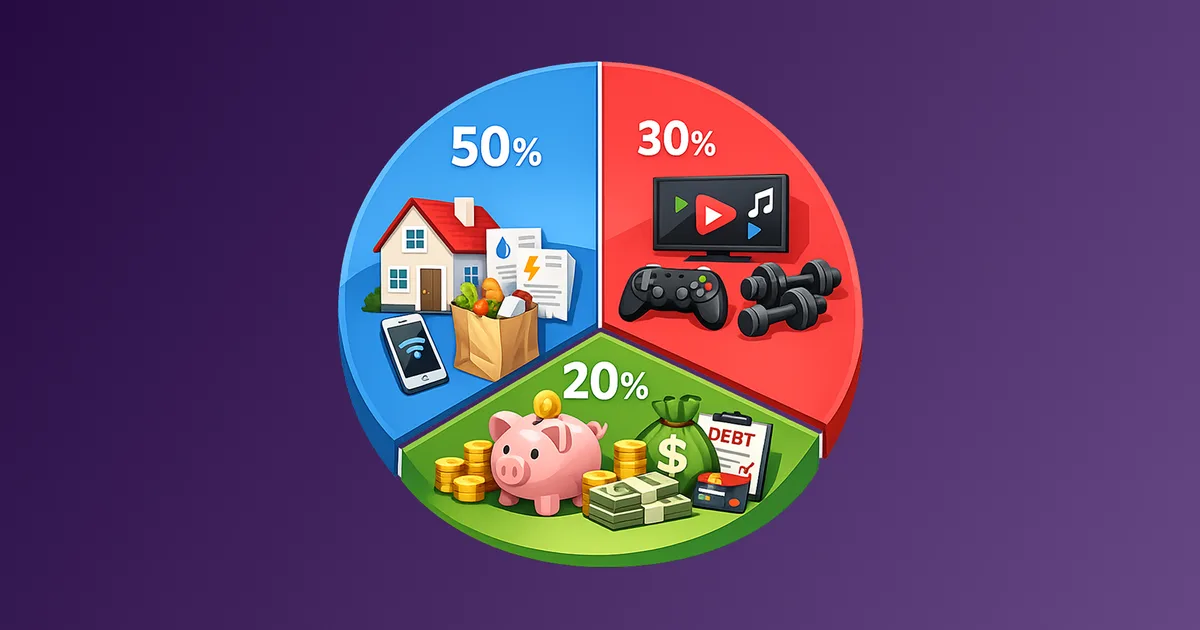
Yes. The envelope method operates at the category level within your wants or discretionary allocation. It is compatible with any overall budgeting framework.
What is a reasonable total subscription cap across all envelopes?
There is no universal answer, but a useful reference point is 5 to 8 percent of after-tax monthly income for discretionary subscriptions (excluding tools required for work). Above that range, the cumulative cost tends to register as meaningful in most household budgets. The benchmark data in How Much of Income Do People Spend on Recurring Expenses? provides more context on where different household types typically land.
Next Step
Pick the subscription category where your spending feels least intentional and set an envelope limit for it today. You do not need to build the full system at once. One category with a defined cap and a trade-off rule is already more structure than most people have, and it starts producing decisions the moment a new subscription in that category becomes tempting.
Once the first envelope feels natural, add the rest at the next monthly review.