Quick answer
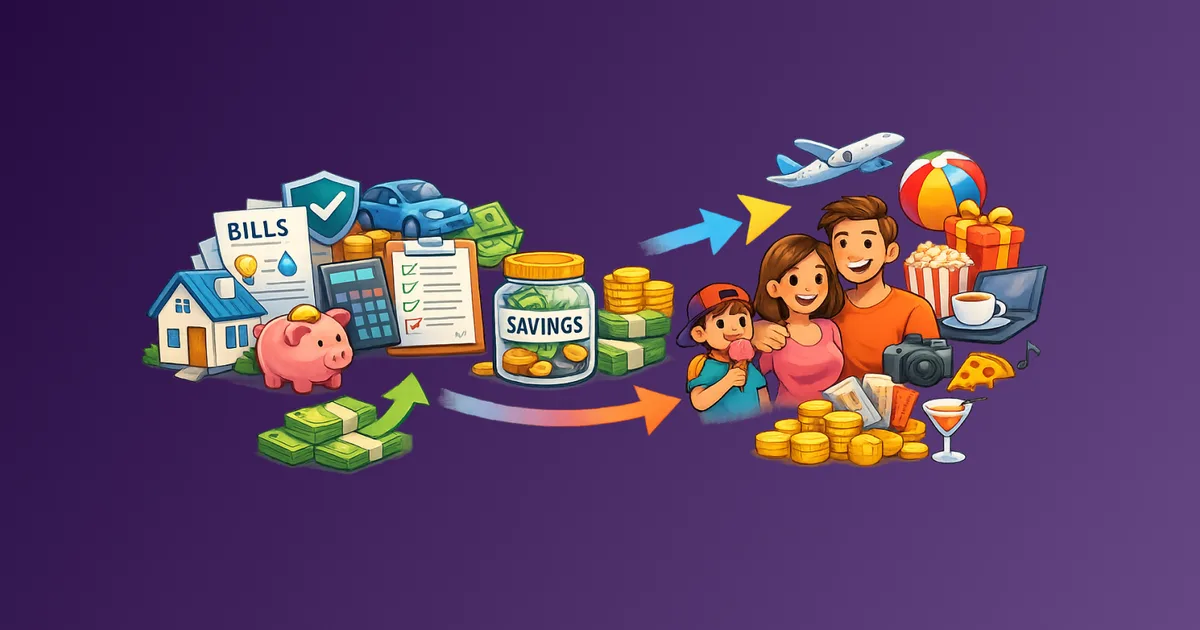
Budgeting doesn't have to be complicated. Cover your essentials and goals first, then enjoy whatever's left. This refreshingly simple approach works great for busy families and freelancers with irregular income, giving you a clear picture of your true spending money each month – guilt free.
Budgeting doesn't have to be complicated. In fact, there's a refreshingly simple approach that works great for busy families and freelancers with irregular income. It boils down to one idea: cover your essentials and goals first, then enjoy whatever's left. We often underestimate how much those monthly bills and subscriptions quietly add up, so this method tackles them head-on. The result? You get a clear picture of your true spending money each month, guilt free.
Stay Updated with Subtrakr
Sign up to our newsletter to get updates about Subtrakr and valuable insights about subscriptions and recurring expense management.
The "Pay Essentials, Then Play" Method
Here's how this practical budgeting approach works:
Income Arrives: Start with your total take-home income for the month (or whatever pay period you use). This is the pool of money we're working with.
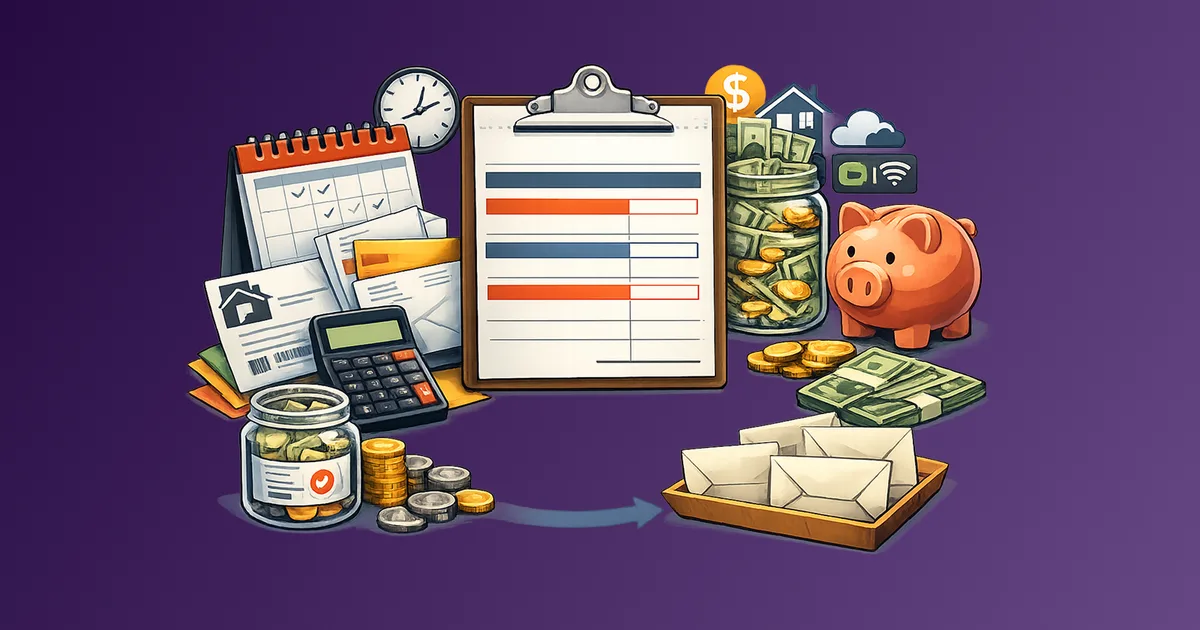
Pay Recurring Expenses First: List all your must-pay bills and living costs and subtract them from your income right away. These are your unavoidable recurring expenses – things like rent or mortgage, utilities, insurance, loan payments, and subscriptions you use regularly. Essentially, these fixed costs are your top priority and must be paid first. It can help to also set a fixed "cost of living" allowance for essentials that aren't exact bills (groceries, gas, etc.), treating them like recurring expenses. By paying these essentials upfront (whether literally paying the bill or earmarking the money for them), you ensure all the basics are covered.
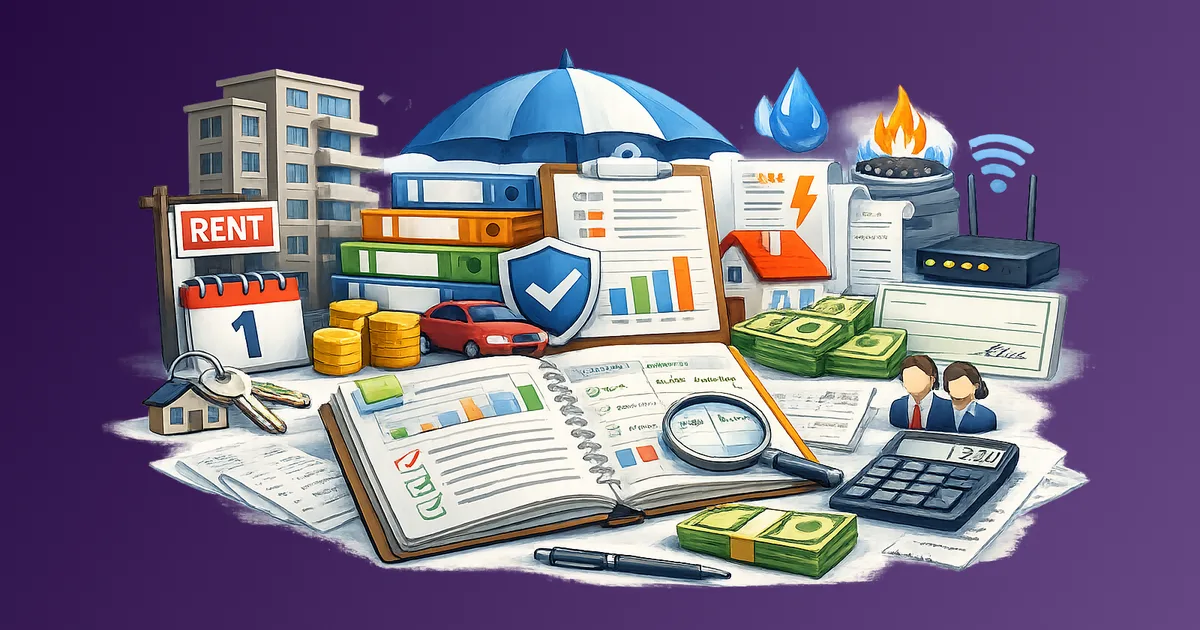
To make sure that list is complete—including payroll and annual insurance, not just subscriptions—walk through How to Track Non-Subscription Recurring Expenses: Rent, Insurance, Utilities, and Payroll once, then plug the monthly total into this method.
Treat Your Savings as a Bill: Decide on an amount you want to save each month – for an emergency fund, big purchase, or other goal – and count your savings as a recurring expense too. In other words, pay yourself (your future self!) by moving that money into savings as soon as you get paid. A proper budget should always include a savings category, and a smart trick is to transfer your savings immediately when income hits so you can only spend what's left. This could also include extra debt payments or investments – anything that counts as "optional" but important for your financial goals.
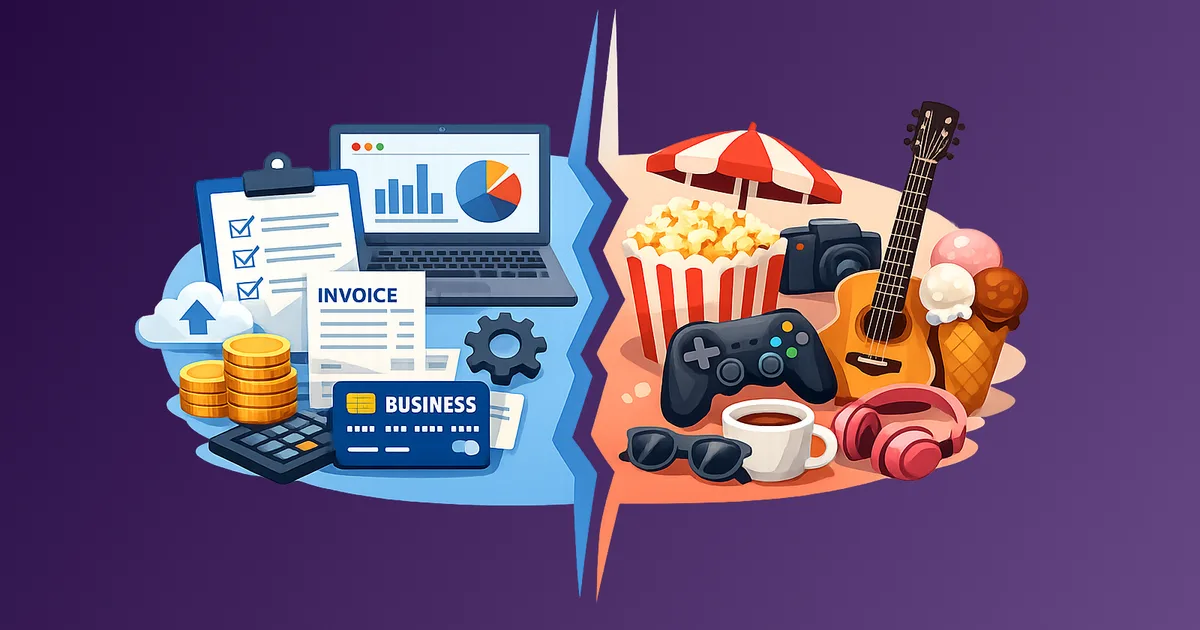
Enjoy Your True Discretionary Spending: After taking care of steps 2 and 3, whatever money remains is your true discretionary budget. This is the money for non-essentials – the fun stuff, dining out, hobbies, entertainment, that daily coffee habit or random Amazon gadget. In our approach, this leftover is clearly separated from the bills and savings, so you know exactly how much you can spend freely until next month. If it runs out, you simply stop discretionary spending (or get creative to earn a bit more) until the next cycle. The beauty is that you can spend this portion guilt-free, knowing you've already handled your obligations and future goals. If you want cleaner category logic for what sits in discretionary vs. protected recurring costs, use Subscription Categories That Actually Work: A Tagging System for Clarity and Cuts.
Why this works: You're essentially drawing a line between "money that's spoken for" and "money that's truly extra." By prioritizing fixed needs and savings, you avoid the common pitfall of overspending on wants and then coming up short for bills. It's budgeting on easy mode – if your income is higher one month, your fun money will be higher; if it's lower, you automatically tighten the belt on discretionary spending. This makes it a flexible fit for freelancers with variable income and families alike. (No complex budget rework needed when income changes – you always cover the essentials first, then adjust the fun as needed.)
Example: Monthly Budget Breakdown
Let's look at a simple example of this method in action. Suppose a family brings in $5,000 in net income per month. They plan out their recurring expenses and savings like so:
| Category | Amount |
|---|---|
| Monthly Income | $5,000 |
| Rent (recurring fixed) | $1,500 |
| Utilities (recurring fixed) | $300 |
| Subscriptions (recurring fixed) | $100 |
| Groceries & Essentials (allowance) | $600 |
| Savings (automatic transfer) | $500 |
| Total Recurring & Savings | $3,000 |
| Discretionary "Fun" Money Left | $2,000 |
In this scenario, the family allocates $3,000 to cover all their necessities and a $500 savings goal. After "paying" those, they have $2,000 left in true discretionary funds. That $2,000 is theirs to spend on eating out, shopping, or other wants without worry. They know all bills are paid and they've paid themselves (savings), so that leftover is guilt-free spending money. If they burn through the $2,000 before month-end, they'll recognize it's time to pump the brakes on non-essentials until the next paycheck. On the flip side, if any of the $2,000 is left at the end of the month, they could roll it into next month's fun budget or add it to savings. 👍
Notice how straightforward this is: you're essentially doing a mini "income minus expenses" calculation one time each month. It's almost like a reverse budget – instead of painstakingly planning every dollar for every little category, you ensure the important things are covered and then see what amount is left for everything else. Many people find this far easier to stick with, since you don't have to track every latte or movie rental – as long as your discretionary spending stays under that leftover amount, you're on track.
And if you discover that your leftover isn't as much as you'd like, that's a useful reality check. You might look for ways to cut some recurring costs or scale back a bit of the "allowance" amounts. (Often those "superfluous" expenses like rarely used subscriptions, impulse buys, or daily coffee runs can sneak into our lives. Keeping them in the discretionary bucket ensures they don't jeopardize your rent or savings goals.) Over time, you may find opportunities to trim bills or save more, which directly increases your fun money. It's a nice motivator to "stop wasting money on unnecessary payments" and keep your spending focused on what truly improves your life.
Quick Compare: How Does This Differ from Other Budgeting Methods?
There are many ways to budget, and no one method fits all. Our approach above is all about simplicity: cover the big stuff first, then no need to micromanage the rest. For context, here's a brief rundown of a few popular budgeting systems (we'll explore these in detail in future posts):
Zero-Based Budgeting: This method gives every dollar a job so that income minus expenses equals zero. You plan out all spending in detail, including savings, before the month starts. It offers maximum control and intentionality, but it can be time-consuming since you must track everything closely. For a practical setup that starts with recurring bills (instead of daily transaction micromanagement), read Zero-Based Budgeting for Recurring Bills: A Practical Guide for Busy People.
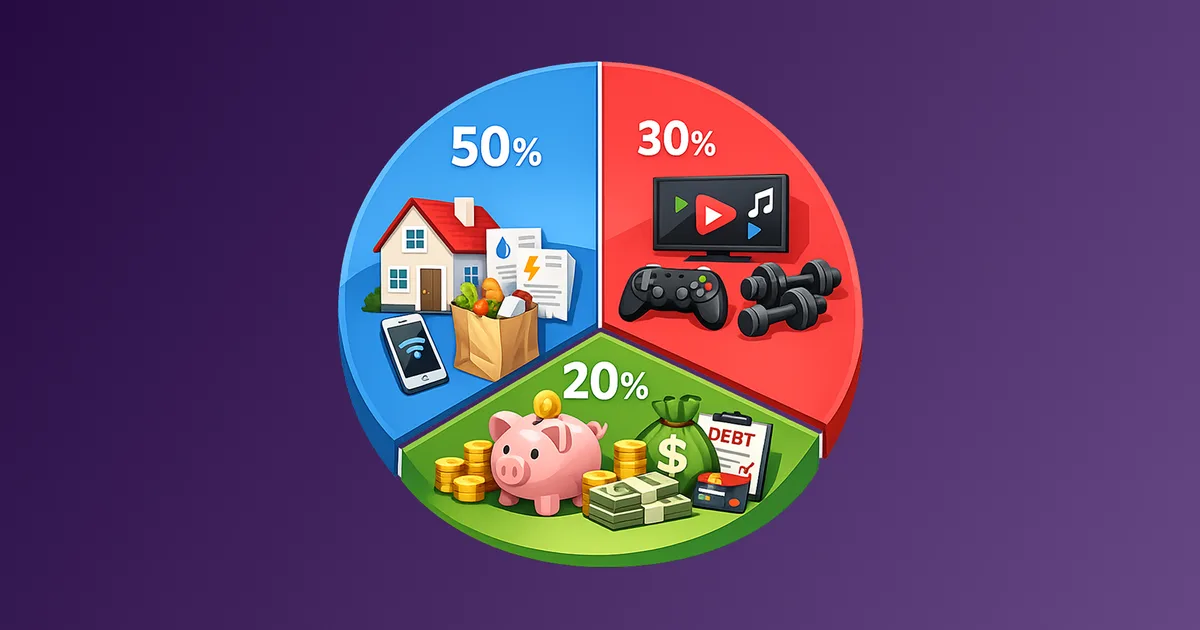
50/30/20 Rule: A famous guideline budget that splits your after-tax income into 50% for needs, 30% for wants, and 20% for savings (or debt payments). For example, if you make $4,000, you'd aim to use $2,000 on must-haves, $1,200 on nice-to-haves, and $800 on savings. It's very easy to understand and great for a quick check on your spending balance. However, in high cost-of-living areas or with irregular income, those exact percentages can be tough to follow.
If you want a percentage-based approach that starts from recurring expenses and subscriptions (so the buckets reflect what is already committed), use The 50/30/20 Rule for Recurring Expenses: A Subscription-Friendly Version.
Pay Yourself First: This approach flips the script by prioritizing savings above all else. You decide on a certain amount (or percentage) of your income to invest or save each month and set that aside immediately, before paying any other bills or expenses. The rest of your money is then available for bills and spending. This is fantastic for consistently growing savings – essentially, our method incorporates this idea by treating savings as a non-negotiable expense. The downside is it doesn't by itself help you track where the remaining money goes; it just ensures your savings goal is met first.
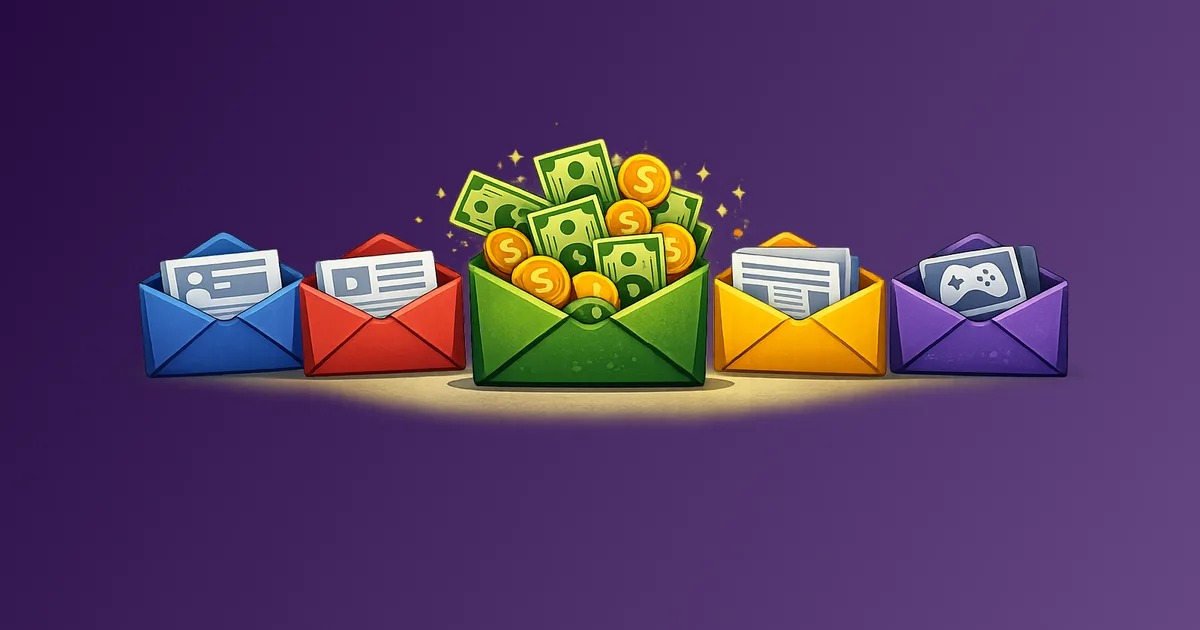
Envelope Method: A classic system where you allocate set amounts for each spending category by using envelopes (literal cash envelopes or digital budgeting app folders). For example, $500 for groceries, $100 for entertainment, etc. Once an envelope is empty, you stop spending in that category. This method gives you very clear boundaries and can be great for curbing overspending - it's hard to bust your budget when you physically see the envelope is empty! The challenge is it requires discipline to stick to each category limit, and using cash or manual tracking can feel a bit cumbersome in the modern era of online shopping and digital payments. For a version built specifically for recurring subscriptions that complements the pay-essentials-first approach, use Envelope Budgeting for Subscriptions: A Simple Way to Stop Subscription Creep.
Each of these methods has its pros and cons, and the best one for you depends on your personality and situation. There's no one "right" way – some people even mix methods (for example, using the 50/30/20 rule as a rough guide while also doing a bit of envelope-style cash control for dining out). The good news: all these systems share the same goal of improving your financial awareness. We'll dive deeper into zero-based budgeting, the 50/30/20 rule, paying yourself first, and envelope budgeting in future posts, so stay tuned if one of those piqued your interest!
Using Tools like Subtrakr to Simplify Your Budget
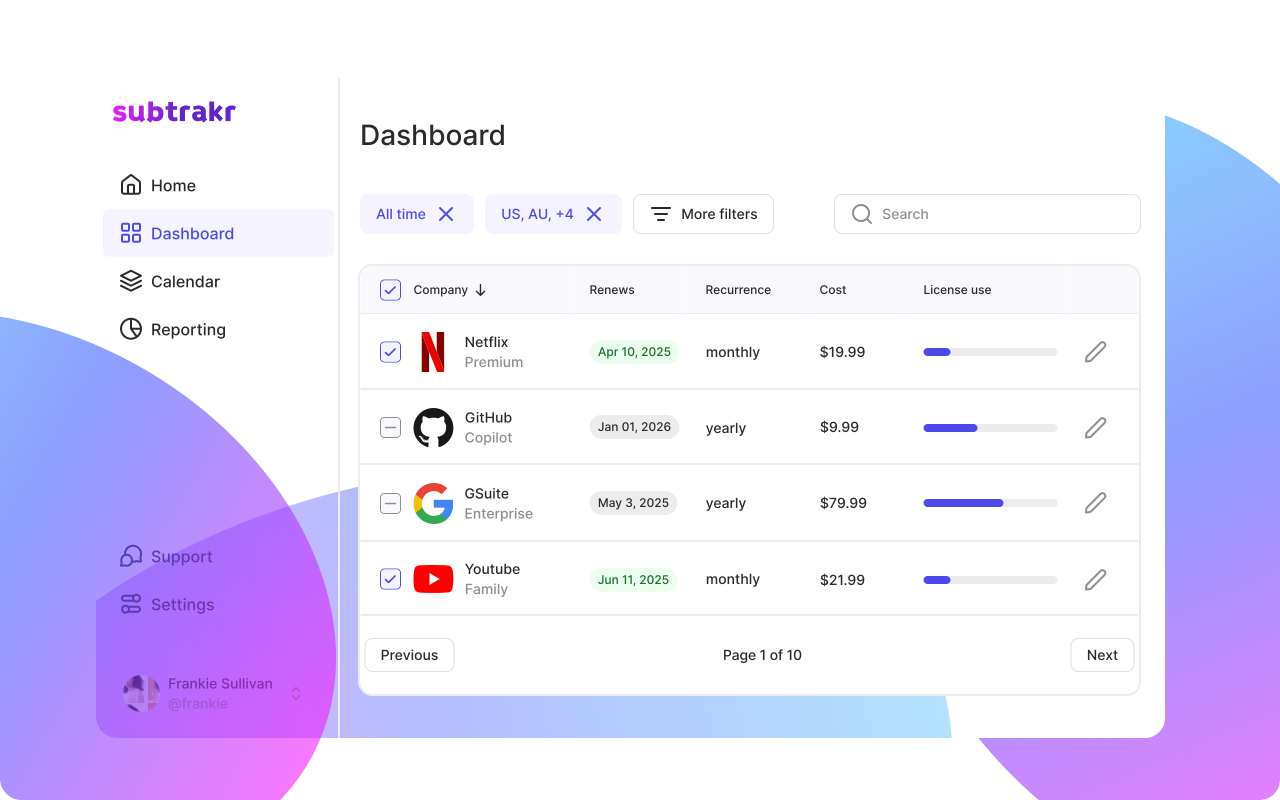
One of the toughest parts of budgeting is keeping track of all those recurring bills and subscriptions. It's easy to forget an annual fee or misjudge how much your utilities or app subscriptions are siphoning from your income. This is where a tool like Subtrakr can be a game-changer for our "pay essentials first" approach. Subtrakr is an app designed to track and manage all your recurring expenses automatically, giving you a one-stop view of your fixed costs. In practice, it can help you in a few key ways:
Recurring Expense Tracking
Instead of trying to remember every bill in your head (or rebuilding your budget spreadsheet every month), you add your recurring expenses to Subtrakr once and let the app do the heavy lifting from there.
- You enter recurring expenses manually: subscriptions, rent, insurance, phone plan, kid-related costs, anything that repeats.
- Subtrakr calculates everything automatically: totals per month, upcoming costs, how much your recurring expenses consume from your income.
- You get a single dashboard view: not "auto-discovered" expenses, but a clean summary of the recurring costs you've defined, always up to date.
This is especially useful for families with lots of small recurring payments and freelancers who want a stable baseline. And yes, it still helps you spot "quiet leaks" (like subscriptions you forgot you had) because once they're listed, they become impossible to ignore.
Smart Categorization
The app lets you organize and tag expenses by type (e.g. Household, Work, Entertainment) to categorize your spending at a glance. By distinguishing which recurring costs are personal vs. business, or essential vs. optional, you get insight into where your money is going. For example, you could tag Netflix as "Entertainment – discretionary" and your internet bill as "Utilities – essential." This categorization mirrors our budget approach: it separates the "must-pays" from the rest. Over time, you can easily spot if a certain category of recurring spending is eating into your budget too much.
Know Your True Discretionary Budget
Most importantly, a tool like Subtrakr helps you identify how much of your income is already committed. When you see that, say, $3,000 of your monthly money is taken up by recurring obligations, it becomes crystal clear that anything beyond that is your discretionary money. Subtrakr basically shines a light on your "leftover" by doing the math for you. It encourages you to stop wasting money on unnecessary payments and keep your spending focused on what matters. By having all recurring expenses accounted for and summed up, you can instantly gauge your true spending power for fun things each month. No more guessing or being shocked by how little is left in your account—the app's tracking brings financial clarity.
In short, Subtrakr acts like a helpful sidekick for this budgeting method. It automates the tracking of recurring expenses, so you can confidently set aside money for them (and for savings) knowing you didn't forget anything. It notifies you of upcoming bills or renewals, helping avoid surprise charges. And by categorizing and visualizing your expenses, it empowers you to make informed decisions—maybe you'll realize you're paying for three streaming services but only use one, and cut two of them to free up cash for other things. Whether you're managing a family budget or a freelancer's business expenses, having full visibility and control over your ongoing costs means less hassle and more peace of mind.
Wrapping Up
This "income -> pay essentials (and yourself) -> enjoy the rest" strategy is a simple yet effective way to budget without feeling bogged down. It ensures that the important stuff is taken care of first, treats your savings like a priority, and then gives you permission to spend what's left however you want. For families, it can take away the stress of constantly second-guessing every purchase – you'll know exactly how much is okay to splurge. For freelancers, it provides a cushion for those variable income swings by always covering the basics first.
Give this approach a try with your own finances. Set up your fixed expenses and savings, check your leftover amount, and see how it feels to have a clear cap on the fun spending. You might be surprised how liberating it is to have that discretionary number defined – it turns spending into a guilt-free experience, as long as you stay within that limit.
And remember, there's no need to get it perfect on the first go. Budgeting is a learning process. Over time you can adjust your savings amount or trim expenses to reach the balance that feels right. The key takeaway is that by front-loading your priorities, you'll make the most of your money and truly enjoy the remainder. Happy budgeting! 🎉