Quick answer
Family plans only save money when seats are used, eligibility rules align, and renewals and price changes are tracked. Use the break-even method to decide fast.
A family plan looks like an obvious win on paper. Pay a little more than a single subscription, split the cost across several people, and everyone comes out ahead. In practice, the math only works when all the seats get used, the people sharing are actually eligible, and someone is paying attention to what the plan costs after the first year.
Stay Updated with Subtrakr
Sign up to our newsletter to get updates about Subtrakr and valuable insights about subscriptions and recurring expense management.
When those conditions are not met, a family plan can cost more than individual subscriptions would have.
A family plan saves money when the per-person cost after splitting falls below the individual plan price, and when all seats are actively used. The break-even point is straightforward to calculate. The harder part is maintaining the conditions that made the plan worthwhile at sign-up: active participation from all members, compliance with household or eligibility rules, and a review cadence that catches price changes and unused seats before they quietly erase the savings.
How Do You Calculate Whether a Family Plan Actually Saves Money?
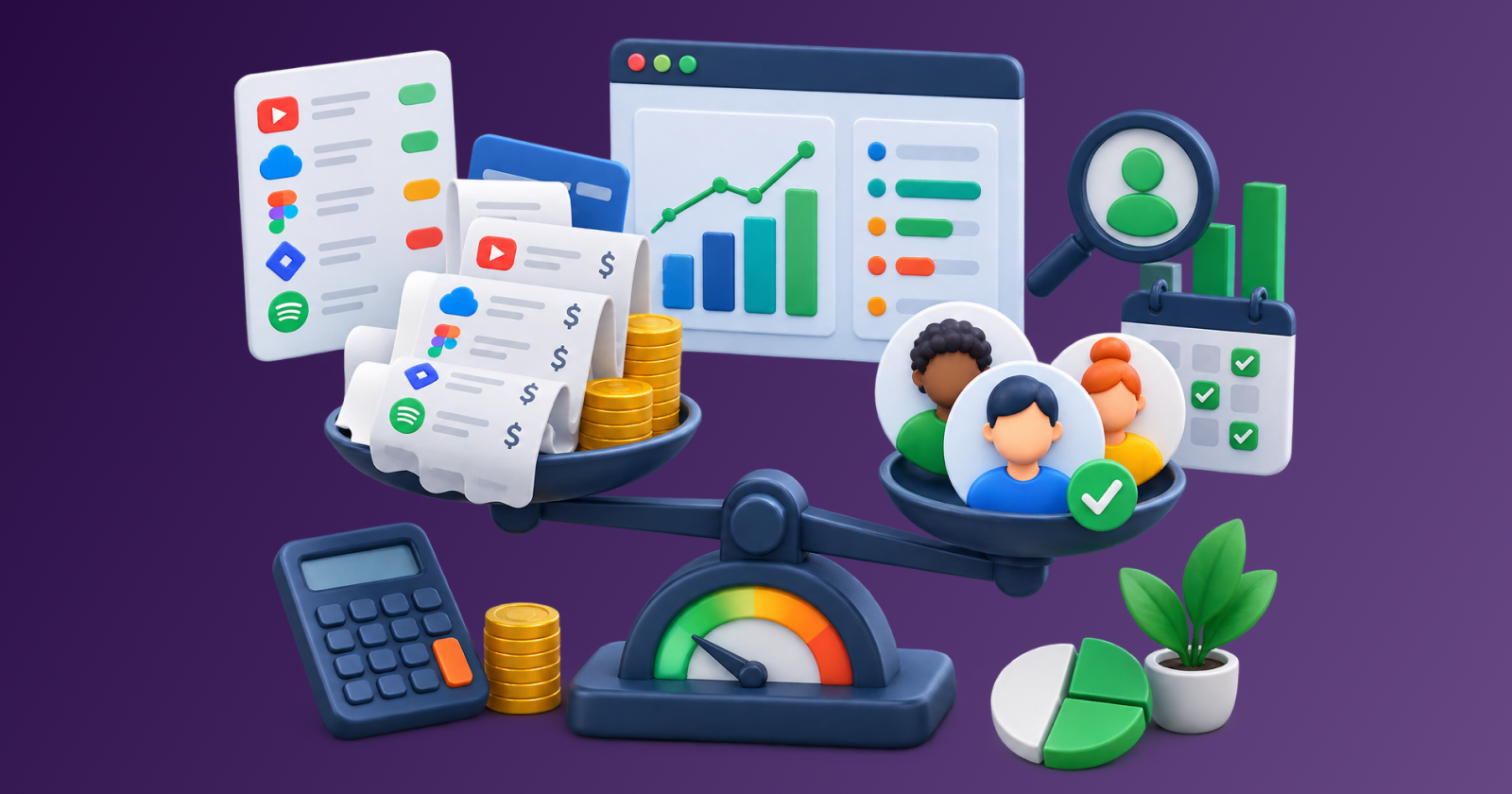
The break-even formula is simple. Divide the family plan monthly cost by the number of people actively using it. If the result is lower than the individual plan price, the plan saves money. If it is equal to or higher, it does not.
Break-even formula:
Family plan monthly cost / active users = cost per person
Compare to: individual plan monthly price
Example:
| Plan | Monthly Cost | Active Users | Cost Per Person |
|---|---|---|---|
| Streaming family plan | $22.99 | 4 | $5.75 |
| Individual plan | $15.99 | 1 | $15.99 |
| Streaming family plan | $22.99 | 2 | $11.50 each (if both paid separately) |
At four active users, the family plan produces clear savings. At two active users, the cost per person rises to $11.50.
The calculation changes every time a member stops using the service. Run it again whenever the group composition changes, not just at sign-up.
Which Subscription Types Offer the Best Family Plan Value?
Not all family plan structures are equal. Savings potential varies significantly by category.
High savings potential
Streaming platforms with family plans tend to offer the largest per-person discount, especially when four to six seats are filled. Cloud storage family plans (Apple iCloud+, Google One) are among the most efficient: the per-person cost at full occupancy is typically a fraction of individual plan pricing, and the product is genuinely shareable with no conflict between users.
Password managers with family plans (1Password, Bitwarden) are another high-value category. The product works independently for each user, there is no usage conflict, and the per-person cost is very low at full plan capacity.
Moderate savings potential
Music streaming family plans (Spotify, Apple Music, YouTube Music) provide clear savings when three or more members use them actively. At two members the gap narrows. At one active user, an individual plan is cheaper.
Lower or inconsistent savings
Software and SaaS family or household plans vary widely. Some offer genuine per-seat discounts. Others bundle features that only one person in the household will use. Evaluate these case by case rather than assuming the family tier is the better deal.
What Are the Most Common Pitfalls of Family Plans?
Underused Seats
This is the most frequent source of family plan waste. A plan bought for four people delivers full value only when four people are using it. When one person stops using the service, the cost per active user rises immediately. When two stop, the economics often flip entirely.
The fix is a short check at each quarterly review: confirm which seats are active. If a member has not used the service in 30 days, treat the seat as effectively empty for the purposes of the calculation.
Eligibility Rule Friction
Many family plans define "family" in ways that do not match how people actually share subscriptions. Common restrictions include requiring members to share the same household, limiting the number of simultaneous streams outside the home address, or requiring a primary account holder to be located in a specific country.
Platforms have tightened enforcement on these rules in recent years, particularly for streaming services. Before consolidating several people onto a plan, verify current eligibility rules, not the ones that applied at sign-up.
Silent Renewals After Composition Changes
Family plans often renew annually. If the group that justified the plan has changed since the last renewal, the new billing cycle starts without anyone reviewing whether the economics still hold.
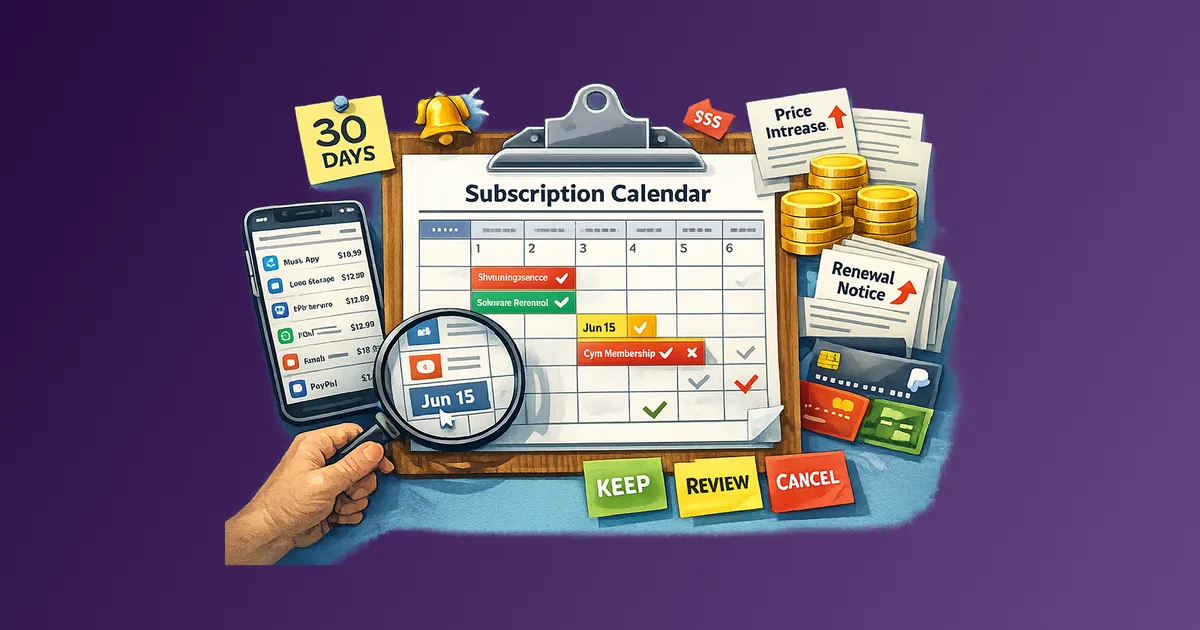
This is one of the cleaner use cases for a subscription renewal calendar: set a review reminder seven days before each annual family plan renewal, specifically to recheck active users and recalculate cost per person before the charge processes.
Price Increases That Change the Break-Even Point
Family plan prices increase too. A plan that was clearly cheaper at the per-person level when it launched may now sit close to or above the individual plan price after one or two annual increases.
Run the break-even formula again whenever a price increase notification arrives. Do not assume the original savings still hold. If you want a playbook for that moment, use What to Do When a Subscription Price Increases.
How Do You Set a Family Plan Audit Cadence?
Family plans deserve a slightly different review rhythm than individual subscriptions because they involve multiple people and often run on annual billing cycles.
- Monthly: Quick check that all seats are still active. This takes two minutes and prevents slow drift of paying for unused members.
- Quarterly: Recalculate cost per active user. Compare against current individual plan pricing. Confirm eligibility rules still apply to all members. Use the recurring expense audit checklist if you want a structured workflow.
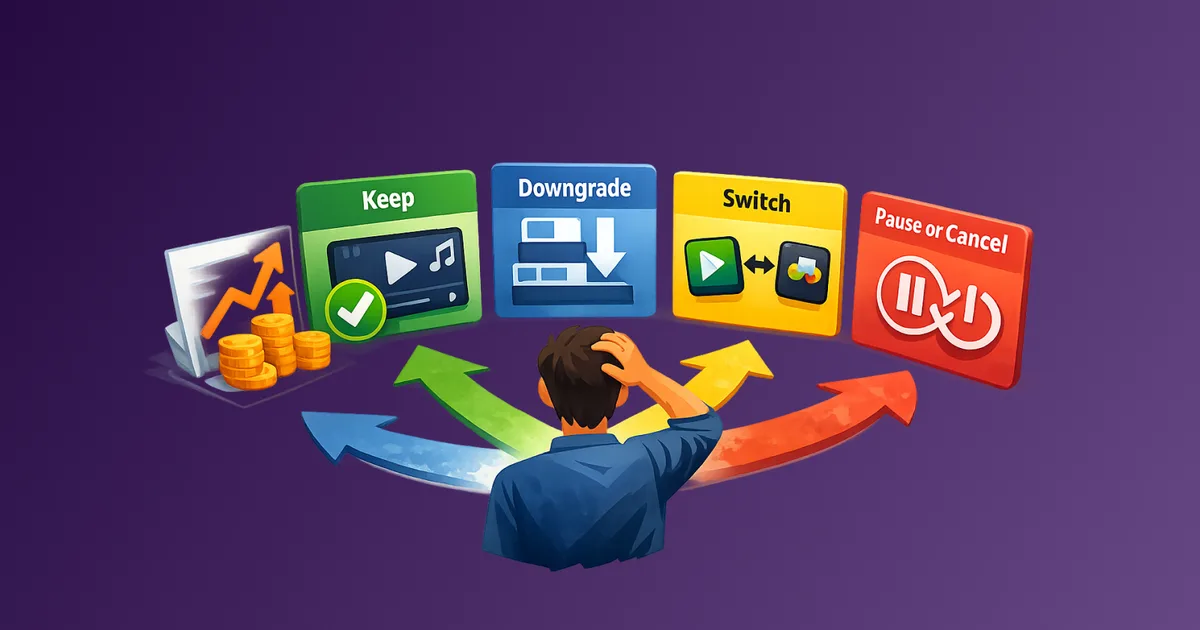
- Before each annual renewal: Full review. Check price changes. Reconfirm member participation. Decide whether to renew, downgrade, or split back into individual plans.
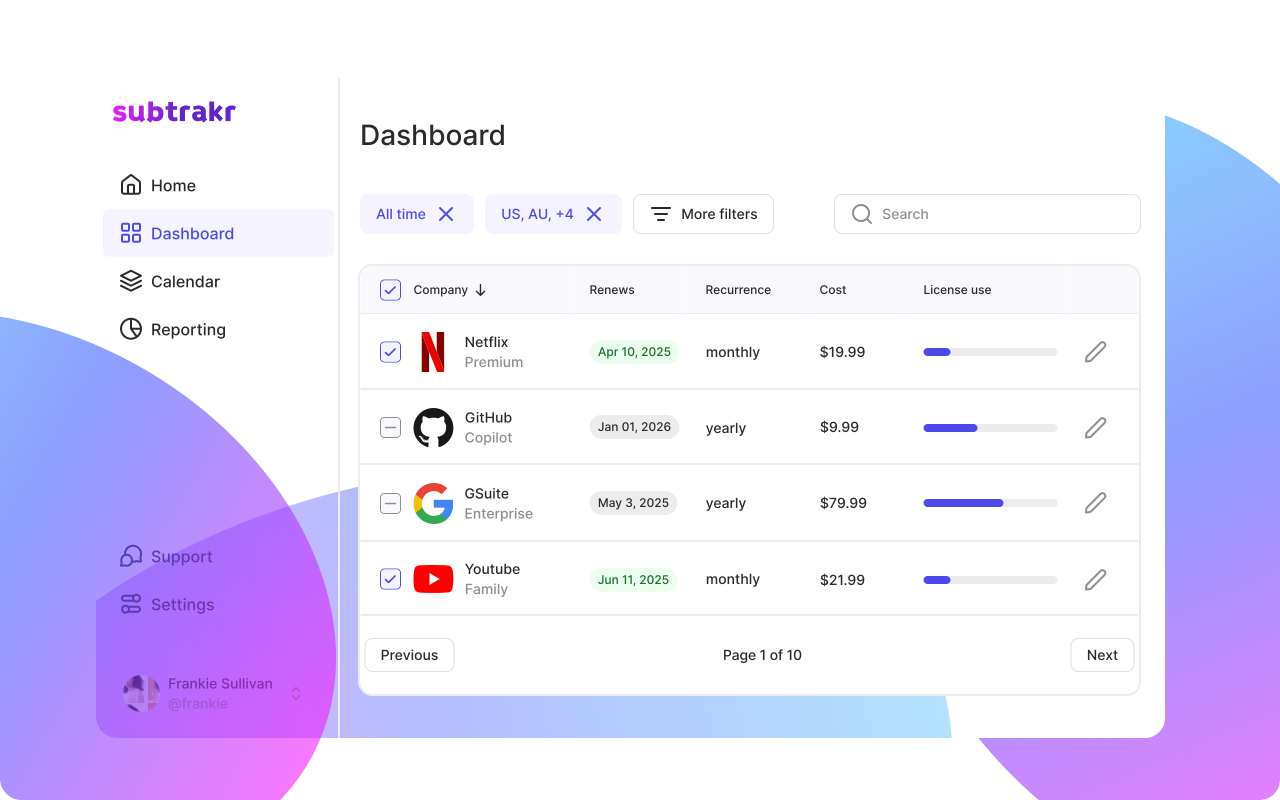
For households managing multiple shared plans, tracking them alongside individual subscriptions in a single view simplifies audits significantly.
What Are the Privacy and Access Considerations With Family Plans?
Sharing a plan means sharing more than a cost. Depending on the service, other members may have visibility into your usage, history, or account activity.
- Watch list and listening history: Some platforms have shared recommendation engines or activity feeds. Profile separation helps but is not always complete.
- Purchase and payment access: App store family sharing can extend purchasing permissions. Verify what is active and whether approvals are required.
- Account recovery and notifications: Some platforms send billing and security emails to multiple members. Decide who manages the account and how communications are handled.
- Data and profile export: If the plan ends and members need to migrate, check whether per-profile export is supported.
None of these are reasons to avoid family plans. They are configurations worth reviewing before adding members, not after.
Step-by-Step: Evaluating a Family Plan Before Signing Up
Time required: 10 to 15 minutes
- List the people who would use the plan. Include only those who will actively use the service, not those who might use it eventually.
- Verify current eligibility rules (household definition, location requirements, simultaneous use limits).
- Run the break-even calculation. Divide the family plan price by the number of confirmed active users and compare to the individual plan price.
- Check the billing cycle. If annual, factor commitment risk if members drop off mid-year.
- Review privacy settings and what is shared between profiles.
- Decide and document. Log the plan in your tracker with active members, monthly cost, cost per person, and renewal date.
- Set a pre-renewal reminder. Seven days before renewal, rerun steps 1 through 3.
Copy-Paste: Family Plan Evaluation Template
FAMILY PLAN EVALUATION

Service: _______________
Family plan price (monthly): ___
Individual plan price: ___

Active members:
1. _______________ (usage: active / occasional / unknown)
2. _______________ (usage: active / occasional / unknown)
3. _______________ (usage: active / occasional / unknown)
4. _______________ (usage: active / occasional / unknown)

Break-even calculation:
Family plan cost / active members = ___ per person
vs. individual plan: ___
Savings per person: ___   Total savings: ___

Eligibility check:
[ ] Same household required?
[ ] Location restrictions apply?
[ ] Simultaneous stream / use limits confirmed?

Privacy review:
[ ] History and usage separation confirmed
[ ] Purchase permissions reviewed
[ ] Account notification routing decided

Billing:
[ ] Monthly / Annual (circle one)
[ ] Renewal date logged: ___
[ ] Pre-renewal reminder set: ___
What Are the Most Common Family Plan Mistakes?
Counting future members as active
A plan built for four people where two have not joined yet is a two-person plan paying four-person prices. Count confirmed active users only.
Not re-evaluating after a member leaves
When someone stops using the service, the economics change immediately. One departure can shift a clearly beneficial plan into a marginally better arrangement. Two departures typically make individual plans cheaper.
Ignoring the annual billing commitment
Monthly family plans allow quick exits when the group changes. Annual plans lock in the rate but also the commitment. Weigh flexibility against discount before choosing. Monthly vs Annual Billing: Which Saves You More? covers this trade-off in detail.
Assuming the plan is still beneficial after a price increase
Family plan prices increase independently of individual prices. Recalculate after every price change notice.
Mixing the plan into a household budget without tracking it separately
A family plan paid by one person but used by several can obscure true per-person cost. Tracking it as a shared line item with a noted cost-per-person keeps the picture accurate. A Simple Budgeting Hack for Families and Freelancers covers a simple way to structure recurring expenses in a household budget.
FAQ
When does a family plan stop saving money?
When cost per active user equals or exceeds the individual plan price. Run the break-even formula whenever the group size changes or a price increase notice arrives.
Can two people justify a family plan?
Sometimes. Divide the family plan price by two and compare to the individual price. For some services, two people is enough. For others, you need three or four active members to break even.
What happens if a family plan member stops using the service?
Cost redistributes across fewer people. Recalculate immediately. If per-person cost rises above the individual plan price, switching back to individual plans can be the better option.
Are family plans worth it for annual subscriptions?
Yes, if you are confident all members will stay active for the full year. The risk is paying for unused seats for months before renewal.
How do I track a family plan alongside individual subscriptions?
Log the family plan as a single line item with a note showing active members and cost per person. Update member count whenever the group changes so the per-person figure stays accurate.
Should one person pay and others reimburse, or should everyone pay a share?
Either works. The main requirement is that reimbursement happens consistently. If it tends to lapse, one payer plus tracking as a shared household expense is simpler.
Next Step
Pick one family plan you currently pay for and run the break-even formula today. Confirm how many seats are actively used. If per-person cost is still below the individual plan price and members are engaged, the plan is working. If not, you now have the numbers to make a different decision.
If you track subscriptions in Subtrakr, add the active member count and cost-per-person as a note to your family plan entry. It takes 30 seconds and makes every future audit faster.