Quick answer
Prices might not change, but perks quietly vanish. Have you noticed your favorite app or streaming service feeling a bit lighter lately? This isn't your imagination. It's a form of stealthy inflation in the digital world, essentially "shrinkflation" for the digital age. Companies are finding sneaky ways to give you less for your money without technically raising prices.
Prices might not change, but perks quietly vanish. Have you noticed your favorite app or streaming service feeling a bit lighter lately? Maybe your cloud storage doesn't hold as much, or that subscription doesn't include the extras it once did, even though you're paying the same. This isn't your imagination. It's a form of stealthy inflation in the digital world, essentially "shrinkflation" for the digital age. Companies are finding sneaky ways to give you less for your money without technically raising prices. And if you haven't been paying attention, you're not alone. This kind of invisible inflation often flies under the radar until one day you wonder: "Am I really getting what I used to?"
Stay Updated with Subtrakr
Sign up to our newsletter to get updates about Subtrakr and valuable insights about subscriptions and recurring expense management.
Digital Shrinkflation: Paying the Same for Less
We're all familiar with regular inflation – prices go up, we feel it in our wallets. And many have heard of shrinkflation in grocery stores: your chips, cereal, or candy bars quietly shrink in size while the price stays the same. (Suddenly that "family size" bag of snacks looks more like a single-serving!) In other cases, companies keep the price but skimp on quality, dubbed skimpflation, like using cheaper ingredients or cutting services. These tricks leave 81% of Americans feeling they're getting less for the same or higher price, and nearly half have ditched a brand because of it.
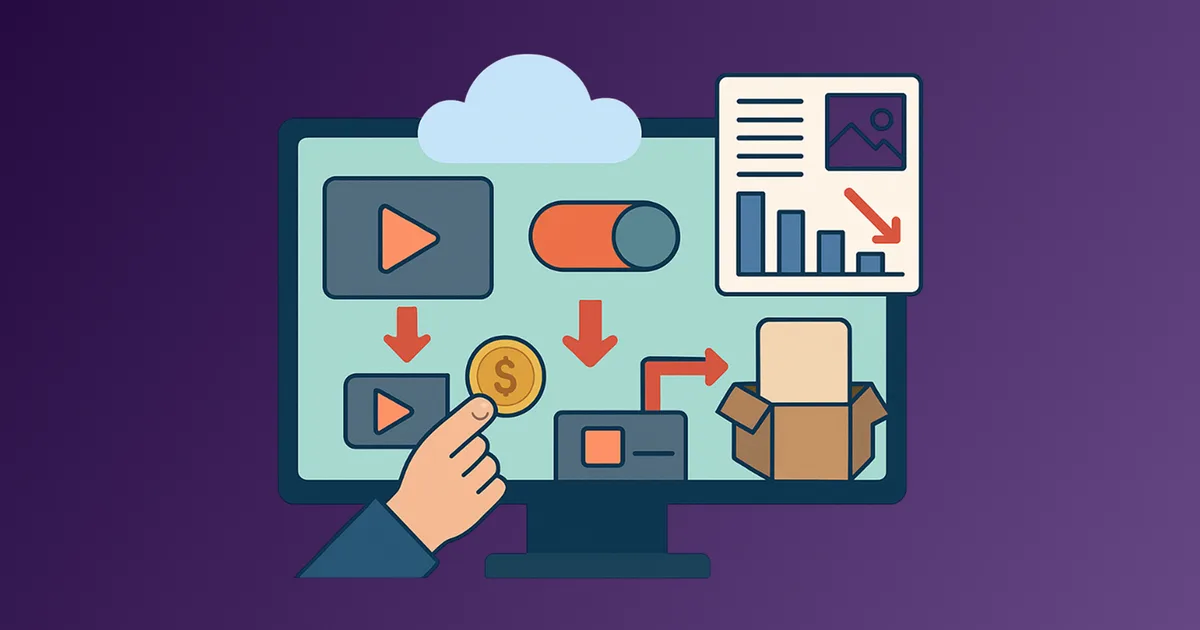
Now, this sneaky inflation has entered the digital realm. Invisible digital inflation means your subscriptions and online services may be quietly offering less value than before. The price tag on your monthly bill doesn't change, but the features, benefits, or quality you receive are trimmed down. It's the online service equivalent of selling a smaller chocolate bar in the same wrapper. In other words, digital shrinkflation is when companies reduce the content or service you get without officially hiking the price. They might remove previously included features, shorten free trials, lower service quality, or tack on fees for things that used to be free, all tactics to effectively raise the price you pay, just without showing it on the sticker.
Stealthy Tactics: How Companies Hide Inflation in Subscriptions
Businesses have become quite creative at hiding price increases in our subscriptions. Here are some common stealth tactics, the digital shrinkflation playbook, and real examples of how they work:
Trimming Content from Streaming Services
Your streaming subscriptions might quietly lose content over time. Platforms like Netflix, Disney+, and Max have been removing shows and movies with little warning, often for cost-cutting reasons. What used to feel like an endless library can suddenly shrink, yet your monthly rate stays unchanged. The idea of an "infinite streaming library" is fading, now more like a rotating selection that may get smaller or more randomized as licensing deals and budget cuts dictate. You're paying the same, but the selection is thinner than before.
Features Removed or Put Behind a Paywall
Some services maintain the base price but strip away perks that were once included unless you pay extra. A striking example is Amazon Prime Video. Amazon kept the Prime subscription price the same, but announced that starting in 2024, Prime Video will include ads unless you pay an additional $2.99 per month for an "ad-free" plan. In other words, what used to be standard (ad-free streaming) now costs more. Technically Amazon "didn't raise the price" of Prime, but by changing the service (adding commercials), they nudged customers to pay more for the same experience. It's the digital equivalent of shrinkflation, less value for the same price. Similarly, Spotify recently drew ire for inserting ads into podcasts even for Premium subscribers, effectively reducing the ad-free experience people thought they paid for.
Shorter Trials and Smaller Free Perks
Free trials and bonus credits are also quietly shrinking. Many software and gaming services that used to offer generous trial periods or usage credits have cut them down. For instance, Microsoft's Xbox Game Pass trial, famously "$1 for one month", was suddenly shortened to just 14 days for that same $1. They halved the trial length while touting the same price, giving new users less time to enjoy the service before paying full price. In the AI world, OpenAI once granted new users $18 worth of free credits to experiment with its API, a pretty hefty free allowance, but ended that practice (no more free credits for new accounts after 2022). If you join now, you have to start paying out-of-pocket much sooner for the same usage that used to be free.
Capping Usage and Quality (Without Lowering Price)
Another stealth move is putting new limits on usage or quality while charging the same. Take cloud gaming: Nvidia's GeForce Now service decided not to raise its subscription fees, but instead to introduce a cap on how much paying members can use it. New subscribers in 2025 are limited to 100 hours of game streaming per month, roughly 3 hours a day. Nvidia openly admitted this cap is to avoid raising membership prices in the near future. That sounds considerate until you realize it means beyond 100 hours you'll have to pay extra or stop playing, so heavy users get less value unless they spend more. We see similar quality downgrades elsewhere: some video services might restrict high-definition streaming to higher tiers, or cloud storage services offer the same price but with lower performance or support unless you upgrade. All these are ways to quietly give you a bit less for the same subscription fee.
Crippled Free Tiers Pushing You to Pay
Even if a service isn't a paid subscription yet, its free tier might be shrinking to nudge you toward a paid plan. A dramatic example is Evernote, the popular note-taking app. For years it had a free Basic plan with certain limits, but it allowed unlimited notes and several devices, enough for casual users. Recently, Evernote imposed a severe restriction: free users can have at most 50 notes in total and one device synced on the account. That's tiny, essentially making the free plan almost unusable for anyone but the lightest user. This kind of "offer less for free" strategy effectively pressures users to start paying for what they used to get at no cost. It's another form of invisible inflation: the price (free) is the same, but the product is now a shadow of its former self.
Why Companies Do This (The Psychology of Stealth Inflation)
Why would companies choose these sneaky approaches instead of simply raising prices outright? The short answer: sticker shock is real. They know consumers are more likely to notice and react to a direct price hike than a subtle reduction in service. By keeping the sticker price the same, companies hope we won't notice we're getting less, or at least won't blame them as much. It's a calculated move to protect profit margins without sparking a customer rebellion.
In an era of high inflation and rising costs, businesses feel pressure too. Raw materials, server costs, content production, labor, many expenses have gone up. Companies could pass those costs to us by charging more dollars per month, but they fear we'd cancel or balk. So instead, they sneak in price increases by subtraction. As one pricing expert put it, it's a subtle technique to increase what you pay "without immediately impacting customers" in an obvious way. By giving a bit less for the same fee, effectively customers pay more per unit of service (even if the monthly fee looks unchanged).
Sometimes companies even openly justify it. Nvidia, for example, essentially said they'd rather cap play hours than raise the monthly rate, to keep memberships "sustainable" without a price hike. Amazon likely introduced Prime Video ads to offset costs while avoiding bumping the base Prime price again so soon. It's a trade-off: they preserve the attractive price point, but you quietly pay in other ways (like tolerating ads or limitations unless you pay extra).
There's also a bit of psychology at play. We tend to compare prices more than we compare fine print details. If Netflix is still $15.99 this year, we assume it's "the same price" as last year, forgetting if last year that included a certain show that's now gone, or that the plan had a feature that quietly disappeared. Companies bank on this inertia and our lack of close scrutiny. As long as we keep subscribing and don't dig into what we used to get, they can chip away little by little. It's the digital version of boiling the frog slowly.
Shrinkflation Isn't New – Just Ask Your Cereal Box!
Physical products have been shrinking for years: jars of snacks in 2010 vs 2024 (as above) got smaller while prices went up. Digital services are now doing the same, giving you less for the same price.
What's happening with software and subscriptions has a clear parallel in the physical world. Companies have long practiced classic shrinkflation on store shelves. Your grocery cart is full of evidence: laundry detergent bottles that used to be 100 ounces might be 90 ounces now, or a "family pack" of cookies quietly went from 30 cookies to 25 over the years. One example: a product might shrink from 1.5 ounces to 1.1 ounces while the price stays the same, meaning you're effectively paying 36% more per ounce than before. The price tag at the store didn't change, but the value you get certainly did (sound familiar?).
Another trick is reducing quality or service, known as skimpflation, which we also see offline. Think of airlines or hotels in recent years: the ticket price or room rate stays the same, but now there's no free meal on the flight, or the hotel's "complimentary" breakfast gets watered down (fewer options, cheaper ingredients). It's a way of cutting costs without explicitly charging more, hoping customers won't kick up a fuss as long as the fee itself is unchanged.
Interestingly, the physical world has also seen a form of what we called "sneakflation." Companies remove something that used to be included and make you pay extra for it later. A straightforward example: many new smartphones stopped including a charger or headphones in the box. The phone's price didn't drop, you're just now expected to buy accessories separately for the same complete experience. Similarly, some airlines took included services (like choosing your seat or bringing a carry-on bag) and turned them into add-on fees. The base fare stays low on paper, but you're shelling out more to get the full service that once was standard.
Seeing these tactics in the "real" world helps put the digital version in perspective. We accepted smaller candy bars and sneaky airline fees for years (even if we grumbled). Now as more of our life and spending shifts to digital subscriptions, companies are using the same playbook: shrink portions, cut perks, or unbundle features, all while trying to keep us subscribed and not alarmed.
Stay Alert: Don't Let Digital Shrinkflation Catch You Off Guard
The first step in fighting back is simply being aware that this is happening. It's easy to overlook the slow drip of lost perks, after all, you might not notice a feature is gone until you need it. So take stock of your subscriptions periodically. Ask yourself: "Am I getting the same value I got a year ago for this service?" If something feels off, it probably is. Maybe that cloud storage isn't as generous, or your "premium" plan now has ads, or the content library has thinned out. These are red flags of invisible inflation.
Consumers are starting to catch on. Just as many have reacted to grocery shrinkflation by switching brands or calling it out, users are beginning to talk about digital shrinkflation too. Online forums and social media light up when, say, a beloved streaming show vanishes or a software's free tier gets crippled. And there are signs of pushback: people canceling subscriptions in protest, or "churn-and-return" behavior (cancelling until a must-watch show or feature comes back). Every time a company overplays its hand, it risks losing goodwill. After all, if enough subscribers feel shortchanged, they'll walk away, monthly subscriptions are easy to cancel, and alternatives often exist.
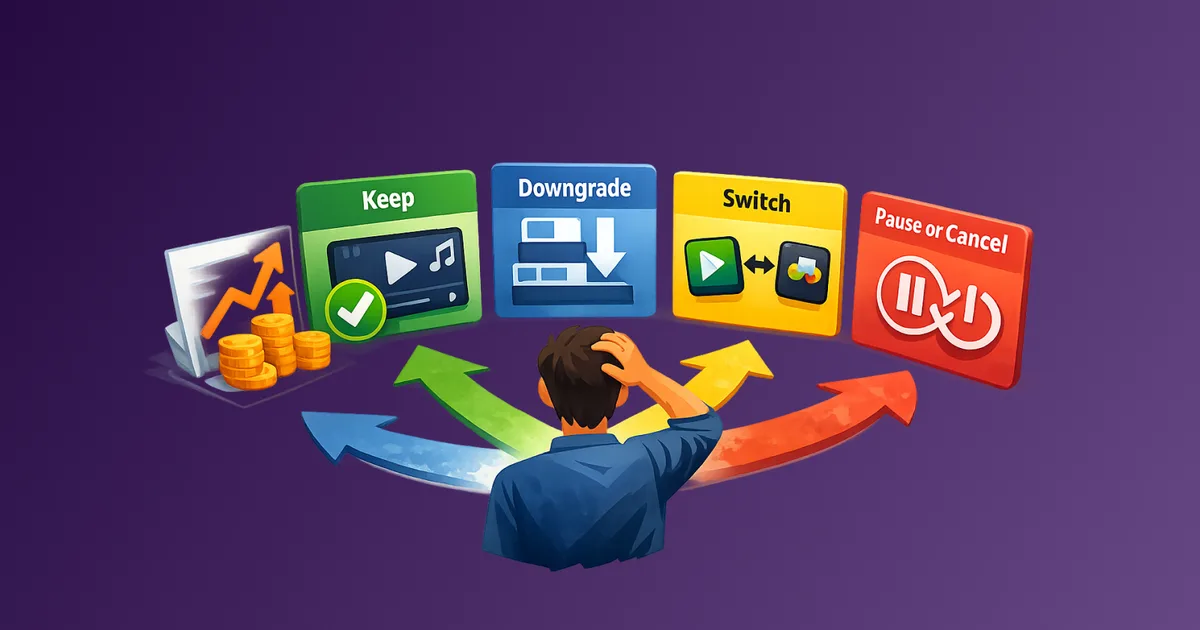
Ultimately, invisible subscription inflation thrives on us not paying attention. The best defense as a savvy consumer is to keep your eyes open. Read those update emails services send (the ones titled "Changes to Terms" that we all usually ignore – yes, those!). The subscription billing terms glossary explains what renewal price, notice windows, and auto-renew mean when those emails change your billing terms. For B2B SaaS, Contract Clauses That Matter in SaaS Renewals covers the contractual side of the same pricing behavior—auto-renewal traps, missing price caps, and notice windows that close before anyone acts. Companies often bury the news of a reduced benefit in the fine print. Hidden or delayed pricing is also one of the most common subscription dark patterns, because the sign-up price gets remembered while the renewal price gets missed. By spotting the change early, you can make an informed choice: stick with it, upgrade, or cancel. If you want a practical response playbook when prices do change, use What to Do When a Subscription Price Increases: Keep, Downgrade, Switch, or Pause.
Most importantly, start the conversation. Share with friends or online communities if you notice a digital service quietly cutting back. Chances are, you're not the only one affected, and a little noise can make companies think twice. Remember how quickly a brand can respond when enough customers voice displeasure. In a way, we have to treat digital shrinkflation the same way we do the grocery kind, call it out and vote with our wallets when necessary.
Bottom line: Just because the subscription price isn't going up, doesn't mean you're not paying more in practice. Stealthy tactics like shrinking features or adding fees are the digital version of a price hike. Now that you know, you can spot it. Don't let the "invisible inflation" lurking in your apps and subscriptions slide by unnoticed. Have you felt any of your subscriptions getting stingier lately? It might be time to check the fine print, and join the discussion on this sneaky trend in the digital economy. By staying alert, we can ensure we're truly getting our money's worth, or decide to take our business elsewhere when we're not. After all, a deal that quietly gets worse is no deal at all.