Quick answer
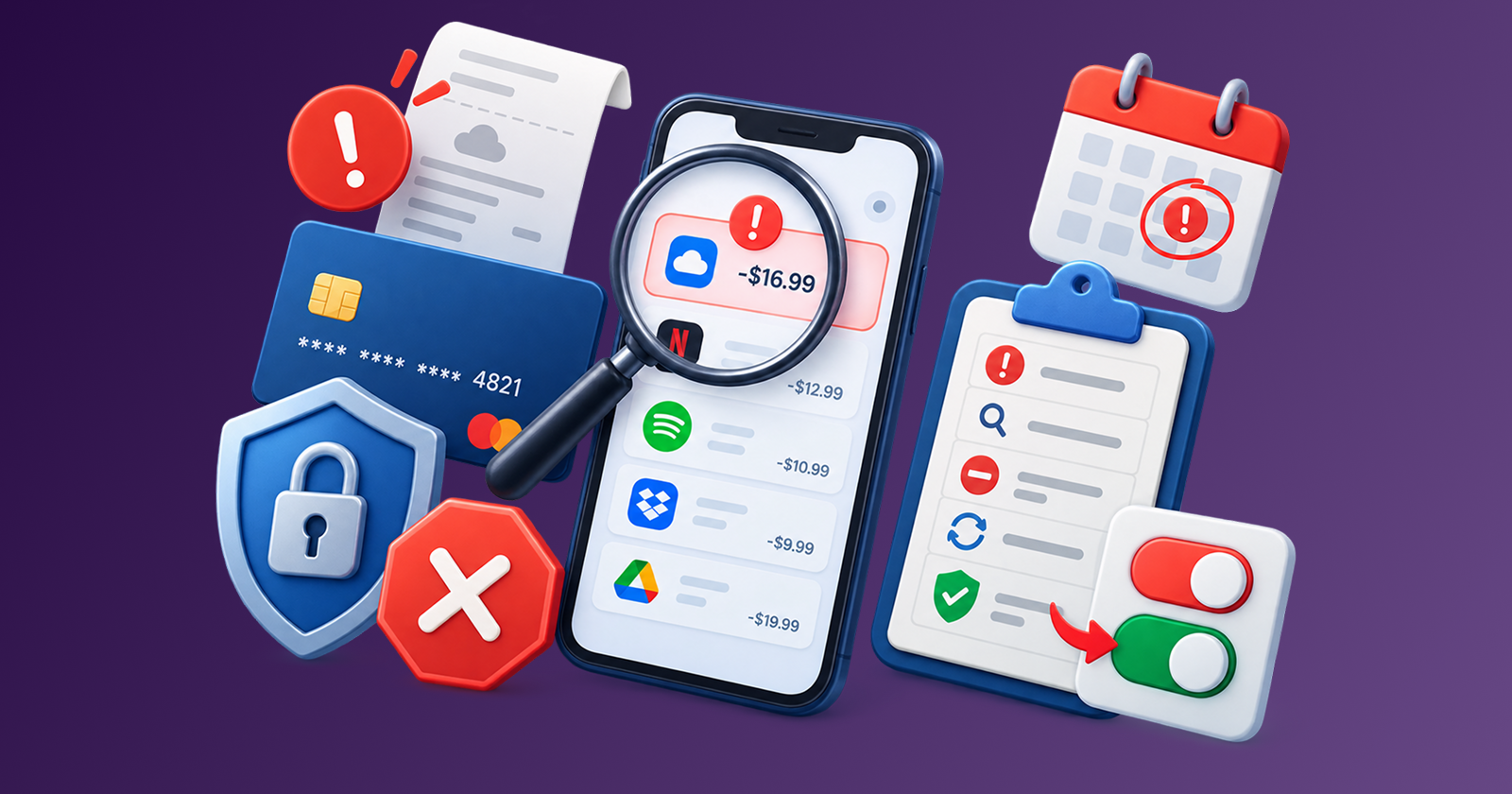
Subscription incident response is a three-phase playbook for surprise charges. Contain first: screenshot the line item, stop future billing, and check other cards for the same merchant. Then run a short root cause check: trial conversion, annual renewal, price change, failed cancel, unrecognized descriptor, or an ownerless tool. Ask the merchant for a refund before you dispute. Only then lock in prevention so the same charge cannot sneak through again.
A surprise charge on a card or bank app feels like a small emergency. Most people either ignore it until the next statement or file a dispute before they know what the line item is. Both reactions waste money: one lets billing continue, the other can freeze a service you still need.
Stay Updated with Subtrakr
Sign up to our newsletter to get updates about Subtrakr and valuable insights about subscriptions and recurring expense management.
Treat the charge as an incident. Contain it so nothing else posts. Find the root cause. Then change the one control that would have stopped this charge from being a surprise.
What Counts as a Subscription Incident?
A subscription incident is any recurring charge that you did not expect, did not recognize, or thought had already stopped. The amount can be small. The problem is the open billing path behind it.
These are incidents:
- A free trial that converted without a reminder you acted on
- An annual plan that billed twelve months after you forgot it existed
- A price increase that posted at the new rate with no decision from you
- A merchant name on the statement that does not match any app you use
- A charge after you believe you cancelled
- A family or team tool on your card that nobody will claim
- A usage-based or seat-based bill that jumped without a cap
A charge is not an incident just because you dislike the product. If you recognized it, authorized it, and still use it, that is a keep-or-cut decision, not emergency response. The playbook below is for the charges that arrived as a shock.
What Should I Do First After a Surprise Charge?
Containment comes first. Do not optimize, do not negotiate, and do not open a bank dispute until the billing path is closed. Your job in the first thirty minutes is to stop a second charge and preserve evidence.
Work in this order:
- Capture the line item. Screenshot amount, date, merchant descriptor, last four digits, and any receipt. You will need this for support, and if the same merchant bills a different card next week.
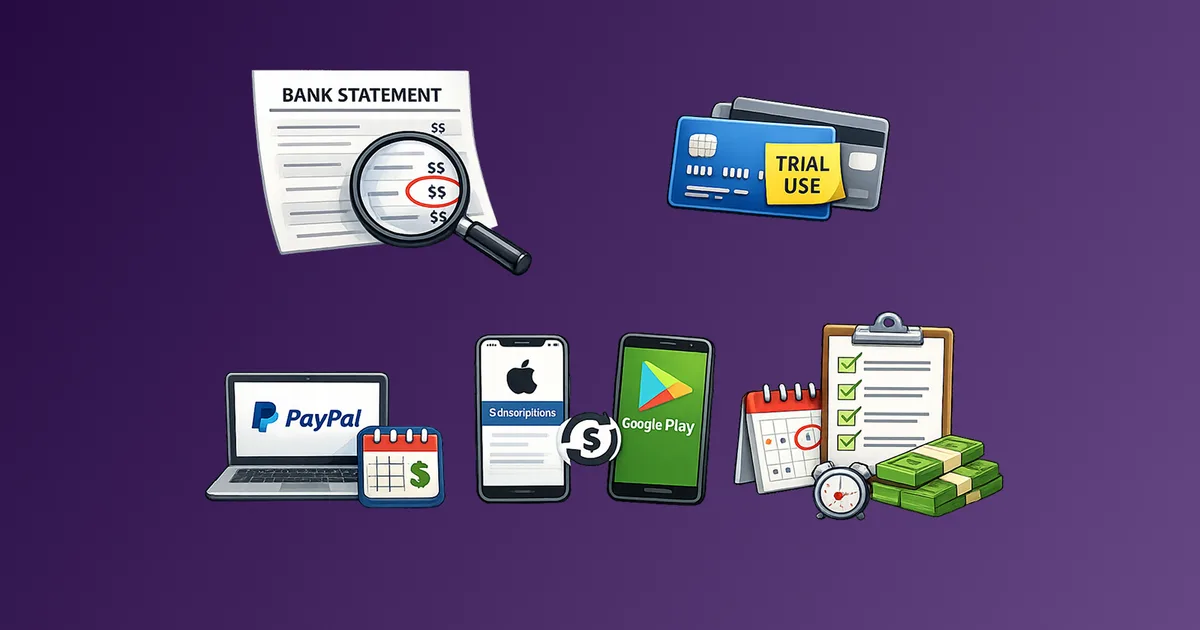
- Name the merchant. Search the descriptor plus the amount. Check Apple, Google Play, PayPal, Amazon, and any family or company cards. A “mystery” charge is often a known app billed under a legal entity.
- Stop future billing. Cancel inside the product if you can log in. If you cannot, freeze or replace the payment method so the next retry fails. Removing a card is not a cancellation, but it is the fastest way to halt retries while you sort access.
- Scan for siblings. One surprise charge is often a cluster: the same trial on a second card, a family duplicate, or an annual that also hit PayPal.
If the charge sits on a primary debit card, move remaining recurring spend off that rail once the incident is stable. A payment method strategy with virtual cards and spending limits contains the next retry without touching every other bill.
Do not spend containment time arguing about whether the charge was “fair.” Fairness is a root-cause question. Right now you only need the billing to stop.
How Do I Find the Root Cause of a Surprise Charge?
Root cause analysis (RCA) is a short written answer to one question: why did this charge reach a card without a decision from the person who pays? If you skip this step, you will refund one line item and get the same surprise next quarter.
Start with the cause table. Pick the first row that matches.
| Cause | Typical signals | What actually failed |
|---|---|---|
| Trial conversion | First paid charge, “trial ending” email you ignored | No cancel-before-convert reminder you acted on |
| Forgotten annual | Large amount, ~12 months since the last charge | The renewal was not on a calendar you look at |
| Price increase | Same merchant, higher amount, same cycle | You had no keep / downgrade / cancel decision |
| Unrecognized descriptor | Brand on the statement does not match the app | You have the sub; you cannot match the name |
| Failed cancellation | You thought you were done; billing continued | Cancel was incomplete, or only the card was removed |
| Ownerless tool | Shared card, nobody claims the login | No named owner, so nobody watched the renewal |
| Usage or seat spike | Amount jumped, merchant is known | No cap, no seat review, no alert on overage |
| Duplicate household signup | Same service twice across family accounts | No shared inventory before a new trial |
Then write five lines, not a report:
- What posted? Merchant, amount, date, payment method.
- Who authorized the original signup? You, a partner, a teammate, or unknown.
- What should have fired before the charge? A trial reminder, a 30-day annual notice, a cancel confirmation, or an owner review.
- Which control was missing? Inventory, calendar, ownership, payment limit, or proof of cancel.
- What will we change so this class of charge cannot repeat? One control, named, with an owner.
If you cannot match the merchant, walk every payment source, not only the card that got hit. Finding every subscription across banks, PayPal, Apple, and Google Play shows whether this is one charge or a pattern. On a shared card, “nobody knows this tool” is itself a root cause: the charge is a missing owner.
When Should I Ask for a Refund Versus File a Chargeback?
Ask the merchant first. A refund is faster, cheaper, and less likely to lock you out of an account you still need. A chargeback is a bank dispute. Use it when the merchant will not help, or when the charge was never yours to begin with.
Ask for a refund when:
- The charge is a trial conversion or annual renewal you forgot, and you contact them within a few days
- You cancelled, but the confirmation is messy and you want goodwill
- The amount is a price increase or seat add you did not notice, and you are willing to stay on a lower plan
- You used little or none of the billed period
File a chargeback when:
- You never signed up, and the merchant cannot show authorization
- You have written cancel confirmation dated before the charge, and the merchant still billed
- The descriptor is a merchant you cannot identify after a real search, and the issuer agrees it looks unauthorized
- The merchant ignores a refund request past their stated window, and you have the email thread
Do not chargeback a renewal you used. Banks and processors treat that as a billing complaint, not fraud, and you can lose both the dispute and the account. Refund and cancel is the clean path for “I forgot.” Chargeback is the path for “this should not have billed.”
A refund is the merchant reversing the charge. A chargeback is the bank pulling the money after a dispute. The subscription terms glossary covers that split, plus grace periods and proration, so you know which clock you are on.
Email the merchant once: charge date, amount, last four digits, what you want (refund and cancel, or refund only), and any cancel proof. Ask for a ticket number. Save the reply with your screenshot.
How Do I Stop the Same Surprise Charge From Happening Again?
Prevention is the control that the RCA named, installed so the next similar charge is visible before it posts. Do not “be more careful.” Care is not a control.
Match the fix to the cause:
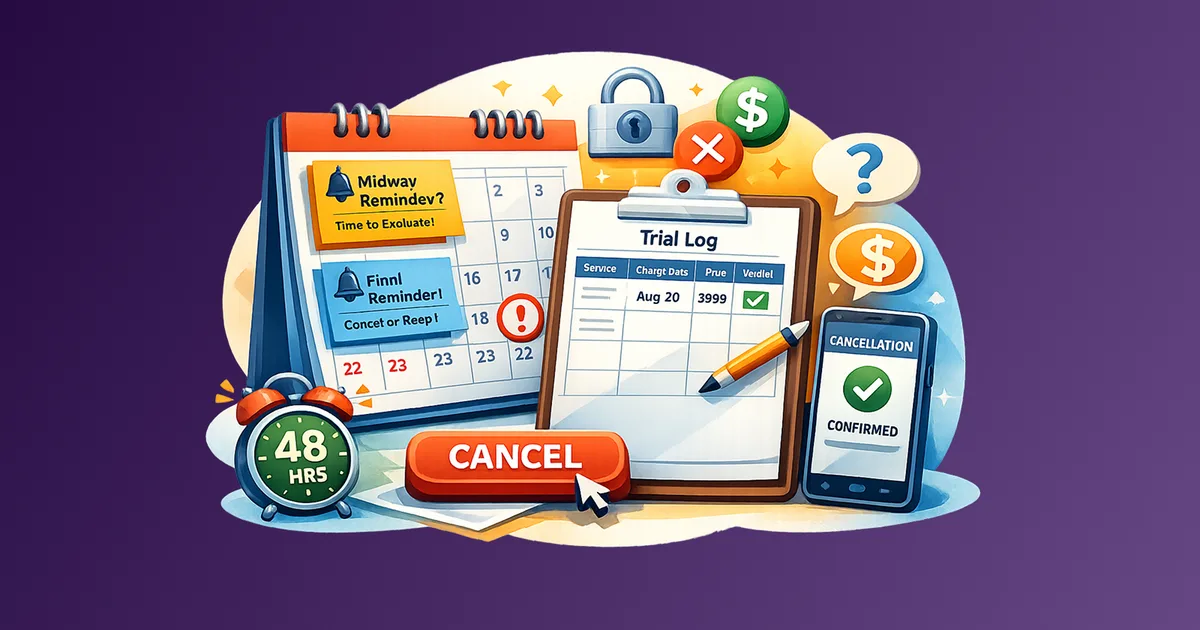
- Trial conversions: Put the end date on a calendar with two reminders, and decide keep or cancel before the first paid charge.
- Annual renewals: Track the date, amount, and a 30-day plus 7-day review. Annuals are the classic surprise because they sit outside the monthly statement rhythm.
- Price increases: Decide keep, downgrade, switch, or pause when the notice arrives, not after the new amount clears.
- Failed cancels: Cancel in-product, save the confirmation, and watch the next cycle. Deleting a card is not proof.
- Ownerless tools: Name one person who can keep or cut. If you cannot name them in ten seconds, cancel or reassign before the next renewal.
- Unrecognized descriptors: Log the statement name next to the product name in your inventory so the next charge matches in five seconds.
- Usage and seats: Set a cap, a seat count, or a monthly equivalent you review. Variable bills need a ceiling, not hope.
The durable version is a single inventory with renewal dates, not a pile of bank alerts. Use the step-by-step recurring expense workflow as the operating system: list, centralize, remind, then audit. Incident response is what you run when that system had a hole. Prevention is closing the hole. If several charges “did not really register,” the incident is the missing review loop, not one merchant.
Step-by-Step Setup (Time required: 30-45 minutes)
Run this on the charge in front of you. Then keep the log for the next one.
- Freeze the moment. Screenshot the statement line and any receipt email. Note the time you noticed it.
- Identify the merchant. Search the descriptor. Check app stores and PayPal if the name is still unclear.
- Decide wanted vs unwanted. If you still use it and the price is acceptable, skip to step 7 and log it. If you do not want it, continue.
- Contain billing. Cancel in the product. If login is gone, freeze or rotate the payment method so retries fail.
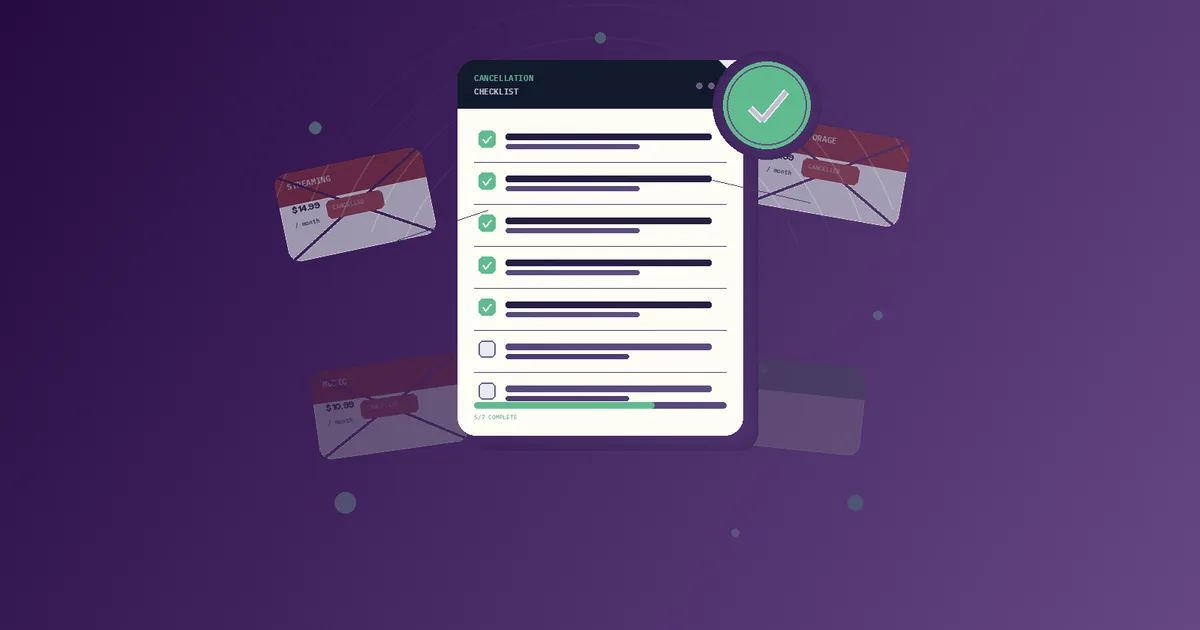
- Complete a clean cancel. Use the official channel, click through to confirmation, and save proof. The cancellation checklist is the execution path so rebilling does not become incident number two.
- Request the money back. Email support with date, amount, last four digits, and the outcome you want. Wait one business day before you escalate to the bank, unless the charge is clearly unauthorized.
- Write the RCA. Fill the five lines: what posted, who signed up, what should have fired, which control was missing, what you will change.
- Scan siblings. Look at 90 days of that card plus other payment sources for the same merchant or the same pattern (trials, annuals, unknown descriptors).
- Install one prevention control. Calendar reminder, virtual card limit, named owner, or descriptor alias in your tracker. One control per incident. Do not rebuild your whole stack today.
- Close the incident. Mark refund status, cancel proof stored, and next review date. If a chargeback is still required, file it with the evidence pack from steps 1, 5, and 6.
Subscription Incident Log (Copy-Paste)
INCIDENT
Date noticed:
Amount and currency:
Statement descriptor:
Payment method (last 4 / Apple / Google / PayPal):
Receipt email found? (yes/no)

CONTAINMENT
Merchant identified as:
Wanted / unwanted / unknown:
Cancel completed? (yes/no)  Confirmation saved where:
Payment method frozen or rotated? (yes/no)
Other cards checked? (yes/no)  Sibling charges:

RCA
Who originally signed up:
Likely cause: trial / annual / price increase / failed cancel / descriptor / ownerless / usage / duplicate
Control that should have fired:
Control that was missing:

RESOLUTION
Refund requested?  Date:  Result:
Chargeback filed?  Date:  Result:
Money recovered:

PREVENTION
One control we will add:
Owner of that control:
Date it will be in place:
Next review date:
Use one log per surprise charge. If three charges share a cause (for example three forgotten trials), still log each line item, then write one prevention control that covers the class.
What Mistakes Make Surprise Charges Worse?
Filing a chargeback before you identify the merchant. You can lose a service you still use, and you can lose the dispute if the charge was a valid renewal. Identify, cancel, refund request, then dispute if needed.
Deleting the card and calling it cancelled. The contract can continue. Retries, dunning emails, and a new card on file are common. Cancel in the product. Save proof. Then change the payment method.
Treating one charge as a one-off. Surprise charges cluster. A trial on this card often means a trial on another. RCA without a sibling scan is how the same merchant bills you twice.
Skipping the written cause. “I will remember this” is how annuals repeat. If the missing control is not written, it will not be installed.
Waiting for the next statement to act. Retries can post in days. Containment is a same-day job. RCA can wait until the evening. Prevention can wait until this week. The charge cannot.
FAQ
What is subscription incident response?
It is a fixed sequence for surprise recurring charges: contain billing, find the root cause, recover the money if you should, then install one prevention control so that class of charge cannot surprise you again.
Should I dispute a surprise subscription charge immediately?
No. Identify the merchant and stop future billing first. Ask for a refund if the charge looks like a forgotten trial or renewal. Dispute with the bank when the charge is unauthorized, or when you have cancel proof and the merchant still billed.
How do I identify a charge I do not recognize?
Search the statement descriptor plus the amount, then check Apple, Google Play, PayPal, and other household or company cards. Many “unknown” charges are known apps billed under a legal name.
What if the subscription already renewed and I used it?
Cancel going forward if you do not want the next cycle. A refund is a goodwill ask, not a right in every case. A chargeback on a used period is a weak dispute and can cost you the account.
How do I keep this from happening every quarter?
Keep one inventory with renewal dates, put trials and annuals on a calendar you actually see, and name an owner for every tool on a shared card. Incident response without those controls will keep firing.
How long should I wait for a merchant refund before I involve the bank?
Give them one business day after a clear written request, unless the charge is obviously unauthorized. If they refuse, ignore you, or cannot show that you signed up, file the dispute with your screenshots and cancel proof.
Next Action
Pick the surprise charge on this week’s statement. Run containment today: screenshot, identify, cancel or freeze. Write the five-line RCA tonight. Install one prevention control before the weekend: a calendar date, a virtual-card limit, or a named owner.
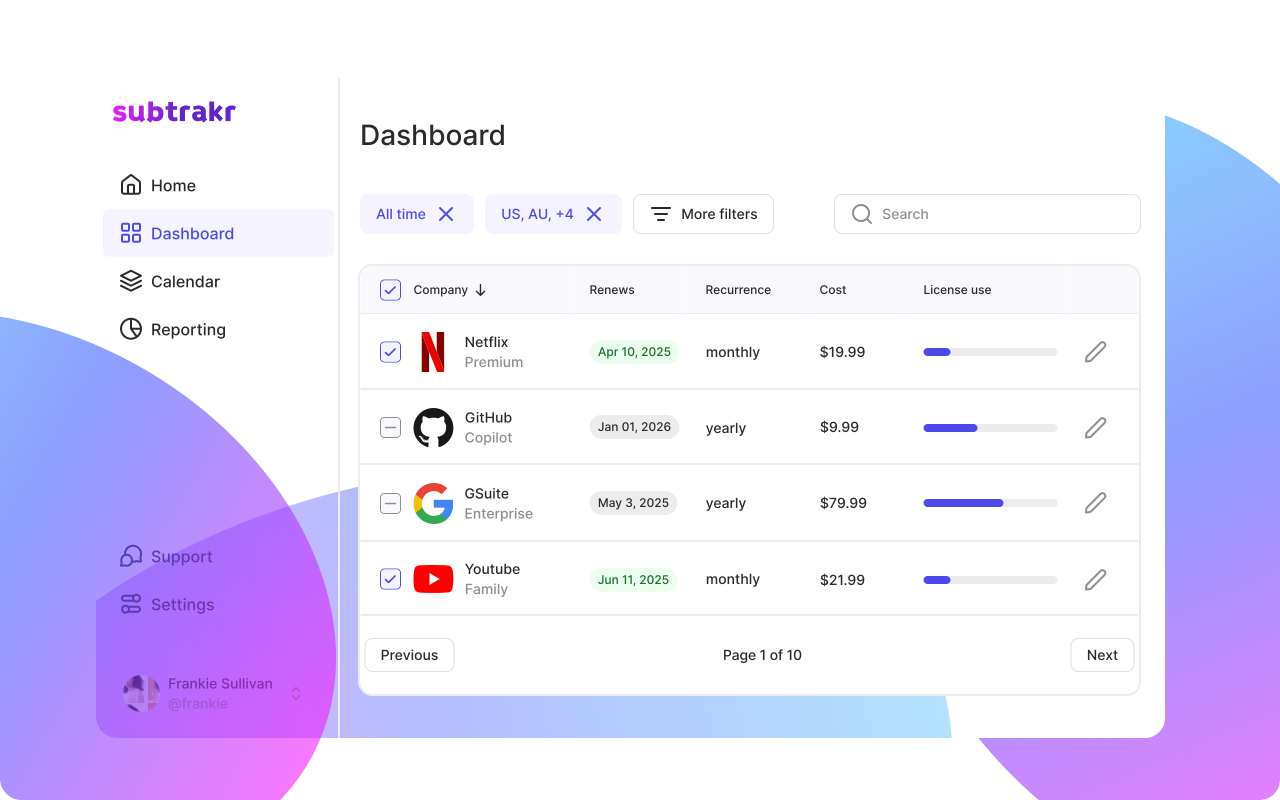
If your inventory and renewal dates already live in one place, the next incident is a lookup, not a scavenger hunt. Subtrakr keeps those dates visible so a forgotten annual is a reminder, not a statement shock.