Quick answer
Learn the most common subscription dark patterns, from roach motel cancellation flows to hidden pricing and trial traps, plus practical habits that keep you in control.
Signing up for a subscription takes thirty seconds. Cancelling one can take thirty minutes, three phone calls, and a retention script designed to wear you down. That gap is not accidental. It is engineered.
Stay Updated with Subtrakr
Sign up to our newsletter to get updates about Subtrakr and valuable insights about subscriptions and recurring expense management.
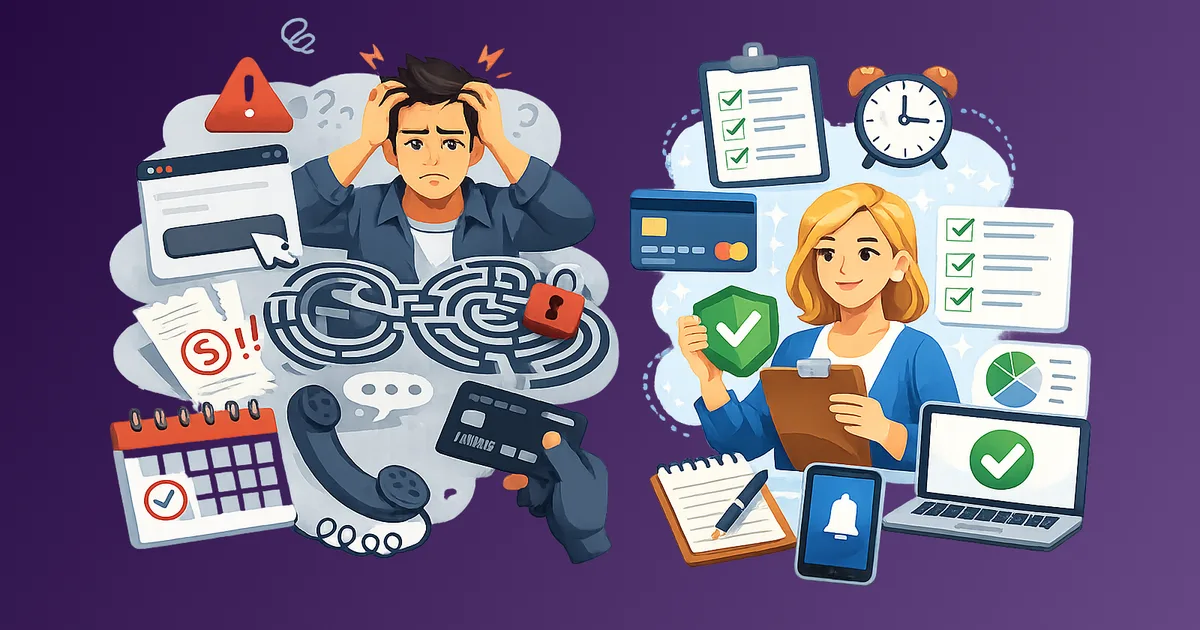
Dark patterns in subscription services are deliberate design choices that benefit the company at the expense of the user. They slow cancellation, obscure renewal dates, hide pricing changes, and create enough friction that most people give up and keep paying. Understanding how they work is the first step to neutralizing them.
What Are Subscription Dark Patterns?
Subscription dark patterns are user interface and process design choices that make it harder to cancel, easier to sign up accidentally, or more difficult to understand what you are actually agreeing to pay. They are not technical bugs. They are features, designed to exploit behavioral inertia and reduce churn at the user's expense.
The term "dark pattern" was coined by UX designer Harry Brignull in 2010 to describe interfaces that trick users into unintended actions. In the subscription context, they range from mildly annoying to financially predatory. Regulators in the US, EU, and UK are increasingly treating them as consumer protection violations, not just poor design choices.
What Do Dark Patterns Look Like in Practice?
The roach motel: easy in, hard out
This is the most common subscription dark pattern. Signing up requires one click. Cancelling requires navigating to a buried settings page, clicking through multiple confirmation screens, watching a retention video, talking to a chat agent, and sometimes calling a phone number during business hours only.
Amazon Prime, Sirius XM, and several gym chains have faced regulatory action specifically for roach motel cancellation flows. The pattern works because most people, faced with enough friction, abandon the attempt and stay subscribed.
Pre-checked trial upgrades and default consent
A free trial that automatically converts to a paid subscription unless you actively opt out is a dark pattern when the conversion is buried in the fine print. The default is set to paid. The user has to notice and act. Most do not.
Variations include pre-checked boxes during checkout that add premium tiers or add-ons, trial periods that end before the user expected based on unclear countdown language, and family plan upsells embedded in solo plan flows.
Confirm-shaming
Cancel flows that force users to click buttons with language like "No thanks, I want to pay more" or "I'll miss out on savings" instead of a neutral "Cancel subscription" are designed to create hesitation through guilt. It is low-level psychological pressure built into interface copy.
Hidden or delayed pricing
Introductory pricing that transitions to full price after a defined period, without a clear reminder, is a structural trap. The sign-up price is prominent. The full renewal price is disclosed but easy to miss. When the higher charge hits, users often do not connect it to the original purchase.
This pattern is increasingly common in streaming, software, and app-based subscriptions that use "first year" or "introductory offer" pricing.
Subscription resurrection
Some services automatically re-activate subscriptions that were previously cancelled when a user makes any purchase or logs back in. Others reactivate after a service change or payment method update, treating a card update as implicit reactivation consent.
The save offer trap
The save offer itself is not inherently a dark pattern. Offering a discount to retain a customer is legitimate. The pattern turns dark when the save offer is the only path shown during cancellation, and there is no clear neutral "No, just cancel" option visible at the same level. Users have to hunt for the exit while the discount button sits prominently in their path.
Confusing billing cycles
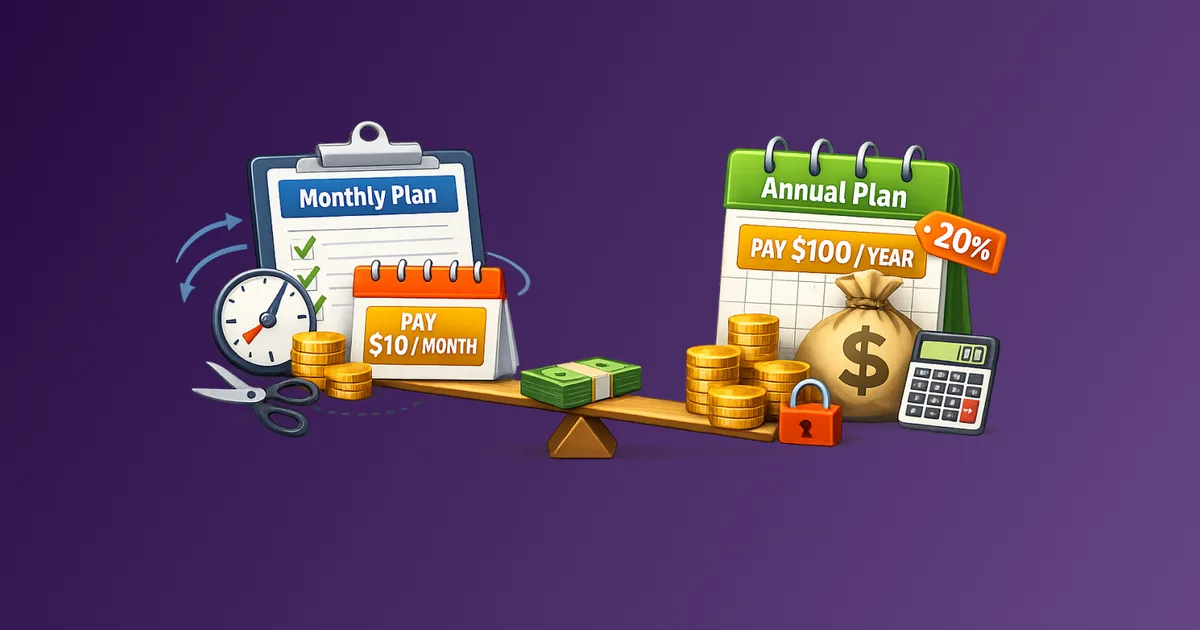
Annual subscriptions billed monthly look cheaper per month but lock the user in for a year. Services that phrase this as "monthly billing" rather than "annual commitment, monthly payment" are obscuring the real structure. Breaking this down to true monthly cost versus true commitment period is how you see what you are actually agreeing to. The monthly vs annual billing breakdown on Subtrakr's blog covers the math in detail.
What Does This Actually Cost?
Forgotten trials
A two-week free trial that converts to a monthly charge is financially minor. Six of them, running across different services at different times, is not. Trial-to-paid conversions are one of the most common sources of forgotten recurring charges because the gap between "I signed up for a free trial" and "this is now billing me monthly" can be weeks or months.
The average person has between two and five active subscriptions they would consider cancelling if they thought about them. A portion of those started as trials. A study from West Monroe Partners found that consumers underestimate their monthly subscription spending by around $133 on average, partially because trial-started services blend into the noise.
Silent renewals
Annual subscriptions that renew without a reminder are the highest-cost category of forgotten spending. A $100 annual subscription that you stopped using six months ago but forgot to cancel represents a complete loss. At the portfolio level, families with a mix of streaming, software, cloud storage, news, and app subscriptions can easily accumulate several annual renewals in a single month with no warning.
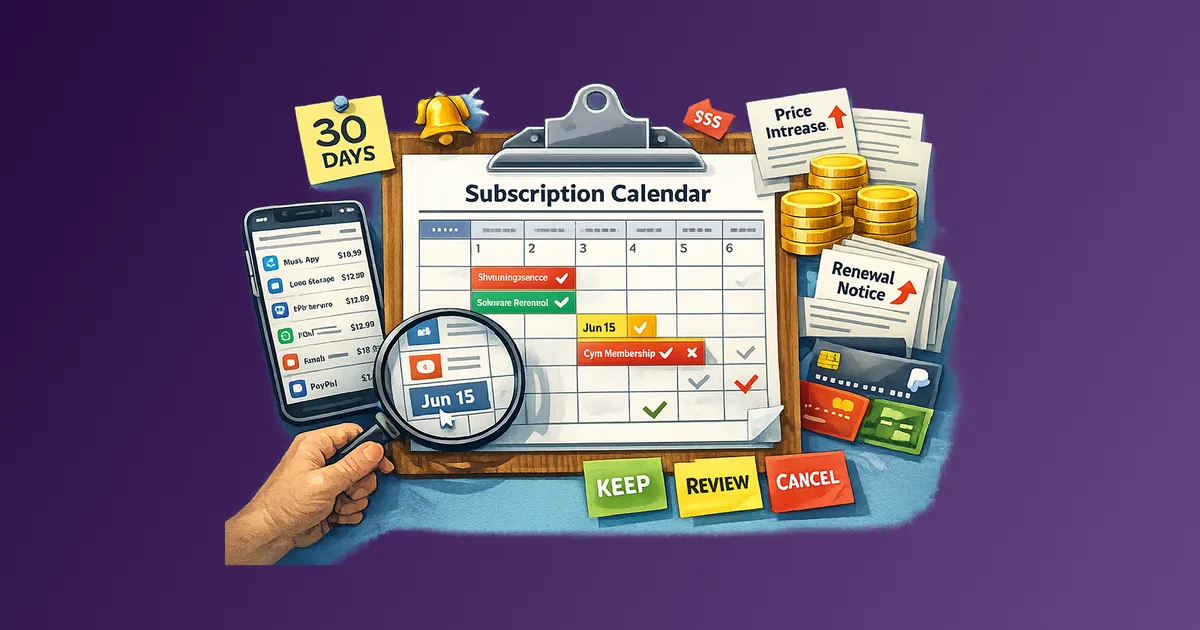
Tracking annual renewals before they hit requires a calendar-first system, not memory. The subscription calendar guide explains how to build one that works.
The compounding friction tax
Every minute spent navigating a roach motel cancel flow, disputing an unwanted charge, or trying to reach a support agent is a real cost. It also creates a behavioral response over time: people stop trying to cancel services they do not want because the effort cost feels too high. That learned helplessness is part of what dark patterns are designed to produce.
How Do You Protect Yourself?
Document at sign-up, not at cancellation
The defensive habit that matters most is recording the key details when you sign up, not when you decide to cancel. By the time you are trying to cancel, you may not remember when the trial ends, what the full price will be, or which email you used.
At sign-up, record:
- Service name
- Date started
- Trial end date (if applicable)
- First full charge date
- Monthly or annual cost at full price
- Billing email and payment method
- How to cancel (note the process while you can still access it easily)
This takes two minutes. It eliminates most of the information gaps that dark patterns exploit.
Use a two-reminder system for trials
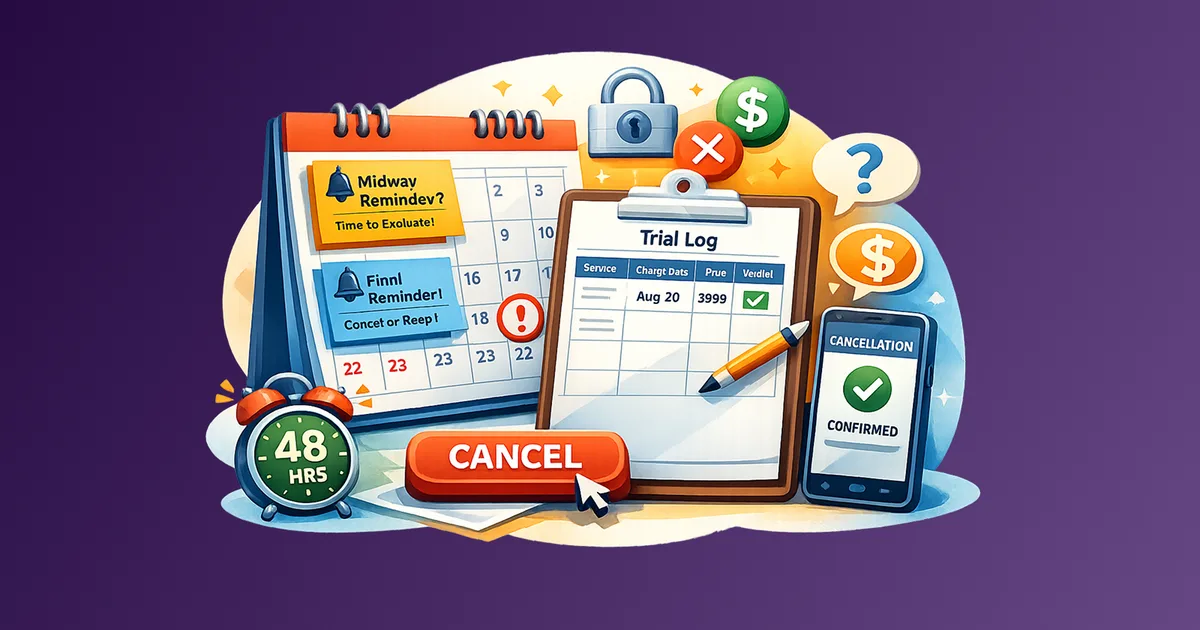
Set two calendar reminders for every free trial: one three to five days before the trial ends, and one the day before. The first reminder gives you time to evaluate the service. The second is the action trigger. If you have not decided to keep it, cancel it during that window.
The free trial trap guide walks through this system in full, including how to handle services that make cancellation deliberately difficult during the trial period.
Track renewals 30 days out
For annual subscriptions, a 30-day advance reminder gives you time to evaluate before the charge hits, not after. Once an annual subscription renews, getting a refund requires escalation. Getting one before requires only a cancellation.
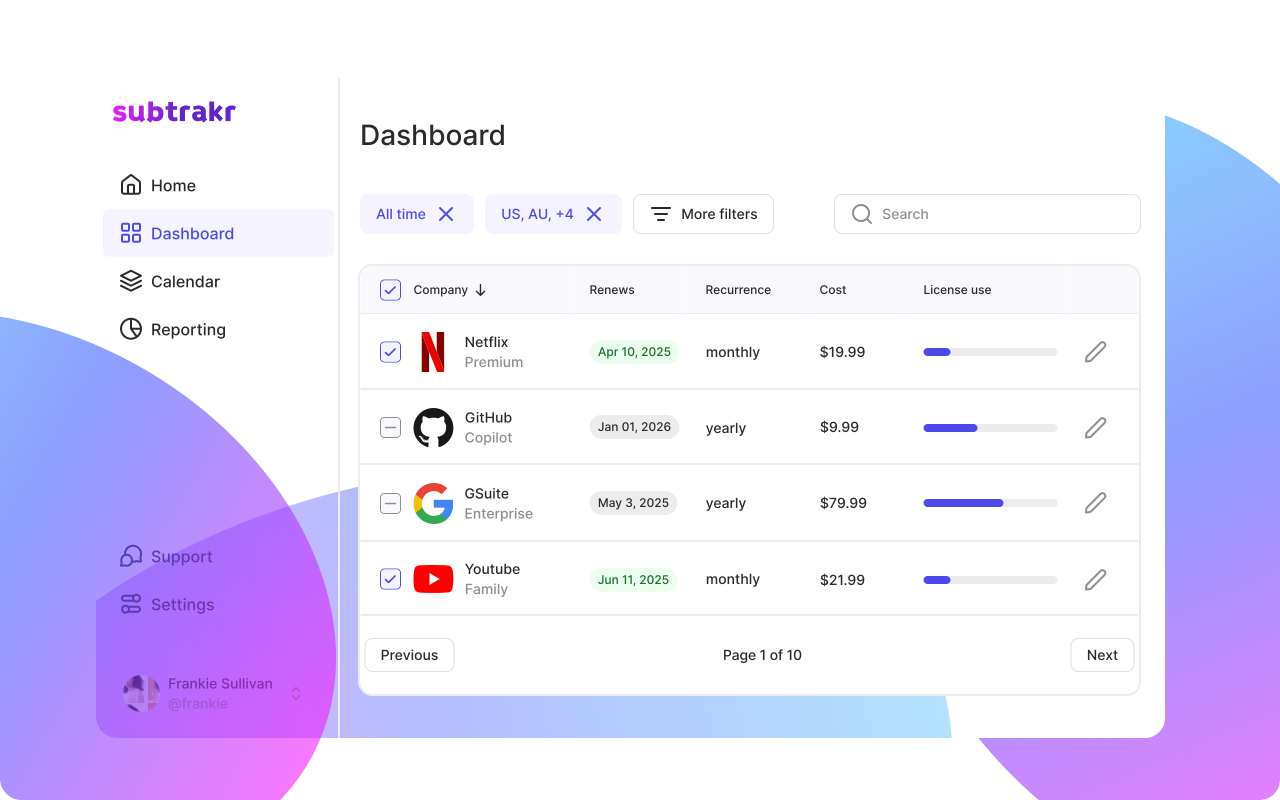
A simple recurring expense tracker that includes renewal dates is enough. Subtrakr lets you log renewal dates and see upcoming charges by month, so you can review what is coming before it arrives rather than reacting to charges after the fact.
Get cancellation confirmation in writing
When you cancel a subscription, request written confirmation. Screenshot the confirmation screen. If you cancelled via email or chat, save the thread. If you cancelled by phone, note the date, time, agent name, and any confirmation number given.
This documentation becomes essential if the service charges you after cancellation, which happens more often than it should. Without proof of cancellation, a chargeback dispute is harder to win, and the service can claim the cancellation was never processed.
Use virtual or temporary cards for trials
Several financial apps and some banks offer virtual card numbers that can be set with a spending limit or expiration date. Using a card that will decline after one charge, or after the trial period, prevents automatic trial conversion even if you forget to cancel. It forces the service to contact you to update payment details before charging, which creates a natural decision point.
This is a particularly effective tactic for services that bury their cancellation flows or make cancellation phone-only.
Review your recurring charges quarterly
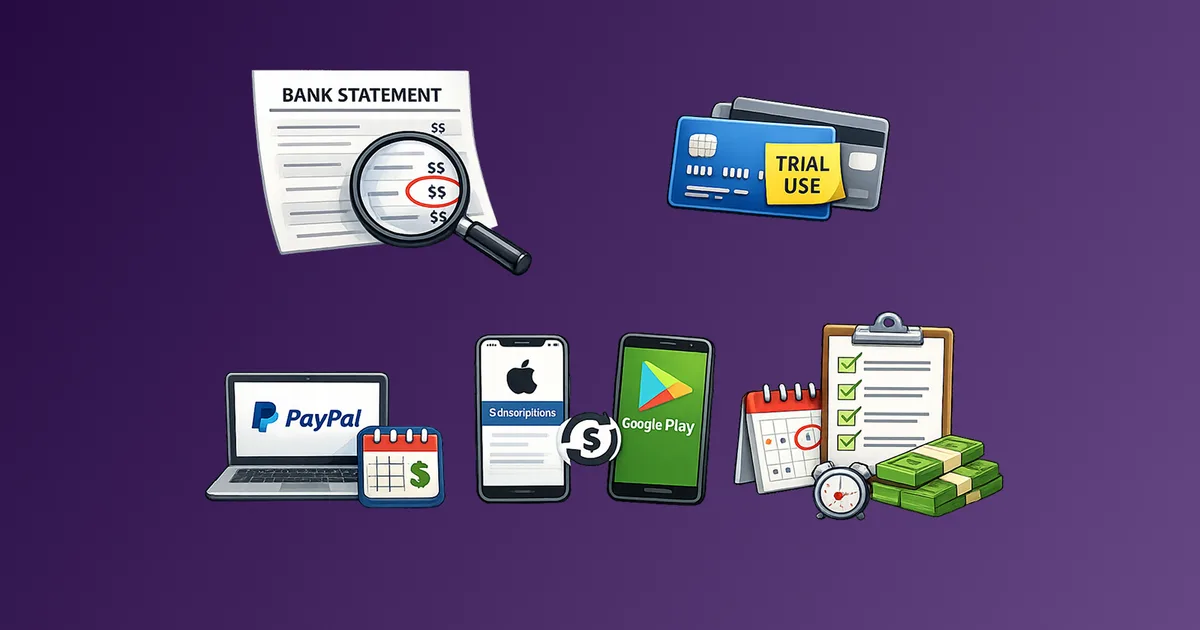
A quarterly recurring expense audit is the structural defense against charges that have been silently accumulating. Pull every recurring charge from your bank statements, credit card statements, PayPal, Apple subscriptions, and Google Play, and compare them against a list of services you actually want and use.
The monthly and quarterly audit checklist provides a structured process for this. Most people who run this audit for the first time find at least one service they had completely forgotten about.
When Should You Escalate?
Disputing charges through your bank or card issuer
If a service charges you after a confirmed cancellation, or charges an amount different from what was agreed, you can dispute the charge with your card issuer or bank as an unauthorized or incorrect transaction.
For card disputes, you typically have 60 to 120 days from the statement date to file a chargeback, depending on the card network and issuer. Having documentation of the cancellation, the agreed pricing, and the actual charge makes the dispute straightforward.
For annual subscriptions that auto-renewed despite your intent to cancel, disputes are possible but less guaranteed. The outcome depends on whether you can demonstrate the cancellation attempt and whether the service provided adequate renewal notice.
Consumer protection filings
In the US, the FTC handles complaints about deceptive subscription practices under the "click to cancel" rule, which came into effect in 2024 and requires that cancellation must be as easy as sign-up. Violations can be reported at reportfraud.ftc.gov.
In the EU, the Digital Services Act and Consumer Rights Directive provide regulatory grounds for complaints about deceptive interfaces. National consumer protection agencies in each member state handle enforcement. In the UK, the Competition and Markets Authority (CMA) has been active in this space.
Filing a complaint does not guarantee individual resolution, but it contributes to the regulatory pressure that has already produced fines and forced design changes at several major services. Dark patterns are increasingly expensive for companies to maintain when regulators are paying attention.
Chargebacks as a last resort
A chargeback should be reserved for cases where you have clear documentation of unauthorized charges or post-cancellation billing and the service has refused to resolve the issue directly. Using chargebacks casually can result in closed accounts and is best treated as an escalation step rather than a first response.
Common Mistakes That Leave You Exposed
Assuming cancellation equals confirmation. Clicking a cancel button and seeing a confirmation screen does not always mean the service has processed the cancellation on their end. Always verify via email confirmation, and follow up if you do not receive one.
Waiting until after the charge to act. Most annual subscription protection happens before the renewal date. Reviewing renewals after they hit puts you in dispute territory rather than prevention territory.
Not checking all payment sources. Subscriptions can charge across bank accounts, multiple credit cards, PayPal, Apple ID, Google Play, and Amazon. Running a cancellation audit only through one payment source leaves blind spots.
Relying on memory for trial dates. Trial end dates are chosen to be forgettable. A 14-day trial that starts on a Tuesday ends on another Tuesday. Without a calendar reminder, it blends into background noise.
Using your primary card for untrusted trials. If a service has a history of difficult cancellations or unclear pricing, using your primary payment method gives them leverage. A virtual card or a card you can easily freeze removes that leverage entirely.
FAQ
Are subscription dark patterns illegal?
Increasingly, yes. The FTC's click-to-cancel rule (effective 2024) makes it illegal in the US for a service to make cancellation harder than sign-up. The EU's Consumer Rights Directive and the UK's CMA have parallel enforcement powers. Enforcement is uneven, but the regulatory trend is clearly toward treating predatory cancellation flows as consumer protection violations.
What is the easiest way to find subscriptions I forgot about?
Review your bank and credit card statements for the past three months and filter for recurring charges. Also check Apple subscriptions under your Apple ID settings, Google Play subscriptions under your Google account, and PayPal under "Automatic Payments." These four sources together catch the majority of forgotten subscriptions. The full discovery guide covers each source in detail.
Can I get a refund after an annual subscription auto-renews?
Sometimes. If you have documentation showing you attempted to cancel before the renewal, or if the service failed to send adequate renewal notice (required under FTC rules), you have grounds for a refund request. Contact the service first. If they refuse, escalate to a card dispute.
How long does a chargeback take?
Card dispute timelines vary by issuer, but most take 30 to 90 days to resolve. Some issuers provide provisional credit during the investigation. Keep all documentation organized while the process is active.
What should I do if a service has no online cancellation option?
Document your cancellation attempt in writing. Send a cancellation request via email, noting the date and your intent to cancel. If phone cancellation is required, follow up the call with a written confirmation request. If the service continues charging after written cancellation notice, you have a stronger basis for a dispute.
Does using a virtual card to stop a trial affect my credit?
No. Virtual cards are tied to your existing account. They do not create new credit lines or affect your credit score. They simply limit the service's ability to charge you without your active participation.
Next Action
Pull your last three months of statements from one payment source this week. Look for recurring charges you did not consciously decide to keep. Note the renewal dates. Set one calendar reminder per annual subscription that is coming up in the next 90 days.
That is the minimum viable defense. Subtrakr can hold the full list, calculate your monthly total, and surface upcoming renewals before they hit.