Quick answer
Match each subscription category to the right payment method—bank card, virtual card, invoice, or platform billing—to reduce surprise charges, contain breach risk, and make cancellations easier.
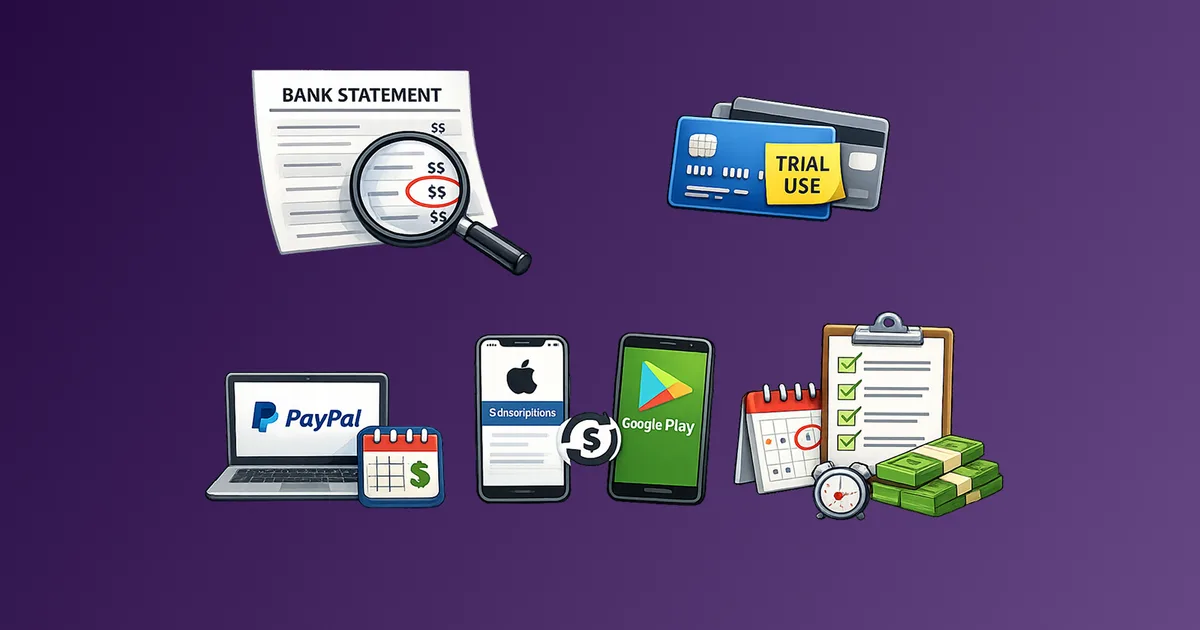
When most people think about managing subscriptions, they focus on what they pay. Fewer think about how they pay, and almost nobody has a deliberate system for it. That gap is where financial risk quietly grows: surprise charges on primary cards, cancelled subscriptions that never stopped billing, vendors that make it hard to leave. Choosing the right payment method for each category of recurring expense is one of the most underrated control moves in personal and small business finance—once you have a complete inventory of what you are paying for. How to Find All Your Subscriptions: Bank, Card, PayPal, Apple, Google Play covers that discovery step; this article extends it into payment control.
Stay Updated with Subtrakr
Sign up to our newsletter to get updates about Subtrakr and valuable insights about subscriptions and recurring expense management.
Why Payment Method Matters for Recurring Spend
Your payment method is not just a billing detail. It is a control layer. The method you choose determines how easily you can track a charge, dispute it, block future billing, or offboard from a vendor cleanly.
Most people default to their primary debit or credit card for everything. That works fine until it does not. When it breaks, it breaks badly: a vendor that keeps billing after cancellation, a card number exposed through a data breach, or a renewal that hits right before payroll clears.
The practical question is not which method is most convenient. It is which method gives you the right combination of control and risk coverage for each type of recurring commitment.
What Are the Main Payment Methods for Recurring Expenses?
There are four that matter for most consumers and small operators:
- Bank card (debit or credit) connected directly to your account or credit line
- Virtual card (single-use or multi-use, issued through your bank or a card provider)
- Invoice / direct billing (vendor issues a bill, you pay manually or via bank transfer)
- Platform-managed billing (Apple, Google Play, PayPal, Stripe billing portals)
Each has a different risk and control profile. None is universally best. The goal is to match the method to the spending category.
When Is a Standard Bank Card the Right Choice?
A standard debit or credit card is the right choice when you have high trust in the vendor and predictable, low-volatility charges.
The ideal use cases:
- Established SaaS tools you actively use and monitor (project management, cloud storage, communication tools)
- Utility-adjacent services with regulated or stable pricing
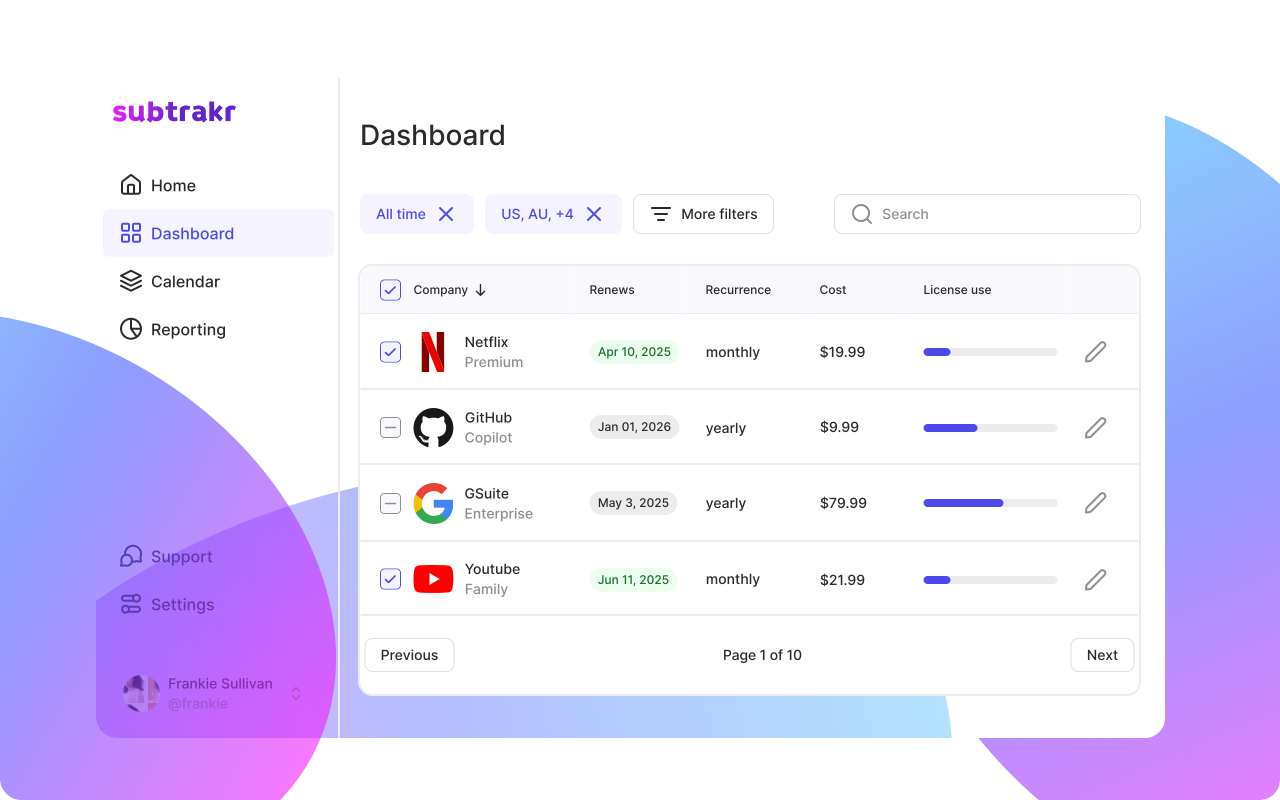
- Subscriptions you are reviewing regularly through a tracker like Subtrakr
The risk with bank cards is passive visibility. If you are not tracking, charges blend into the statement. The card works perfectly, and the problem is your attention gap, not the payment method itself. When you have a live tracker showing all recurring charges and their expected billing dates, the card risk drops significantly.
One distinction that matters: debit vs credit. Credit cards offer stronger dispute and chargeback rights in most jurisdictions. For recurring subscription billing, credit is generally lower risk than debit if a vendor dispute ever occurs.
When Should You Use a Virtual Card?
Virtual cards are the right tool when you want to contain risk without blocking a subscription entirely.
Use a virtual card when:
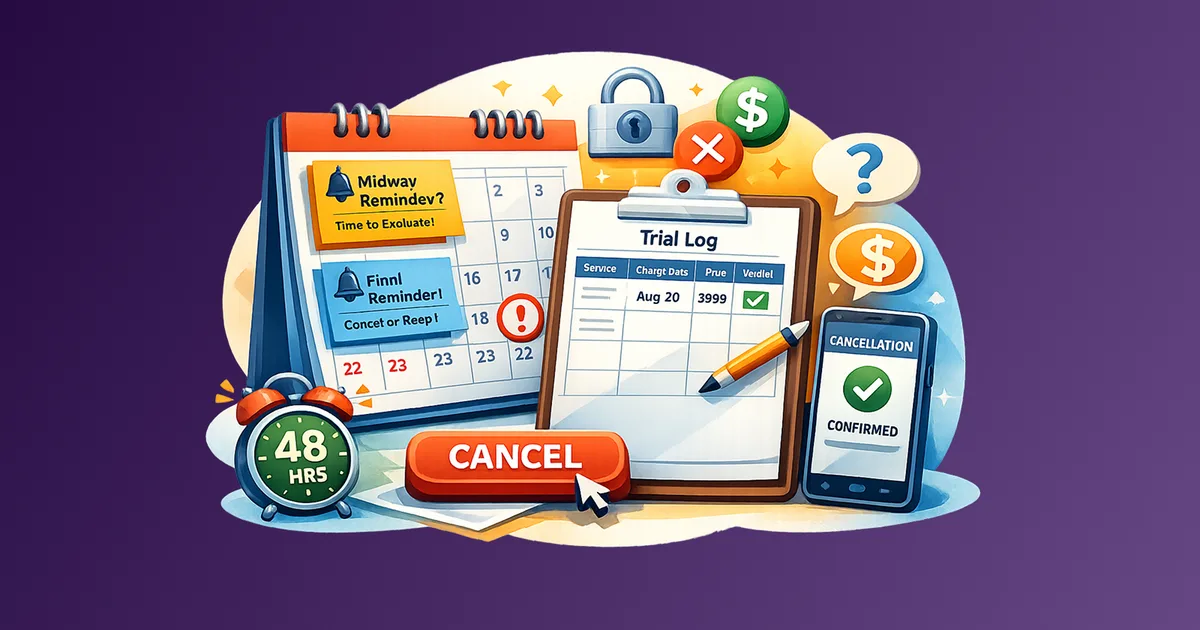
- You are signing up for a free trial and want to block automatic conversion (pair with How to Avoid Free Trial Traps for a calendar-first system alongside the virtual card)
- You are testing a new vendor with unclear cancellation policies
- You want to isolate a category of spend (all entertainment subscriptions on one virtual card, for example)
- You are giving payment access to a vendor you do not fully trust yet
Virtual cards work by generating a separate card number that can be tied to a spending limit, a single merchant, or a single transaction. If the vendor is compromised or keeps billing after cancellation, you close the virtual card without touching your primary account.
For trial management specifically, the logic is clean: use a virtual card with a low limit or single-use setting. If you forget to cancel, the charge simply fails. No dispute needed.
Practical note: most consumer virtual card options are available through Revolut, Privacy.com (US), and increasingly through major banks' own apps. Business users often have more robust options through corporate card platforms.
When Does Invoice Billing Make More Sense?
Invoice billing, where the vendor sends you a bill and you initiate payment manually or via bank transfer, is the highest-control option. It is also the least convenient.
It is appropriate when:
- The charge is large enough to justify manual review before payment
- You are operating in a B2B context where finance approval is part of the workflow
- The vendor relationship is formal and the contract governs payment terms
- You want a clean paper trail for accounting or tax purposes
The core advantage of invoice billing is that you are never charged without actively deciding to pay. No card on file means no passive billing. But this comes at a cost: you need to track the invoices, set reminders, and ensure payment before the due date. Late payment can interrupt service or trigger penalties.
For individuals, invoice billing is rarely practical for regular subscriptions. For small businesses, it is worth setting up for the largest tools in the stack, particularly annual contracts above a certain threshold.
How to Assign Payment Methods by Category
A working system does not require a different card for every subscription. It requires a consistent logic you can follow and review.
Here is a practical assignment framework:
| Category | Recommended method | Reason |
|---|---|---|
| Free trials | Virtual card (single-use or limited) | Blocks auto-conversion |
| New vendors, unverified | Virtual card | Isolates risk before trust is established |
| Core SaaS tools (active use) | Credit card, tracked | Reliable, chargeback protection available |
| Annual contracts, large billers | Invoice or credit card with alert | Needs review before renewal |
| Entertainment / media | Virtual card or credit card, grouped | Easy to isolate and cancel category-wide |
| Platform-managed (Apple, Google) | Platform billing | Better visibility within the platform ecosystem |
| B2B / business tools with approval workflow | Invoice | Finance control, paper trail |
The category logic matters more than the specific card you use. When you can see all your recurring charges in one place, grouped by category and billing date, you can also audit whether your payment method assignments still make sense. Subtrakr gives you that view as a structured list, which makes category reviews straightforward.
What Are the Most Common Payment Method Mistakes?
Using your primary debit card for everything. This is the most common and highest-risk default. Debit gives you weaker dispute rights and exposes your main account balance to vendor billing errors.
Linking your primary card to free trials without setting a cancellation reminder. The trial-to-paid conversion is a deliberate friction design by most subscription businesses. A virtual card removes this risk entirely.
Not knowing which card a subscription is on. When a card expires or gets replaced, subscriptions on that card fail silently, then often trigger penalty emails or access interruption. This is a sign that you do not have a complete view of your subscription stack.
Assuming cancellation stops billing immediately. Some vendors process the final charge before the cancellation takes effect. Others have billing cycles that do not align with cancellation dates. Documenting which card each subscription uses, alongside its cancellation status, is the audit step most people skip. How to Cancel Subscriptions Without the Stress walks through offboarding and confirming billing has actually stopped—payment method awareness is what makes that verification possible.
Consolidating all subscriptions on one card with no segmentation. Convenient until that card is compromised. Losing one virtual card to a breach only affects the subscriptions isolated to it.
Step-by-Step: Setting Up a Payment Method System (Time required: 30 minutes)
Step 1: List all current active subscriptions
Pull every recurring charge from your bank statement and any platform accounts (Apple, Google, PayPal). If you use Subtrakr, this is your existing tracker view.
Step 2: Categorize each subscription
Group by: core tools, trials, entertainment, business tools, annual contracts.
Step 3: Assign a payment method logic to each category
Use the framework table above. You do not need a different card for every subscription, just a consistent rule per category.
Step 4: Create a virtual card for trial and new vendor sign-ups
Set it up once, use it as your default for anything new or unverified.
Step 5: Note which card each subscription is on in your tracker
In Subtrakr, add the payment method as a note or tag per expense. This makes card replacement and cancellation tracking much easier.
Step 6: Set a quarterly review
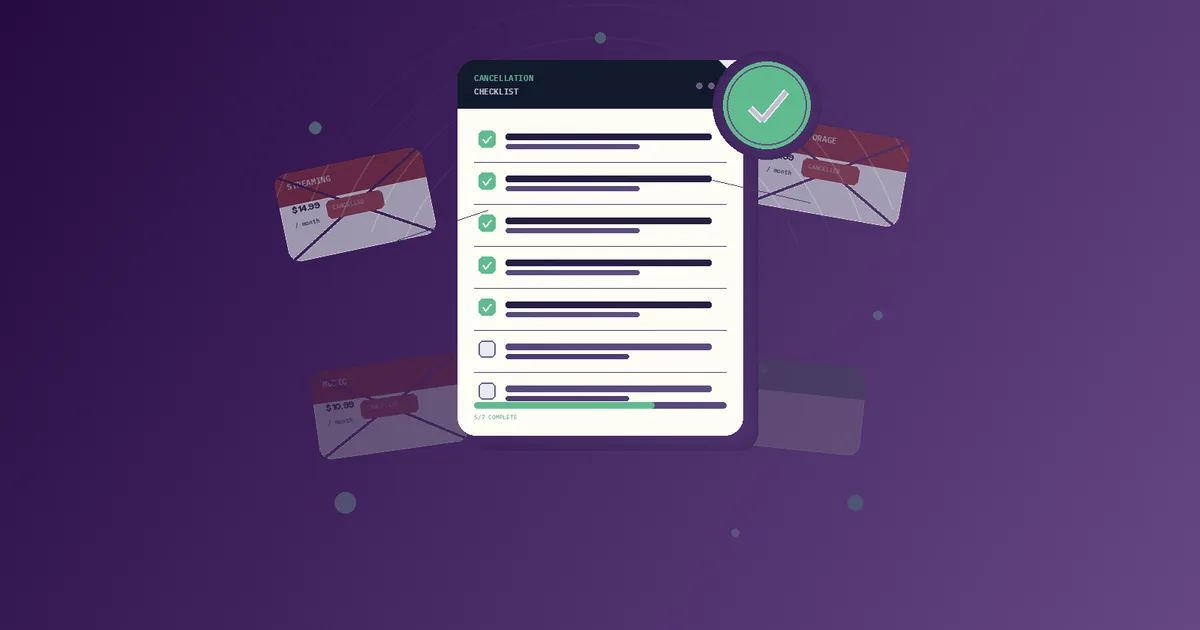
Check whether any subscriptions are on a card you no longer use, and whether trial virtual cards can be closed. Include payment method verification as a standing audit step using the Recurring Expense Audit Checklist.
Copy-Paste Reference: Payment Method Assignment Logic
Free trial sign-up          → Virtual card (single-use or low limit)
New vendor, unknown risk    → Virtual card (multi-use, low limit)
Active SaaS, trusted        → Credit card (tracked in Subtrakr)
Annual contract, large      → Credit card with renewal alert, or invoice
Entertainment / streaming   → Virtual card or dedicated credit card
Platform billing (Apple/Google) → Platform account
B2B tool with finance review → Invoice
FAQ
Does it matter whether I use debit or credit for subscriptions?
Yes. Credit cards generally offer stronger dispute rights if a vendor charges incorrectly or continues billing after cancellation. For recurring spend, credit is the lower-risk default.
Can I use one virtual card for all my subscriptions?
You can, but the value of a virtual card is containment. Using one virtual card for everything reduces the isolation benefit. A better approach is a dedicated virtual card per risk category, or at minimum a separate one for trials.
What happens when my card expires and I have active subscriptions?
Most card providers issue a new card with the same number but a new expiry. Your bank may auto-update card-on-file details with merchants. If not, subscriptions will fail silently at the next billing date. A subscription tracker that shows upcoming renewals helps you catch this before access is interrupted.
Is invoice billing available for personal subscriptions?
Occasionally, especially for annual contracts or professional tools. More commonly it is a B2B feature. If a vendor offers it, it is worth requesting for large annual commitments.
How do I track which subscriptions are on which card?
Add a payment method note to each recurring expense in your tracker. In Subtrakr, you can annotate each entry. This becomes critical during card replacement or when you want to do a full offboarding review.
What is the risk of using platform billing through Apple or Google?
Platform billing simplifies cancellation (all managed in one place) but reduces direct visibility into what you are paying and when. It also means the platform takes a cut of the vendor's revenue, which can affect pricing. Tracking the actual amounts in a tool like Subtrakr, even when billed through a platform, keeps you aware of the real cost.
Next Action
Pick one category from your current subscription stack, assign a consistent payment method rule to it, and note it in your tracker. Start with free trials if you have any active. Set up a virtual card this week if you do not already have one.
If you want a full view of everything you are paying and on which card, add your subscriptions to Subtrakr. The tracker gives you the structured list you need to make payment method decisions without guessing.