Introduction
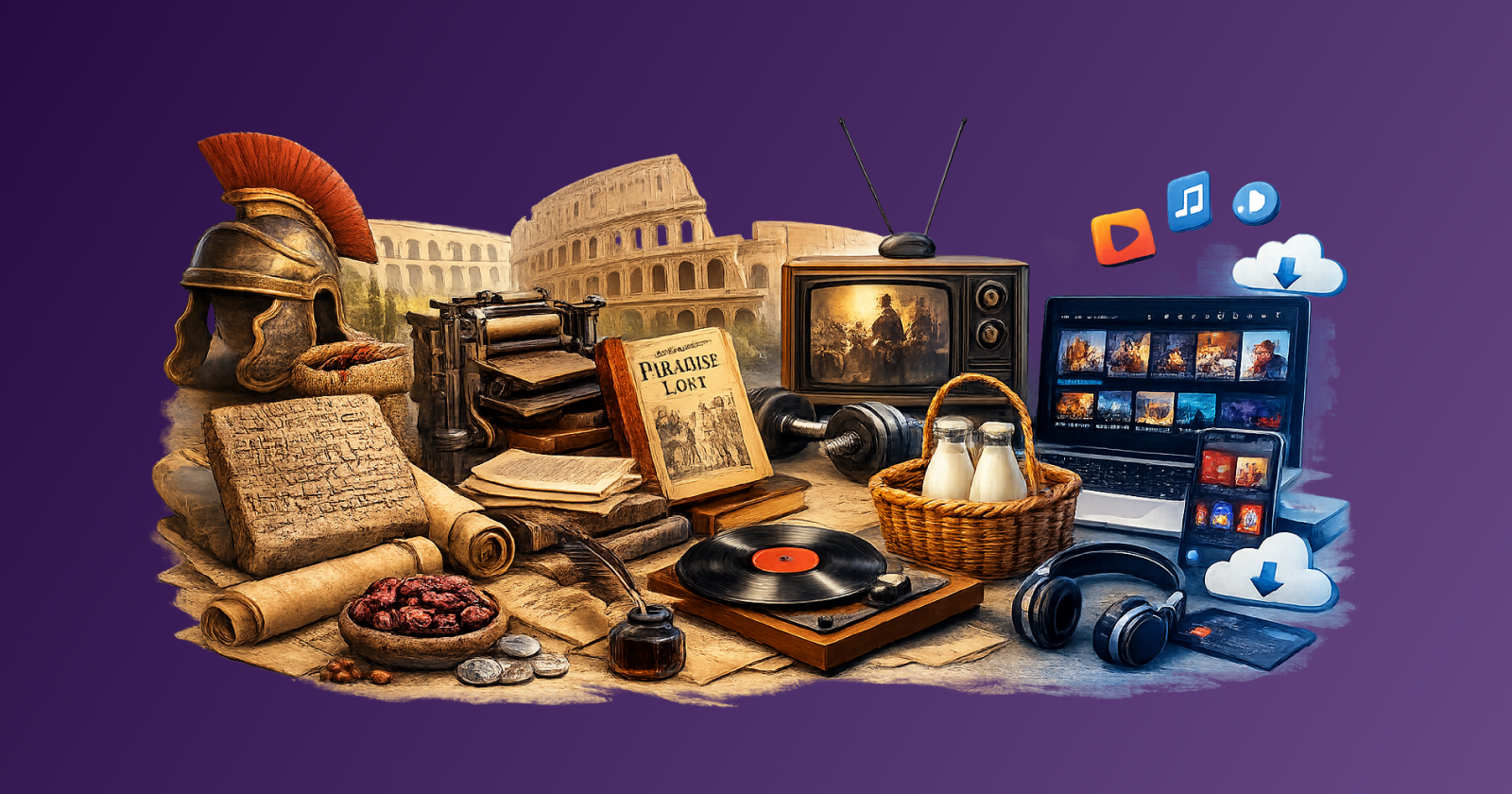
Look around and you'll find subscriptions everywhere – from your morning newspaper or streaming TV app to the gym down the street. Paying a set amount at regular intervals for ongoing access to goods or services has become second nature in modern life. But while the Netflixes and Amazons of today feel cutting-edge, the idea of recurring payments is ancient. In fact, humans have been arranging payments on a weekly, monthly, or annual basis for millennia. This article explores the origins and evolution of subscriptions and recurring expenses – from antiquity's first records of rent and dues, through the rise of print media subscriptions and club memberships, all the way to today's digital subscription economy. Along the way we'll discover fascinating historical anecdotes and milestones that shaped how recurring payments became a major part of modern personal finance.
Stay Updated with Subtrakr
Sign up to our newsletter to get updates about Subtrakr and valuable insights about subscriptions and recurring expense management.
Ancient Origins: Leases, Rent, and Dues in Antiquity
Regular payments are not a strictly modern invention. Some of the earliest written records show people entering into contracts with recurring obligations. For example, a clay tablet from 428 BC in Mesopotamia documents a 60-year lease of farmland in which the tenant agreed to pay 20 talents of dates per year as rent. Each year, at the harvest season, the renter would deliver the specified amount of dates – a clear case of an ancient recurring payment plan. Similarly, in ancient Rome, tenants renting apartments in multi-story insulae (tenement buildings) paid their landlords on a periodic basis. The famous Roman orator Cicero even wrote of collecting rent from his properties at regular intervals, indicating that monthly or annual rent schedules were commonplace by the imperial era.
Recurrence also appeared in ancient commerce and finance. Rome's richest man, Marcus Licinius Crassus, reportedly sold some of his properties via installment plans – allowing buyers to pay off houses through a series of payments over time. This was essentially an early form of financing that spread the cost out in recurring increments, much like modern installment loans or subscription payment plans. Even agreements between nations sometimes adopted multi-year payment schedules. After the First Punic War (241 BCE), defeated Carthage was obliged to pay an indemnity of 3,200 talents of silver to Rome over a 10-year period. In effect, Carthage was put on a ten-year "subscription" to deliver annual payments until the war debt was settled – a sizable recurring expense in the ancient world.
Not all recurring payments were voluntary. In many early societies, tribute or tithes functioned as compulsory subscriptions. Subjects might owe a tenth of their produce to a temple every year, or vassals might owe their lord a regular feudal rent (often paid in grain or labor). These practices show that by antiquity and the Middle Ages, people were already familiar with the concept of paying for something continuously over time rather than all at once. The fundamental idea underlying subscriptions – a steady exchange of payment for ongoing access or service – was firmly rooted in the economic life of ancient civilizations.
Print Media: Newspapers, Magazines, and the First Subscriptions
The modern subscription model truly began to take shape with the rise of print media. Once printing presses enabled periodicals, publishers naturally turned to subscriptions to fund and distribute their works. Early newspapers in the 17th century were often small weekly gazettes that readers could subscribe to for delivery. By the eighteenth century, it became common for newspapers and journals to solicit subscribers in advance. In colonial America, for instance, Benjamin Franklin's Pennsylvania Gazette and other papers advertised yearly subscription rates and delivered issues to paying readers. The appeal was clear: subscriptions provided a steady readership and revenue, while subscribers enjoyed convenient, regular delivery of news.
Magazines followed a similar path. The Gentleman's Magazine, first published in 1731 in London, is considered one of the first general-interest magazines – and it was sold on a monthly subscription basis. In fact, subscription publishing was so important in the 1700s that authors often funded books by collecting subscriptions beforehand. A famous example is the 1688 deluxe illustrated edition of John Milton's Paradise Lost, which was "published by subscription" with 500 subscribers funding the print run. This early crowdfunding-by-subscription model helped guarantee an audience (and cover printing costs) before the presses even rolled.
Regular subscriptions for periodicals took off in the 19th century as literacy and printing both boomed. By the late 1800s, magazine subscriptions were widespread in markets like Britain. Popular monthly magazines and weekly illustrated papers built loyal subscriber bases. In the United States, giants like Harper's and The Atlantic in the mid-1800s relied on subscribers for stability. The late 19th century also saw newspaper barons like Joseph Pulitzer and William Randolph Hearst use aggressive subscription drives to build mass circulation for their dailies. Getting the morning paper delivered to your door for a fixed fee became a middle-class staple.
These early print subscriptions were largely about convenience and habit – a way to ensure you never missed an issue of your favorite publication. They also represent the first time the subscription model really scaled to the consumer market. Instead of one patron sponsoring a single book, thousands of ordinary readers were each paying a bit on a recurring basis to sustain a continuing service (the news). This established a template that would later be emulated by everything from mail-order clubs to today's digital media platforms.
Clubs and Societies: Book Clubs, Record Clubs, and Wine of the Month
While publications popularized subscriptions for information, the idea of subscribing to membership-based clubs also emerged and evolved over time. The roots of this concept go back to guilds and mutual aid societies. In ancient Rome, for example, burial societies (collegia funeraticia) operated much like clubs: members paid monthly dues into a common fund to ensure a proper funeral when they died. One Roman collegium from the 2nd century CE required an initial fee of 100 sesterces (and a jar of good wine) plus monthly fees of 1.25 sesterces thereafter. In return, members were guaranteed certain services – an early form of a subscription membership model geared toward social benefits.
Fast forward to the modern era, and we see an explosion of consumer clubs selling products via subscription. One milestone was the advent of book clubs. In 1926, the Book-of-the-Month Club launched in the United States as a mail-order service to deliver curated books to subscribers every month. At a time when books were relatively expensive and not always accessible in small towns, this club allowed thousands of readers nationwide to receive a hand-picked hardcover each month at an affordable price. For decades, thousands of readers across America relied on the Book-of-the-Month Club's monthly selections to discover new literature. The convenience of home delivery and the element of surprise ("Which new novel will arrive this month?") made the club wildly popular and imitated by many others.
Music soon followed books. In 1955, CBS launched the Columbia Record Club, a mail-order music subscription service that became legendary. New members could sign up with a famous offer of "12 records for a penny" (with a commitment to buy more records later). The response was enormous – by the end of 1955, Columbia Record Club had 128,000 members who purchased 700,000 records through the service. Throughout the 1960s and 70s, record clubs and their sister tape clubs (for 8-tracks and cassettes) were a common way for music fans to get albums on a subscription basis, often at discount rates. These clubs fundamentally changed how music was retailed, accounting for as much as 10% of U.S. record sales by the mid-1960s.
Other consumer niches adopted the club subscription format as well. Wine enthusiasts, for example, got their own service in the early 1970s. The Wine of the Month Club, founded in 1972 in California, offered subscribers a curated selection of wines delivered to their doorsteps. Members would receive two bottles (often one domestic, one international) every month along with tasting notes – a convenient way to explore new wines without hunting them down in stores. The concept of "-of-the-month" clubs proliferated into all sorts of products: from cheese and gourmet foods to flowers, beer, and even socks. By paying a recurring fee, club subscribers gained ongoing access to new experiences in their interest area, whether it was bestselling novels or boutique wines.
Underpinning all these club models is a powerful psychological draw: curation and surprise. Subscribers entrust the club to hand-pick items for them, making each delivery a little event. In return, the business secures a steady revenue stream and customer loyalty. This win-win drove the success of 20th-century subscription clubs and set the stage for the subscription box craze of the 21st century.
Rent, Utilities, and the Rise of Recurring Bills
Not all recurring expenses are for discretionary treats – many are simply the price of modern living. The concept of paying rent at set intervals is as old as property ownership itself. Medieval peasants paid annual or seasonal rents (often in crops or labor) to their feudal lords. As cities grew, renting urban housing became common, with monthly rent as the standard. By the 19th century, in industrializing cities from London to New York, it was typical for working families to pay rent every month, just as Romans had done centuries before. Regular rent payments were such a fixture that they barely registered as a "subscription" – they were just a fact of life.
The Industrial Revolution and the spread of municipal services in the 1800s introduced new types of recurring bills. Private companies and city utilities began charging fees for ongoing services like water, gas, and electricity. For instance, early water supply companies in London (such as the New River Company, established 1619) charged households monthly or quarterly for piped water, replacing the old pay-per-bucket model from street vendors. Gas lighting utilities, which emerged in the first half of the 19th century, sent out bills at regular intervals for lighting homes and streets. By the late 1800s, electric power and the telephone had arrived – and with them, the notion of a monthly service charge. The very first telephone exchange, opened in New Haven, Connecticut in 1878, set its pricing at a flat $1.50 per month for phone service. Subscribers to that pioneer phone network had only a handful of other people to call (the inaugural phone directory listed just 50 subscribers!), but they paid their $1.50 every month nonetheless for the privilege of connected communication.
Thus by the early 20th century, a typical household budget might include several recurring expenses: rent, water, gas, electricity, and telephone, not to mention perhaps a newspaper or milk delivery subscription. The routine of paying bills every month became ingrained in modern society. It trained consumers to expect that some services were metered out continuously and paid for continuously. In a sense, this was a cultural shift: rather than buying ice by the block or paying a lamp-lighter each night, you now had a running account with utility companies that sent an itemized bill at the end of each billing period. Life was increasingly governed by the monthly due date, a cycle we still know well today.
It's worth noting one charming example of a 19th–20th century recurring service: the milkman. In many Western cities, families subscribed to regular milk delivery – an early form of the subscription home delivery services so popular now. In Britain, milk deliveries by horse-drawn cart began in the 1860s and remained a daily ritual for over a century. Customers would pay the milkman weekly or monthly to bring fresh bottles to their doorstep each morning. At its peak in the 1980s, about 90% of milk consumed in the UK was delivered to the home by milkmen. (This astonishing figure later fell to just 3% by 2016 as supermarkets and convenience stores took over.) The neighborhood milkman, like the paperboy, was an unsung pioneer of the subscription economy – proving that consumers would happily pay recurring fees for convenience and consistency in everyday essentials.
Subscription Services Boom in the 20th Century: Gyms, Cable TV, and More
By the mid-20th century, the subscription model extended into new realms of consumer life. Health clubs and gyms embraced membership fees as a business model. While fitness facilities had existed earlier, 1947 saw the opening of the first chain of modern health clubs by Vic Tanny in California. Vic Tanny's gyms introduced middle-class Americans to the idea of paying dues to access a fitness center, pioneering the use of membership contracts in the industry. This was a shift from pay-per-visit public bathhouses or YMCAs to a true subscription approach – members signed up for months or years to use the facilities. By the 1970s and 1980s, gym and sports club memberships (often with monthly or annual fees) were common across the U.S. and Europe. The concept of the "gym membership" became synonymous with a recurring expense in many household budgets.
Another revolution in subscription services came with television. In 1972, Home Box Office (HBO) launched as the first premium cable TV channel, transmitting uncut movies and sports events to subscribers for a monthly fee. This was the birth of pay-TV: instead of just receiving the free broadcast networks, viewers could subscribe to additional content. HBO's early success (it reportedly started with only 365 subscribers in its first New York market) proved that people would pay recurring fees for quality entertainment at home. The cable and satellite TV industry built on this with multi-channel subscription packages in the 1980s and 90s. By paying your cable bill each month, you gained access to dozens or hundreds of channels – a far cry from the 3 or 4 channels over-the-air TV provided. Essentially, television became a utility-like subscription service. This paved the way for today's streaming platforms that have taken the subscription TV model even further.
The late 20th century saw many other consumer services adopt subscriptions. Home security systems began to be sold with monthly monitoring fees. Roadside assistance clubs (like AAA) charged annual memberships for year-round service. Even credit cards introduced annual fees for premium card memberships. In software, companies experimented with maintenance contracts or licensing fees that had to be renewed periodically. The common thread was that businesses loved the predictable revenue of subscriptions, and consumers appreciated the ongoing access and support. By 1990, the average consumer might be subscribing to a variety of things: magazines, a music or book club, cable TV, a gym, perhaps a security alarm or phone plan – all in addition to the usual rent and utilities. The subscription model had proven remarkably adaptable across industries.
The Digital Era: Streaming Content and Software-as-a-Service
If the 20th century planted the seeds of the subscription economy, the late 1990s and early 2000s made it bloom on a massive scale. The rise of the internet and digital distribution led to Streaming Services and Software-as-a-Service (SaaS) – two trends that turned one-time purchases into ongoing subscriptions. One early harbinger was Netflix, which in 1999 began a DVD-by-mail subscription (no late fees: you paid a monthly rate to continuously receive and return movies). By the mid-2000s, broadband internet enabled Netflix to shift to streaming video on demand, a model quickly copied by Hulu, Amazon Prime, and many others. Consumers flocked to these services – for example, by 2020 almost half of UK households had a subscription to a streaming TV platform (and the numbers are similar in the US and other countries). Binge-watching your favorite shows has become a monthly budget line-item in millions of homes.
The music industry likewise transitioned from sales (CDs or MP3 downloads) to all-you-can-listen subscriptions. Spotify's launch in 2008 popularized the idea that for a flat monthly fee, you could stream virtually any song on demand. Apple Music, Tidal, and others followed, and today tens of millions of people pay a recurring fee to access vast libraries of music ad-free. In a way, this hearkens back to the Columbia Record Club – but now you don't own any physical media, you simply rent access to a massive digital jukebox.
Perhaps the most transformative shift has been in software. Traditionally, buying software meant a one-time purchase of a license or CD-ROM. That model is largely gone. Software-as-a-Service (SaaS) emerged in the early 2000s with companies like Salesforce, which offered business software through a web browser for a monthly subscription fee rather than a big upfront cost. The appeal of SaaS was huge: businesses and individuals could always use the latest version of a program, with updates and cloud storage included, as long as they kept their subscription active. By the 2010s, even desktop software giants pivoted to subscriptions. Adobe, for instance, moved its popular Creative Suite (Photoshop, Illustrator, etc.) to Adobe Creative Cloud in 2012, a service-only model priced at around $50 per month instead of selling $600 packages every few years. Microsoft did similarly with Office 365, encouraging users to subscribe annually for Word/Excel/Outlook instead of buying the boxed software outright. Even many mobile apps on smartphones have introduced subscription options for pro features or content. From note-taking apps to dating apps, developers realized that a recurring revenue model could be more sustainable than a one-time download fee.
Consumers initially pushed back on some of these changes ("Why pay every year for software I used to own forever?"), but over time the convenience of always-updated, on-demand services won out. Today, the average person's digital life is full of micro-subscriptions: cloud storage for your photos, premium email or productivity tools, perhaps a monthly donation on Patreon, a paid news site subscription, and so on. Each may be small on its own, but collectively they represent a significant shift in how we allocate our spending. We have moved from an ownership model to an access model across many domains – and subscriptions are the price of that access.
Subscriptions and Personal Finance in the Modern Age
Two hundred years ago, a typical person's recurring expenses might have been limited to tithes and rent. Today, recurring charges are everywhere – and they add up. It's not uncommon for a household to have a dozen or more active subscriptions, from streaming platforms and utilities to subscription boxes and digital apps. This proliferation has made managing recurring expenses an important part of personal finance. Studies have found that many people lose track of just how many subscriptions they're paying for – and how much they're spending. In one 2022 survey, consumers estimated they spent about $86 per month on subscriptions, but when they checked the actual numbers, the average was over $200 per month – more than 2.5 times higher than they thought. It's all too easy to sign up for a "free trial" and end up paying for it months after you've stopped using the service!
The psychological ease of auto-pay contributes to this. A significant majority of consumers set their subscriptions to auto-renew on credit cards or bank accounts, making it less likely they'll notice each charge. In a recent survey, about 74% of people said it's easy to forget about recurring subscription charges, and 42% admitted they had continued paying for a subscription they no longer used simply because they forgot to cancel. These forgotten or unused subscriptions are essentially money leaked from the budget. It's no surprise, then, that as subscriptions have multiplied, a new industry of subscription management tools has arisen. According to the same study, about one in ten consumers now uses some form of subscription tracking app or service to monitor their recurring charges. These tools provide a handy overview of all your active subscriptions and what they cost, helping people avoid surprises and identify things they might want to cancel.
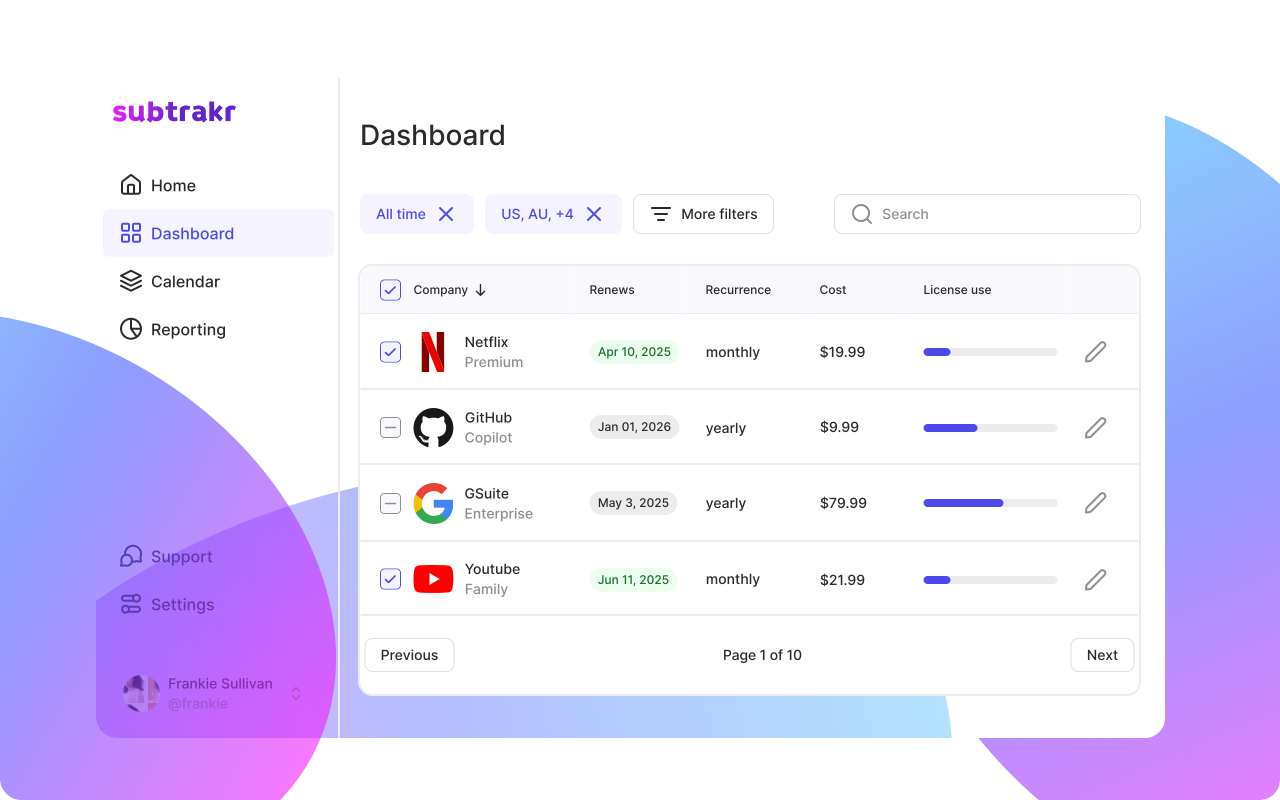
After all, the subscription model's great strength – convenience – can also be a weakness if it causes overspending. The lesson of history is that while recurring payments have been around forever, they've never been as prevalent as they are now. Keeping on top of them is crucial for financial health. Thankfully, today there are ways to do just that. Subtrakr, for example, is a modern app designed to help people stay on top of their recurring expenses. It automatically tracks your subscriptions, alerts you to upcoming bills, and gives you a clear picture of where your money is going each month. In a world where everything from your music to your groceries can come as a service, tools like these ensure that you remain in control of your subscriptions – and not the other way around.
Conclusion
From ancient farmers delivering rents in sacks of dates, to Victorian families welcoming the milkman each dawn, to today's binge-watchers and SaaS-powered businesses – the thread connecting them is the power of the subscription. Recurring payments have evolved from humble beginnings into a driving force of the global economy. They offer convenience, consistency, and community, but also demand mindfulness and management. Understanding the history of subscriptions helps us appreciate how we got here and how deeply the model is woven into our lives. As we look to the future – be it subscription cars, subscription meals, or yet-unimagined services – one thing is certain: recurring payments, in one form or another, are here to stay. Armed with a bit of historical perspective and the right tools (don't forget to use Subtrakr to keep those subscriptions in check!), we can all make the most of the subscription age while keeping our finances healthy.
Sources
- Baga'miri Lease Contract (428 BC) – Fordham University Ancient Contracts
- History StackExchange – Discussion on Recurring Payments in Ancient Rome
- Paradise Lost 4th Ed. (1688) Subscription – Williamsburg Art & Historical Center
- Elite Business Magazine – The Evolution of Subscriptions, 2020
- Fast Company – History of Book-of-the-Month Club, 2025
- FundingUniverse – Columbia House Company History
- Wikipedia – Wine of the Month Club (history)
- Les Mills – History of Health Clubs (Vic Tanny, 1947)
- Lunarmobiscuit Blog – First Telephone Subscription (New Haven, 1878)
- C+R Research – Subscription Spending Survey, 2022